Team Building Events
FOR LARGE GROUPS
Energize Your People and Improve Communication With Interactive Fun

Yes, the laughter will be real and the relationships strengthened – but the take-aways from insightful debriefing discussions address real-world workplace issues.
Research has shown experiential activities are the most effective way to ensure engagement and lasting impact. As a veteran teacher and coach, Sean skillfully facilitates fun challenges that provide outcomes your people can apply –
Sean also offers Custom Workshops that dig deeper to address your specific workplace challenges, helping your organization see issues from a fresh perspective and resolve them to become a more productive team.

“Our people laughed, participated, and encouraged each other more at this event than any in our history of annual staff meetings…
We especially appreciated your unassuming demeanor and relatable style. We will happily recommend you to improve teams in any industry or setting.”
“Sean was animated, funny, engaging, and extremely inclusive (and as someone who sometimes feels like an outsider, it made me feel extremely welcome.) …Sean opened doors of opportunity for our team to grow on so many levels. He was awesome!!”
Large groups are FUN!
You can have a great time connecting and creating opportunities for your people to interact and laugh together with Sean’s professionally facilitated events for large groups and conference events…
Sean is an experienced facilitator of large group team building activities – and his experiential learning activities can accommodate hundreds of participants with fun activities that involve pairs, groups of four, and whole audience interaction!
Team building for groups of 50 or more people (whether it is teacher team building or a corporate event) requires planning and professionalism to get the results you desire. If you are looking for something that will inspire laughter and offer lessons that help your people become better teammates, Sean is your guy!
Sean keeps your people engaged with paired activities, in groups of fours, and facilitates focused conversations that help your people strengthen relationships and build an awareness of differences and the unique talents each individual brings…
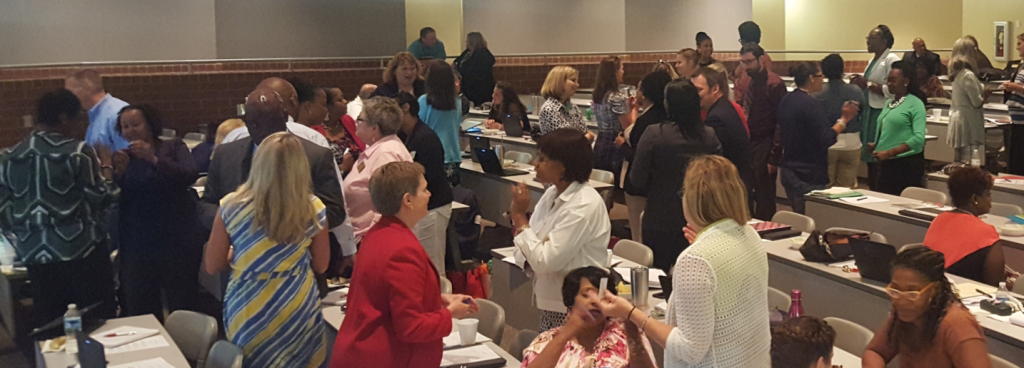
(view some of Sean’s past client comments by clicking on the image above)
Whichever large group team building activities are used with your attendees, the key to a successful event is the IMPACT it has on future beliefs and behaviors. That means you want more than just laughter – you want useful take-aways as well…
Sean will ensure that your people enjoy:
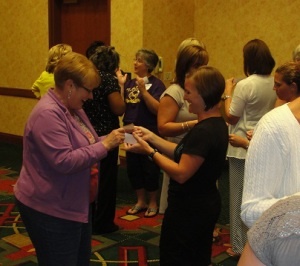
For major events, planning a way to ensure that everyone makes new connections, has a great time, and takes away useful and relevant lessons and ideas can be a tall order. Sean is here to help…
Hundreds of people in an event space can present challenges that not every facilitator or speaker is comfortable with… Thankfully, Sean’s experience with team building activities for large groups can turn a portion of your event into a fun and effective way to strengthen bonds and communication among all people and departments!
Sean’s messages and entertaining style provide powerful insights and leadership applications that your people will benefit from the very next day!
Take a look at Sean’s Team Building Questions page to see a shortlist of his favorite activities…
Sean knows that your group’s productivity and success depends upon their ability to build trust, communicate more effectively, and laugh together… So how do you create quality connections and engagement with hundreds of people?
Book Sean to professionally facilitate his large group team building activities!
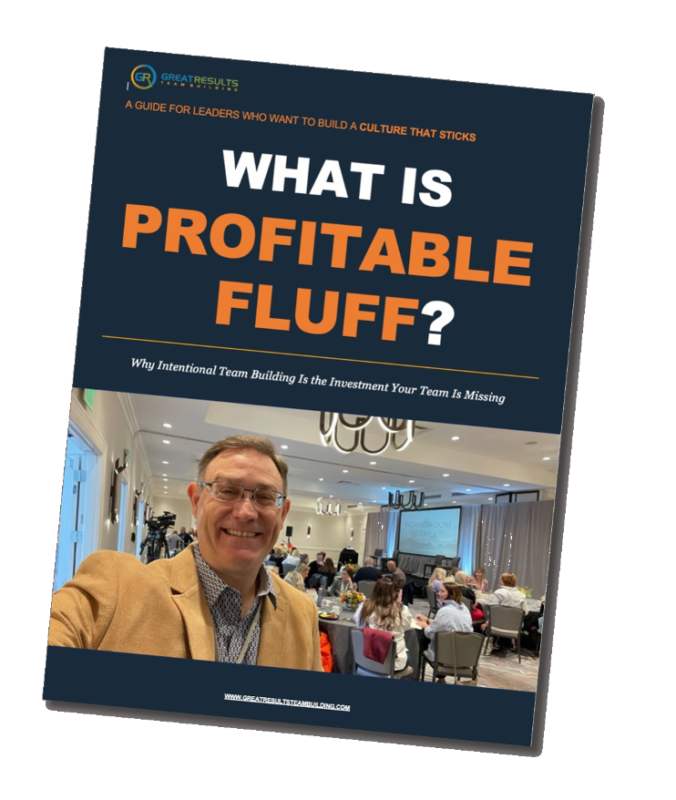
You’ve probably been there. Someone books a bowling night, calls it team building, and everyone has a decent time. But Monday rolls around and nothing’s different. Same friction. Same conversations that aren’t happening. If that’s your experience, the skepticism makes complete sense…
But what if there’s a version that actually changes things?
After 20 years coaching teams – and working with organizations like Cisco, John Deere, and the CDC – I’ve seen what happens when team building is designed with intention…
Download the Free Guide and Find Out -->
No cost. No pitch. Just the helpful info for a better team experience.
Large group team building is not the same as a company party.
That distinction matters more than most organizations realize when they are planning an event for 80 to 800 people.
Large group team building is a professionally facilitated experience designed to improve how people communicate, collaborate, and connect across departments and roles. It is structured, intentional, and led by someone who knows how to work a room of hundreds without losing a single person in the back row.
It is different from recreational activities like escape rooms, bowling outings, or happy hours. Those are fun. And fun matters. But fun alone does not change behavior on Monday morning.
The moment a group grows beyond 30 or 40 people, the logistics and facilitation demands change dramatically. Pair activities need to be designed differently. Large group energy requires a different kind of stage presence. The debrief conversations that produce real insight have to be structured so they work at scale, not just in a small conference room.
What separates a memorable large group team building event from a forgettable afternoon is the intention behind it.
The best events accomplish two things at once. They create genuine connection and laughter, and they leave every person with an insight or awareness they can apply immediately.
That combination is what I call Profitable Fluff. Not recreational. Not just fun. Intentional experiences that pay dividends in productivity, communication, and culture.
Most team building events end when the activity ends. That is exactly the wrong place to stop.
The activity is the vehicle. The debrief is the destination.
After 20 years of coaching and facilitating, I can tell you with confidence: the conversation that follows a well-designed activity is where the breakthrough happens. It is where people connect what just occurred in the room to what is actually happening on their team. It is where laughter turns into awareness.
Without a skilled debrief, your people had a fun afternoon. With one, they leave with a new way of seeing a teammate, a communication habit they want to change, or a shared vocabulary that makes future conversations easier.
Here is what a well-facilitated debrief accomplishes for a large group:
It surfaces assumptions people did not know they were making. It creates a shared reference point the team can return to for months. It gives people permission to say things out loud that they have been thinking privately. And it gives leaders a window into what is actually driving their team’s dynamics.
That is not something you get from an escape room. It is not something that happens accidentally. It has to be designed and led by someone who knows what questions to ask and when to let the silence do the work.
One of my favorite pieces of feedback came from a dental practice after a half day event. The leader told me that the reflection time and sharing after each activity solidified their end goal for the day more than anything else on the agenda.
That is the debrief. That is why it matters.
What size groups can you work with? I work with groups from 8 to 800 people. Large conferences, annual meetings, department offsites, and corporate retreats are all formats I have facilitated. The program design scales with the group size so the energy and engagement stay consistent whether there are 60 people or 600.
How do you keep 200 people engaged during a team building event? The design of the activities matters as much as the facilitation. I use a mix of paired interactions, small group challenges, and full audience moments so everyone is involved, not just watching. People stay engaged when they feel personally included. That requires intentional structure, not just a microphone and a stage.
How long does a large group team building session typically run? Most large group programs run between 90 minutes and a half day. The right length depends on your goals, your schedule, and how much depth you want to reach. I will tell you honestly if what you are trying to accomplish requires more time than you have budgeted. That conversation happens before you book, not after.
What does the debrief involve and why does it matter? The debrief is a facilitated group conversation that follows each activity. It is where participants connect what just happened in the room to their real team dynamics. I ask specific questions designed to surface awareness, shift perspective, and give people a shared language for the issues they face together. It is the part most facilitators skip. It is the part that makes the event worth the investment.
Is the program customized for our organization? Every program is customized. Before I design anything, I have a discovery conversation with you to understand your team’s specific challenges, the mix of people in the room, and what success looks like. No two events I deliver are identical.
Do attendees leave with anything tangible? Yes. Every participant receives one of my published books as a takeaway. That means the lessons do not end when the event does. Weeks later, someone picks up the book and the awareness starts again.
Not everyone who calls themselves a facilitator has actually done this at scale.
If you are planning an event for 100 or more people, the stakes are real and the margin for error is small. Here are five things worth evaluating…
1. Have they actually done it at your group size? Facilitating 20 people in a conference room is a completely different skill set from managing the energy and logistics of 300 people in a ballroom. Ask specifically. How large was the largest group they have worked with? What did the format look like? What happened when something went sideways?
2. Do they customize or do they show up with a canned program? A great facilitator will ask you questions before they ever propose an agenda. They want to understand your team’s specific dynamics, the mix of departments in the room, what tension exists, and what outcome would make this event a success for you. If they skip that conversation, they are delivering a product, not a solution.
3. Can they hold energy across the full group without losing people? This is a stage presence and design question. Ask to see video from a large group event. Watch whether the people in the back are engaged or on their phones. That tells you everything.
4. Does the program produce takeaways, or just a good time? Fun is necessary but not sufficient. Ask what participants leave with. Is there a framework, a tool, a book, a shared vocabulary? Something that has a life beyond the event itself?
Organizations that communicate effectively are 4.5x more likely to retain the best people.
-Watson Wyatt (worldwide consulting firm)
U.S. companies lose $3 billion a year to the effects of negative attitudes at work.
-The Bureau of Labor Statistics
60% of executives listed lack of collaboration as one of their top leadership challenges.
-American Management Association
talk with sean
PEEK INSIDE SEAN’S TEAMWORK TOOLBOX:
GET FREE access to OVER 50 useful handouts and
activities for smart team leaders!


Ready to talk about your team?
Book a Call