
Culture neglect is the most expensive mistake most leaders never see on a budget line.
You have poured real money into your organization. Talent you competed to hire. A strategy you spent months debating. Software, training, offsites, consultants. All of it aimed at getting your team to perform. And then, without anyone deciding to, the one thing that determines whether all of that investment pays off gets left to run on its own. Your culture.
Culture is not a soft extra that sits next to the real work. It is the environment your real work happens inside. Neglect it and it does not stay flat. It goes stale. And a stale culture quietly drains the value out of everything else you paid for.
Neglect is not a decision.
That is what makes it dangerous.
Nobody calls a meeting to announce they are going to stop caring about their culture. That is not how it happens. It erodes in the gaps. A hard conversation that keeps getting postponed. A standard that slips once and then again. A thank you that never quite gets said. None of it feels urgent in the moment, so it waits. And culture is built out of exactly those small moments a leader chooses to handle or ignore.
The frustrating part is that most leaders can feel something is off.
In Businessolver’s 2024 State of Workplace Empathy Report, 52 percent of CEOs said their own workplace is toxic, up 10 points from the prior year.
That is not disgruntled employees talking. That is the people at the top admitting the environment is broken.
But feeling that something is wrong is not the same as knowing what to do about it. In my book What Effective Leaders DO, I describe the Ladder of Awareness. Most leaders get stuck one rung up, symptom aware. They see the wet floor. They just have not found the leak yet. So the frustration grows and the neglect continues, because you cannot fix a cause you have not named.
What culture neglect actually costs you
Here is the number that should get your attention. Gallup reports that business units in the top quartile of employee engagement are 23 percent more profitable than those in the bottom quartile.
Sit with what that gap means.
Two organizations can hire from the same talent pool, sell into the same market, and run the same strategy on paper. The one with a cared-for culture can be nearly a quarter more profitable than the one that let its culture go stale. That difference is not a talent difference or a strategy difference. It is a culture difference. It is the return you forfeit when you neglect the environment your people work in.
A neglected culture does not just underperform. It wastes the money you already spent on talent, strategy, and tools.
The five symptoms of a neglected culture
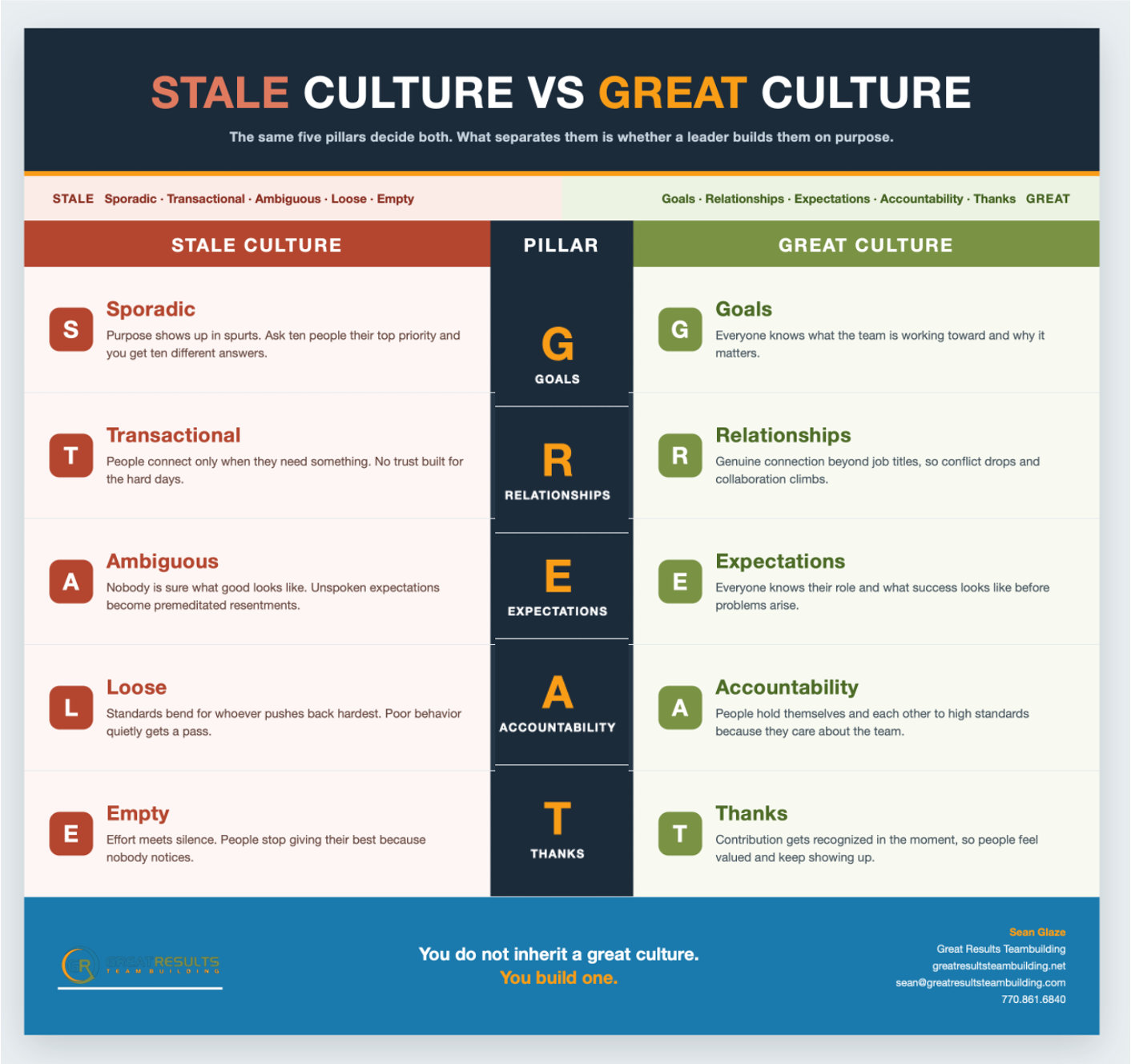
Stale cultures are rarely loud. They are polite. People show up, do their jobs, and go home, and nothing is obviously on fire. But underneath, neglect shows up as five specific symptoms. Watch for them, because they spell out exactly what is happening.
Sporadic. Purpose comes in bursts, then fades. Ask ten people their top priority and you get ten answers.
Transactional. People connect only when they need something. No trust is banked for the hard days.
Ambiguous. Nobody is sure what good looks like. Unspoken expectations quietly become resentments.
Loose. Standards bend for whoever pushes back hardest, and everyone notices who got the pass.
Empty. Effort meets silence, so people stop giving their best because it never seems to matter.
Read the first letters down the page.
STALE.
That is not a personality flaw in your people. It is the predictable result of a culture left unattended.
How to reverse the neglect: the GREAT maintenance plan
The good news is that culture is not fragile and it is not permanent.
It is a set of habits, which means it responds fast when a leader starts paying attention again. For years I have taught these five habits as the G.R.E.A.T. culture model, and each one directly repairs one of the symptoms above.
Goals: point everyone at the same finish line
Sporadic gets fixed with shared clarity. Not a mission statement on the wall that nobody can recite, but a goal every teammate can repeat back and tie to their own work. When people know where they are going, they can finally row in the same direction instead of paddling their own way.
If your people cannot name the goal, they cannot pull toward it.
Relationships: rebuild trust on purpose
Transactional gets fixed with intentional connection. Trust does not happen because people share a building. It happens because you create moments that require it. This is exactly why I push leaders away from treating team building as a recreational day out. A bowling night is fun, but fun is not trust. Real team building is facilitated on purpose, so people understand how their teammates think and communicate. When that clicks, empathy replaces frustration.
Connection is not a perk. It is the infrastructure everything else runs on.
Expectations: make good impossible to misread
Ambiguous gets fixed with clarity of role. People should know what success looks like before a problem shows up, not after. The clearest teams can hand a new hire the standard on day one and have them repeat it back. Vague expectations do not lower the bar. They just hide where it is.
Unspoken expectations are premeditated resentments. Say them out loud.
Accountability: hold the standard for everyone
Loose gets fixed with shared ownership. Accountability is not punishment, and it is not the boss playing referee. It is people holding themselves and each other to a high standard because they care about the team. The fastest way to kill it is to exempt your top performer because they deliver. The moment you do, the standard becomes optional for everyone watching.
The moment a standard bends for your best performer, it stops being a standard.
Thanks: recognize contribution in the moment
Empty gets fixed with consistent recognition. Not an annual award. Attention. A leader who notices real effort and says thank you specifically and sincerely, week after week. Recognition does not require a budget. It requires that you are paying attention. People do not leave teams where they feel genuinely valued.
Recognition that shows up once a year does nothing for the other fifty one weeks.
Five habits is easy to agree with and hard to maintain.
When Monday hits, the calendar fills, and the habits become something you intend to do rather than something you actually did.
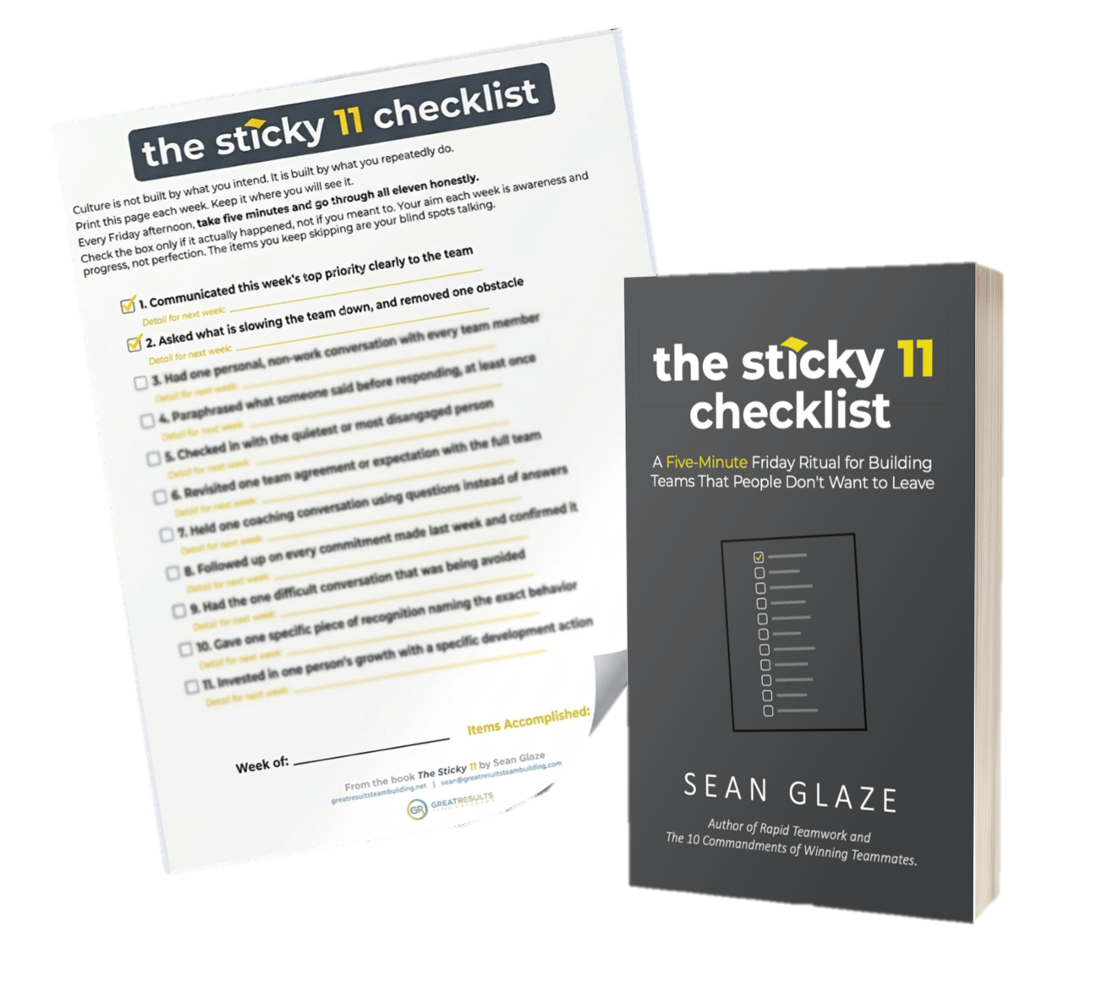
That gap is where neglect creeps back in, and it is not a motivation problem. It is a maintenance problem. It is why I built The Sticky 11 Leadership Checklist, a five minute Friday reflection that turns culture maintenance into eleven small questions you answer at the end of each week.
Did I make the priority clear?
Did I remove one obstacle?
Did I check on the quiet one?
None of those take long. But answering them every Friday is what keeps a culture from going stale without anyone noticing, because you catch the slip in week one instead of quarter three.
The Sticky 11 checklist is a synthesis of what I have taught across all four of my books, and you can download it free!
Culture is an investment too. Protect it like one.
Here is what I want you to walk away with. You would never buy expensive equipment and then refuse to maintain it. You would not hire great people and then ignore whether they can work together. Yet culture is the one investment leaders routinely leave to chance, and it is the one that decides the return on all the others.
A stale culture is not a life sentence. It is just a set of habits nobody has intentionally replaced yet. Choose to move each of those five symptoms one step toward GREAT and you will feel the shift long before it reaches the numbers.
Then it reaches the numbers too.
You do not inherit a great culture, and you do not keep one by accident.
You build it, and you maintain it, on purpose, one habit at a time.
Ready to stop the leak?
Sean Glaze is a leadership keynote speaker, team building facilitator, and author based in Atlanta, Georgia. His engaging 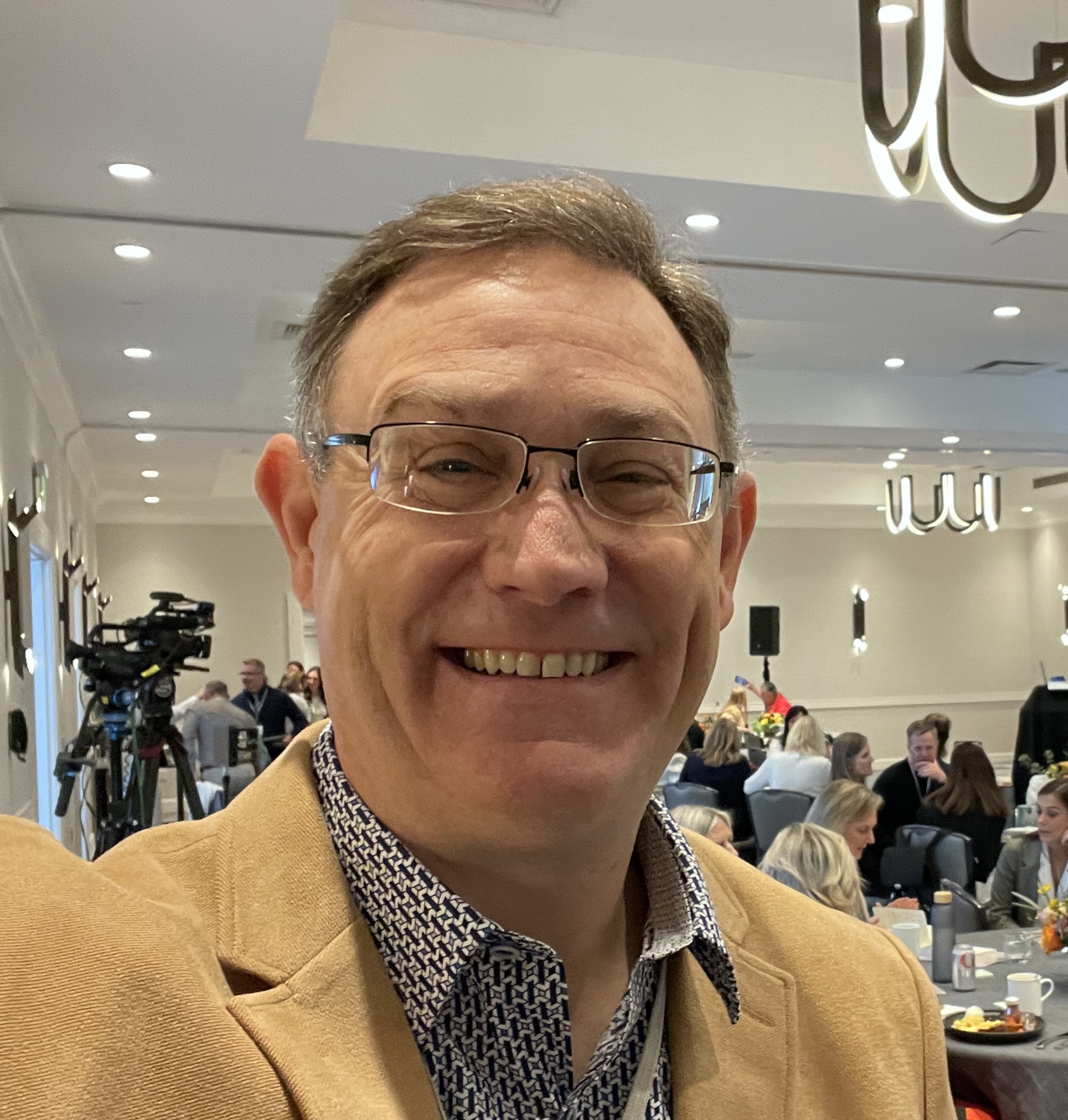 conference leadership keynotes and custom team building programs have helped clients like Cisco, John Deere, the CDC, and Emory University to increase collaboration, boost productivity, and build Sticky Cultures that inspire more profitable teamwork.
As a successful basketball coach, Sean gained valuable insights on turning talent into teamwork – and now travels around the country to share those lessons.
Sean’s books, Rapid Teamwork, What Effective Leaders DO, The 10 Commandments of Winning Teammates, and Staying Coachable are entertaining parables that accelerate the growth of leaders and teams!