

The fix for bad leadership is not a bigger brain.
It is a shorter list.
A surgeon and a Wharton professor arrived at the same answer from two completely different worlds, and once you see it, you cannot unsee it. It has nothing to do with charisma, and everything to do with what you actually do when it counts.
Let me introduce you to both of them.
First, the Surgeon
Atul Gawande is a surgeon and a writer. In The Checklist Manifesto, he tackled a problem that had nothing to do with talent. Surgeons are some of the most trained people on the planet. They are not failing because they lack knowledge.
They were failing, sometimes fatally, because in complex high pressure moments, smart and capable people skip steps they know by heart. Gawande’s answer was almost insulting in its simplicity. A checklist. A short list of critical items run at the same point every time.
The results were not small.
Hospitals that adopted his surgical checklist saw major drops in complications and deaths. The checklist taught the surgeons nothing new. It just made sure they did the things they already knew to do.
Then, the Professor
Michael Useem is a management professor at the Wharton School and one of the most respected voices on leadership in the country. He read the same landscape from the executive side and reached the same conclusion Gawande reached in the operating room.
In The Leader’s Checklist, Useem makes the case that leadership, like surgery, is a high stakes performance where good people skip the fundamentals under pressure. His argument is that the absence of a clear action checklist is one of the most correctable failures a leader has.
Sit with that phrase.
One of the most correctable failures. Not a talent shortage. Not a personality flaw. A correctable one. You fix it with a list, not a decade.
Why This Pairing Matters
When a surgeon in the operating room and a professor at Wharton independently land on the same fix, you should pay attention.
These are not two people repeating a trend.
These are two experts in totally separate fields, staring at high pressure human performance, and both concluding that the missing piece is not more knowledge. It is a reliable way to execute what you already know.
That is the whole ballgame for leaders.
I have watched brilliant managers with shelves full of leadership books still lose their best people, because knowing and doing live in different zip codes.
Under Pressure, You Do Not Rise. You Fall to Your Habits.
Here is the sports version I have watched play out a thousand times. The buzzer is about to sound, the game is on the line, and nobody suddenly becomes a better player than they were in practice. Under pressure, you do not rise to the occasion. You fall to the level of your habits.
Leadership works the same way. When the quarter is on fire and three people need something from you at once, you will not suddenly become a great communicator or a patient coach. You will default to whatever you do by habit. So the real question is not whether you know good leadership. It is whether you have built the habits, and whether you have a system that runs them for you when you are too busy to think.
This Is Exactly Why I Built the Sticky 11
I did not invent the checklist idea. Gawande proved it in surgery. Useem carried it into leadership. What I did was build the specific one for the manager who wants a stronger team and does not have time for another course.
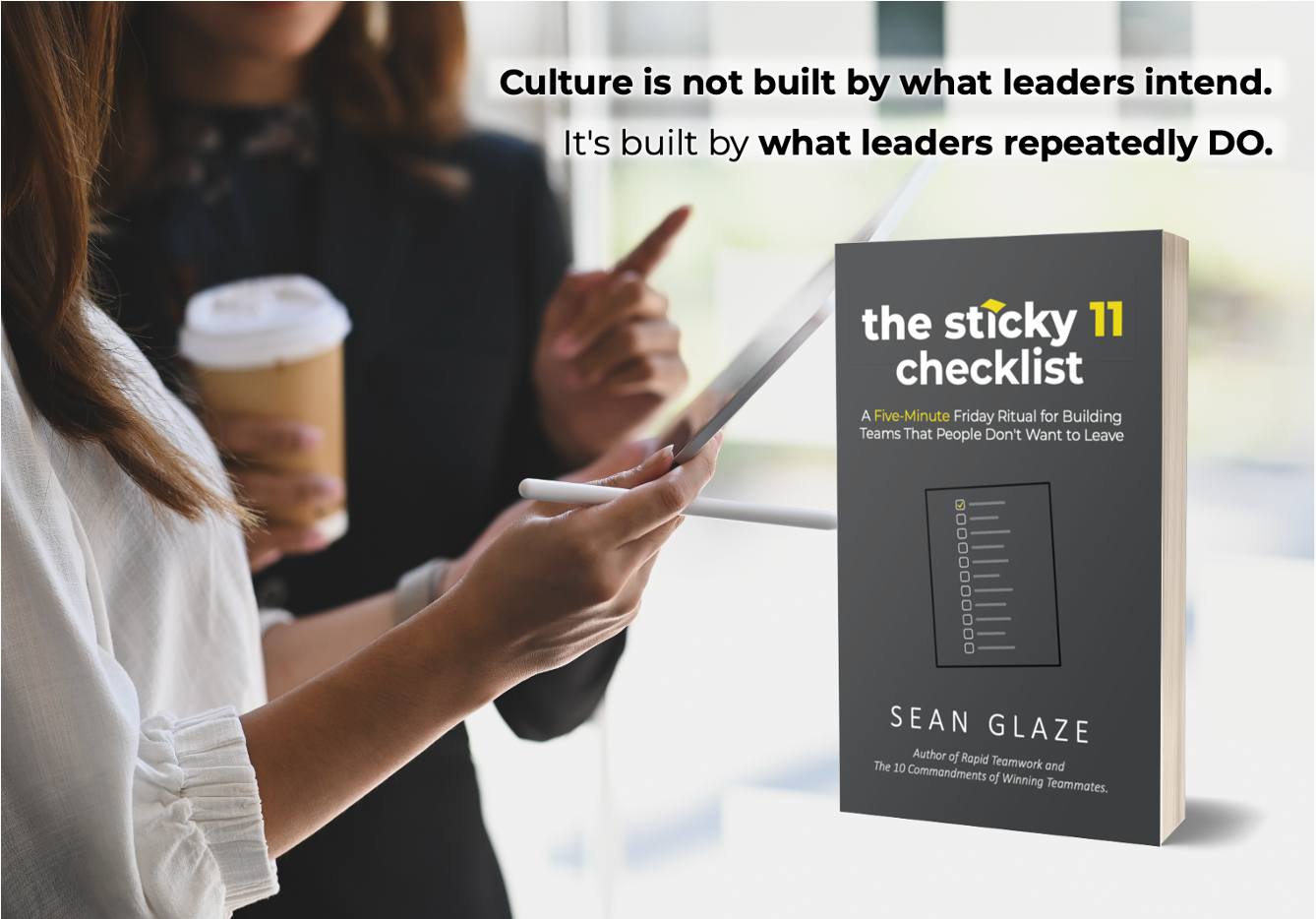
The Sticky 11 is a five minute Friday ritual. Eleven honest questions pulled from my four books, run at the end of every week. It does not teach you new leadership theory. It makes sure that when the week got loud, you still did the eleven things that keep a team together.
To be clear, Gawande and Useem validate the method, the checklist itself. They never saw my eleven habits and they do not endorse my list. What they proved is that the approach works. The eleven are mine, built from what I have taught teams for years.
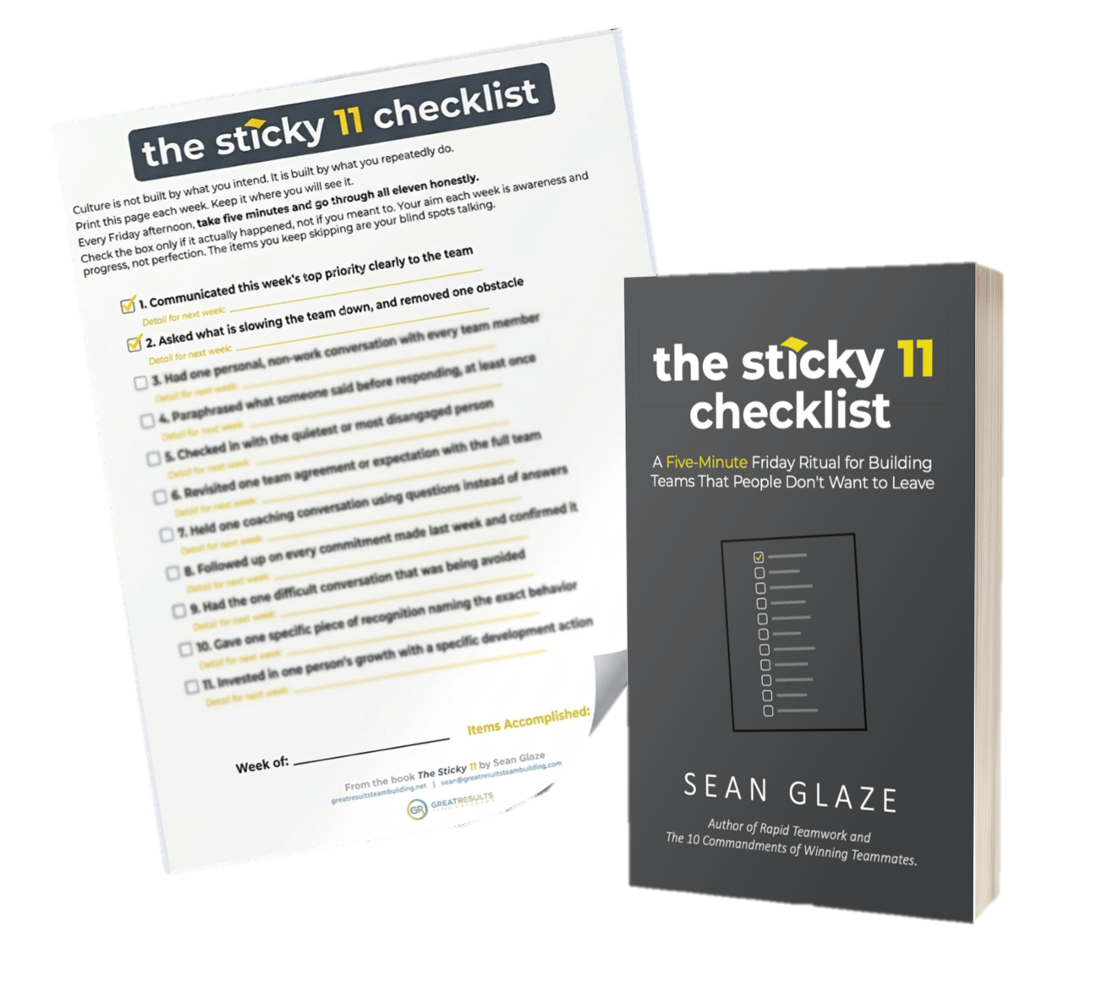
Want to try it? Download the free printable Sticky 11 leadership checklist
Run your first one this Friday.
And if you want your leaders to build these habits together in a room that actually changes how they show up on Monday, that is what I do.
– – – – –
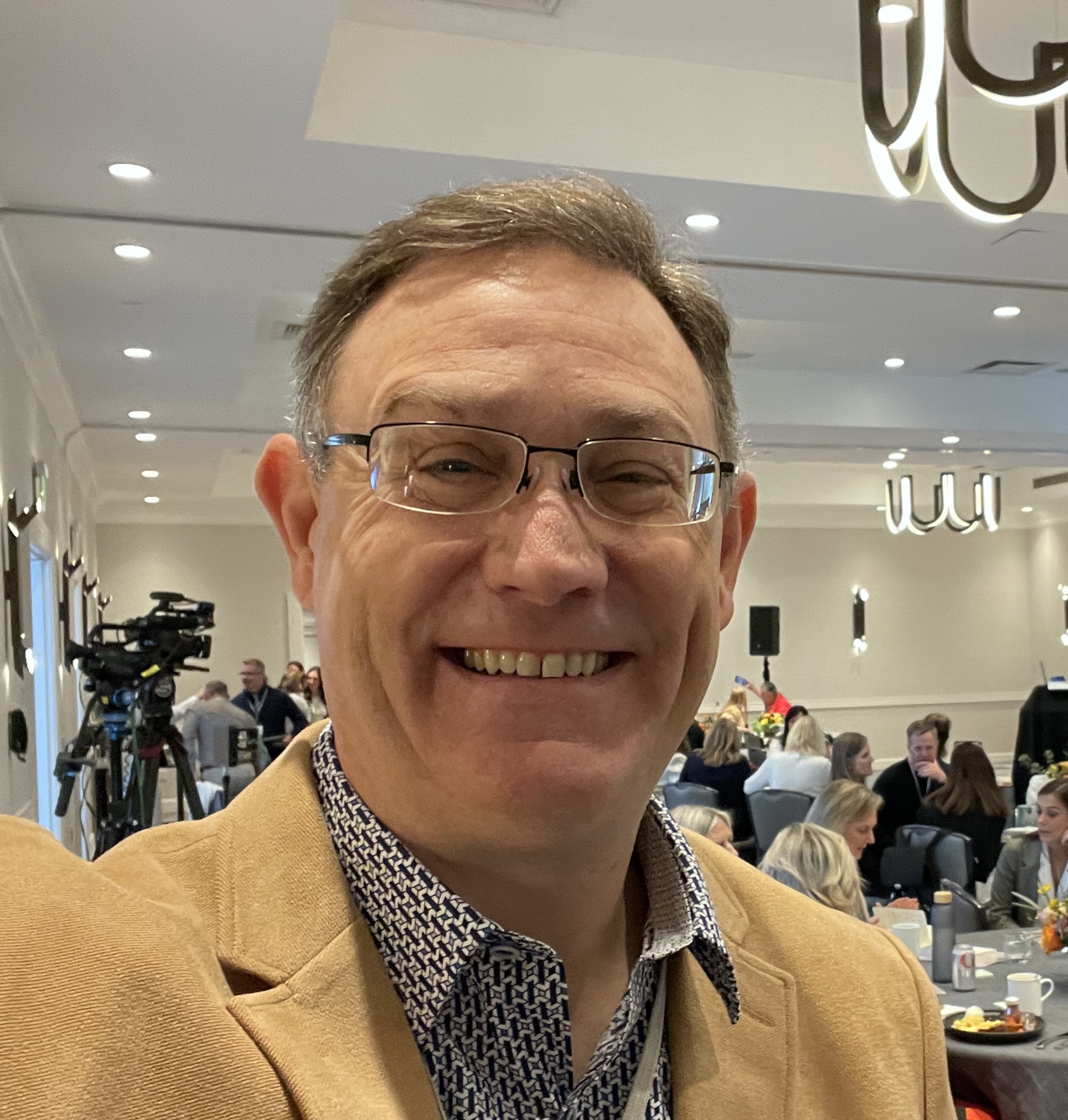 Sean Glaze is a sought-after leadership and workplace culture speaker, who gained valuable insights on turning talent into teamwork as a successful basketball coach – and now he travels around the country to share those actionable lessons.
Sean’s engaging conference leadership keynotes and custom team building programs have helped clients like Cisco, John Deere, the CDC, and Emory University to increase collaboration, boost productivity, and build Sticky Cultures that inspire more profitable teamwork.
Sean’s books, Rapid Teamwork, What Effective Leaders DO, The 10 Commandments of Winning Teammates, and Staying Coachable are entertaining parables that accelerate the growth of leaders and teams!