How to Plan a Company Offsite
That Actually Changes Behaviors
Why the Agenda Is the Last Thing You Should Build

Why the Agenda Is the Last Thing You Should Build
The short answer is that most company offsites are planned backwards.
The venue gets booked, the agenda gets filled, and someone is assigned to find an activity. In that order. The question of what the team should actually be able to do differently when they return to work on Monday is an afterthought, if it gets asked at all.
That sequence explains why so many offsites produce two days of good feelings and six months of the same friction, the same silos, and the same unresolved dynamics that were already there before everyone packed a bag.
An offsite that changes how your team works together is built in reverse.
You start with Monday morning.
What do you want to be true about how these people operate with each other after this experience that is not true today? Everything else, the venue, the structure, the activities, the speakers, and the debrief is designed in service of that answer.
Language shapes expectation.
When you call an event a retreat, you are telling your team, without meaning to, that they are stepping back. Retreating.
The word carries an energy of disengagement from the work, which is exactly what most offsites feel like once they are over.
The best team events I facilitate are designed as advances. An advance looks forward. It asks: where are we going as a team, and what do we need to be able to do together to get there? It surfaces the real friction and equips people with tools for navigating it. It ends with specific commitments, not vague inspiration.
The naming shift matters practically too.
When you introduce the event to your team as an advance, you set a different expectation about what the time together is for. People arrive prepared to work on something, not just to get away from work for two days.
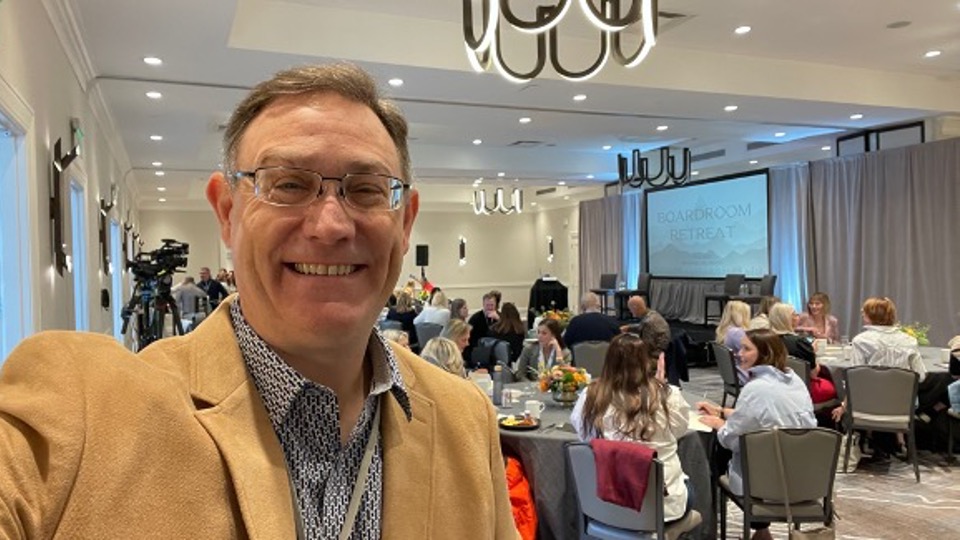
Before you book anything, you need to be honest about which level of experience you are actually trying to deliver. Most organizations budget for Level 1 or Level 2 and then expect Level 3 outcomes.
That mismatch is the root cause of most offsite disappointment.
|
Level |
What It Looks Like |
What You Actually Get |
|
Level 1: Entertainment |
Bowling, escape rooms, cooking classes, trivia nights |
Relaxation and social connection. People enjoy each other outside of work context. No lasting behavioral change. |
|
Level 2: Inspiration |
Motivational keynote, celebrity speaker, awards banquet |
Re-energized and re-committed. Inspiration often fades within two weeks without a structure to apply it. |
|
Level 3: Transformation |
Facilitated team development with structured debrief and specific application |
Real shifts in how people see each other and work together. Tools, shared language, and commitments that survive Monday morning. |
Level 3 costs more in planning, facilitation, and intentional design.
It also produces the only outcomes worth measuring.
People still laugh. The energy is high.
But something deeper happens: a team member finally understands why a colleague communicates the way they do, and two people who have been grinding against each other for a year decide publicly to do something different.
The research supports the investment.
According to Gallup’s 2024 State of the Global Workplace report, high-engagement organizations, the kind built through intentional connection and shared understanding, report 23 percent higher profitability and 51 percent lower voluntary turnover than their low-engagement counterparts.
A well-designed offsite is one of the highest-leverage investments an organization can make toward those numbers.
A manufacturing company came to me after two consecutive years of booking well-known motivational speakers for their leadership summit. Both events generated strong post-event survey scores. People enjoyed themselves.
The speakers were talented and engaging.
When they came back for year three, the HR director was candid: nothing had changed. The same managers who avoided direct feedback were still avoiding it. The same departments that operated in silos were still siloed. The energy from each speaker wore off within two weeks.
We redesigned the summit from the outcome backward.
Before I walked into the room, I had interviewed six team leads and identified three specific friction patterns that were costing the organization productivity and trust. Every activity on the day was designed to surface one of those patterns in a safe context, debrief it in a way that named the real dynamic, and produce a specific commitment from each leader about how they would operate differently.
The day included DISC-based communication work that explained why the engineering team and the sales team had been talking past each other for two years. It included a structured accountability exercise that gave managers a framework for having the direct conversations they had been avoiding. And it ended with each leader stating one public commitment in front of their peers.
Eight months later the HR director told me two things.
First, managers were still using the language from the session in their one-on-ones. Second, she had not lost a single person from the leadership team since the event. In the prior twelve months she had lost three.
After facilitating hundreds of these experiences, the same six elements separate the ones people still talk about years later from the ones that faded by the following Thursday.
A follow-up structure. The event plants the seed. Follow-up is the watering. Within 48 hours, leaders should ask each team member to share one takeaway and one commitment. Within two weeks, those commitments should be revisited in a team meeting. Within 30 days, someone should be asking what is actually different. Many offsites feel meaningful in the moment and produce little lasting change because organizers do not understand why bonding activities alone will not produce the behavior changes your offsite is designed to create. Without this structure, even the best offsite fades into memory.
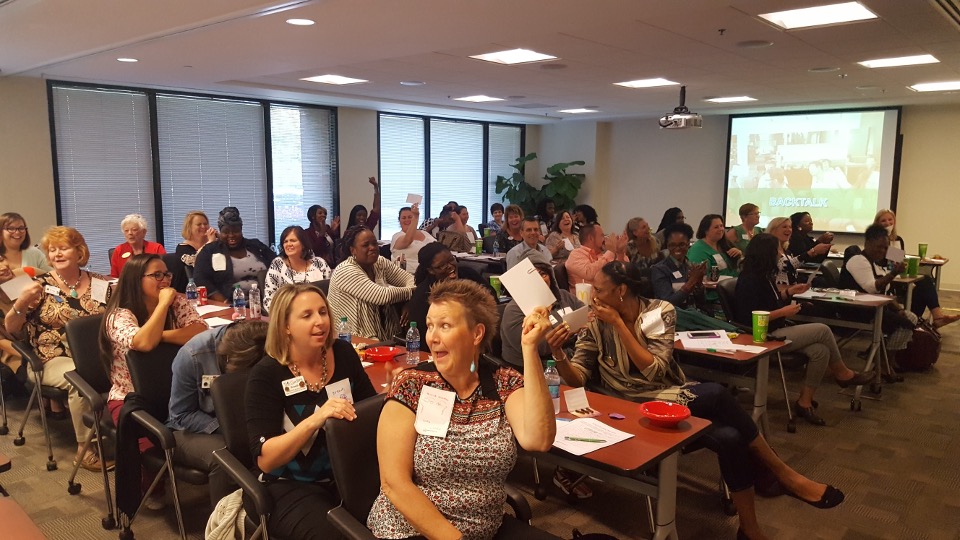
|
Timeline |
Action Items |
|
90+ days before |
Define the outcome in one sentence. Identify your facilitator or speaker. Reserve the venue. |
|
60 days before |
Send pre-event scouting questionnaire to team leads. Review results and begin customizing program design. |
|
30 days before |
Conduct pre-event attendee survey. Complete prep call with facilitator. Finalize agenda with specific activity debrief plans. |
|
1 week before |
Confirm all logistics: room setup, materials, technology, books or takeaways, arrival time for facilitator. |
|
Day of |
Facilitator arrives early to walk the room and set energy. Activities begin on time. Debrief follows every activity immediately. |
|
48 hours after |
Leader asks each team member for one takeaway and one commitment. Records responses. |
|
2 weeks after |
Team meeting references specific commitments made at the offsite. Leaders name what has changed. |
|
30 days after |
Optional check-in: what is different? What needs more attention? Consider a follow-up touchpoint. |
“I found it particularly helpful with the emphasis on accountability.
As a result of you being here, two employees that had never gotten along made a commitment to work together and be friendly and professional…”
– Chad Heupel, Branch Chief, CDC
Most offsites give people information. The best ones give people a mirror.
There is a meaningful difference between a team that has been told how to communicate better and a team that has watched themselves communicate in real time and seen exactly where it breaks down. The first creates awareness of a concept. The second creates awareness of themselves. Only one of those changes behavior.
This is why the activities you choose matter far more than most planners realize.
A low-stakes physical challenge with a high-stakes debrief can surface in twenty minutes what years of polite meetings have kept invisible: who actually listens when the pressure builds, who fills silence with control instead of curiosity, who checks out the moment they feel their idea was dismissed.
The activity is not the point. What the activity makes visible is the point.
When a skilled facilitator names that dynamic in the room, not as a criticism but as an observation, something shifts. People stop defending their habits and start examining them. That examination is the beginning of the behavior change your Monday morning will actually reflect.
You cannot schedule that kind of awareness. But you can design the conditions that make it possible. That is the real work of planning an offsite that changes your team.
Every offsite I design is structured around the five pillars of the G.R.E.A.T. culture model. When the day is built around this framework rather than a generic agenda, the experience produces culture change instead of entertainment.
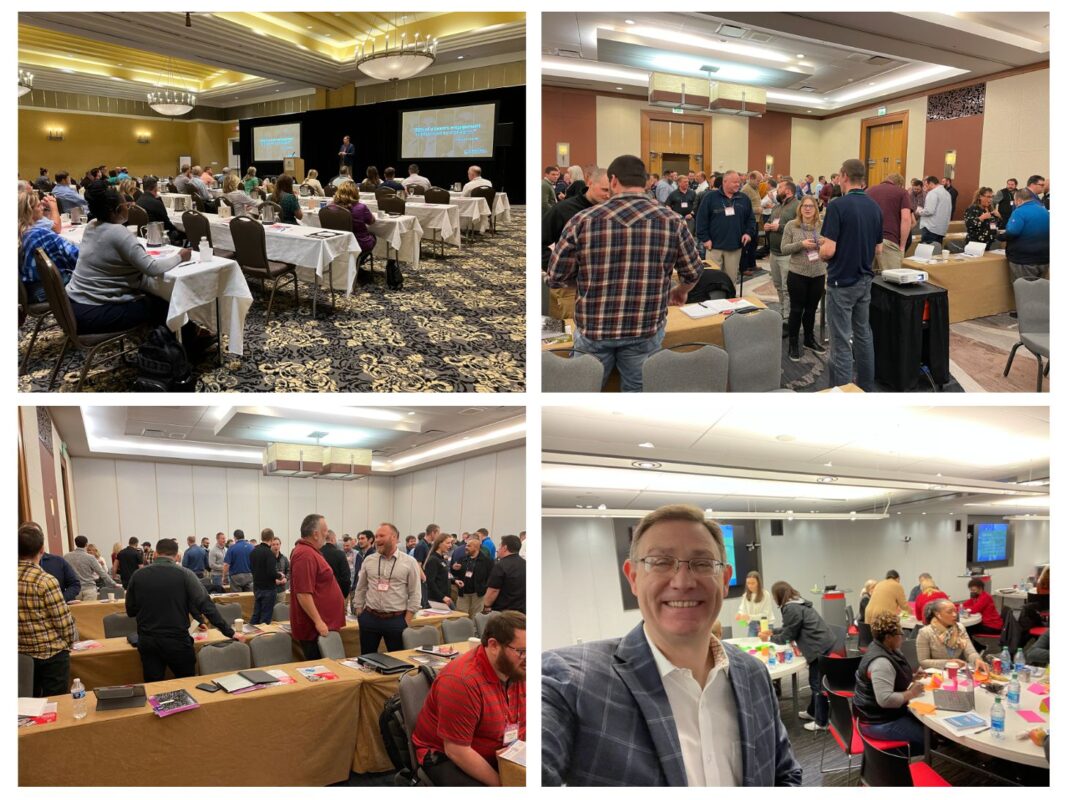
Start with the outcome, not the agenda. Define what you want to be true about how your team operates after the experience. Then work backwards to design activities, sessions, and discussions in service of that outcome. Book your venue and facilitator early, do pre-event discovery with team leads, conduct an attendee survey, and plan your follow-up structure before the event happens.
For groups of 50 or more, 90 to 120 days of lead time is ideal. This allows enough time for pre-event discovery, program customization, venue logistics, and attendee surveys. Shorter lead times are possible but compress the design process in ways that usually show up in the outcomes. Once the date of your offsite is clear, the most important programming decision you will make is how to choose a keynote speaker or facilitator to anchor the program in a way that the rest of the agenda reinforces.
A successful offsite has a clear outcome defined before the event, activities specifically designed to serve that outcome rather than fill time, a structured debrief after every activity, specific commitments captured before people leave the room, and a follow-up plan activated within 48 hours. Without all five elements, even well-produced offsites tend to fade quickly.
A retreat implies stepping back from the work temporarily for rest and recreation. An advance looks forward, asking what the team needs to be able to do differently as a result of the experience. The language shapes the expectation. An advance ends with tools and commitments. A retreat ends with memories.
At minimum: a stated outcome and opening alignment session, at least one activity designed to surface a real team dynamic, a full debrief of that activity that connects back to the real workplace, DISC or communication style work if the team has friction, and a closing commitment session. Every element of the agenda should connect to the outcome. If it does not, it is filling time.
Great Results Teambuilding offers half-day facilitated programs starting at $4,500 and full-day programs starting at $6,500, for groups of 8 to 800. All programs include a published book for every attendee. Programs are available in-person and virtually, and every session is customized based on pre-event discovery conversations.
A well-designed offsite does not just give your team a great day. It gives them a different Monday. Different conversations. A shared language for the dynamics that used to cause friction. Specific commitments from people who made them in front of their peers.
That is what transforms a team event from a budget line item into a genuine culture investment.
Great Results Teambuilding delivers intentional, facilitated programs for groups of 8 to 800. Every program is fully customized based on pre-event discovery. Every attendee receives a published book. Every debrief is designed to produce specific insights your team applies on Monday morning.
Past clients include Cisco, John Deere, the CDC, Emory University, Ecolab, Southern Company, the USPTO, and World Wide Technology – Over 100 client testimonials and 20 five-star Google reviews!
Ready to talk about your team?
Book a Call