So, Why Do Most Team Building Events Fail?
The Short Answer is that most team building fails for five predictable reasons:
-the activity is treated as the goal instead of the vehicle,
-there is no customization to the team’s actual dynamics,
-the facilitator lacks real credibility with the group,
-no shared language is created that people use afterward,
-there is no follow-through plan after the event ends.
.
Fixing one of these improves results. Fixing all five produces lasting behavior change.
.I have heard about it more times than I can count.
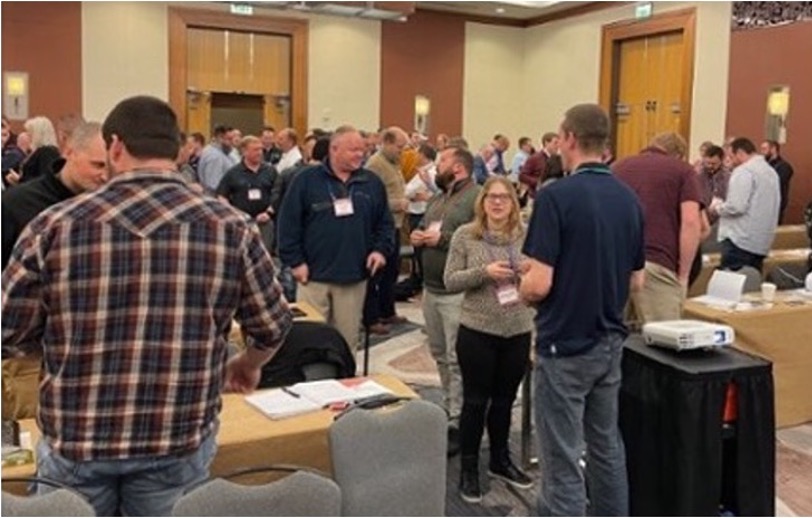
An HR leader books a team building event. The energy is high during the activity. People laugh, compete, and connect in ways they do not normally get to at work. The post-event survey comes back with strong scores.
Three weeks later, the team is back to the same communication patterns. Same silos. Same unspoken frustrations. The event was enjoyable. It changed nothing that mattered.
This is not a rare outcome.
It is the most common outcome in the corporate team building industry.
And it is not the fault of the team or even the organization. It is the predictable result of how most team events are designed, selected, and delivered.
After 20 years of coaching basketball teams and facilitating hundreds of corporate team programs for organizations including Cisco, John Deere, the CDC, and Emory University, I can tell you exactly why team building fails. More importantly, I can tell you what actually works.
Reason 1: The Activity Is the Goal
The single biggest mistake organizations make is treating the activity itself as the point of team building. Book the escape room, run the ropes course, play the trivia game. The activity happens.
The activity ends. Everyone goes home.
Nothing changes.
In a well-designed program, the activity is not the destination. It is a vehicle designed to create observable moments that a skilled facilitator can debrief into lasting insight.
Think about how coaches use practice drills. A good basketball coach does not run a three-on-two drill because the drill is interesting. The drill is designed to expose communication tendencies, reveal decision-making patterns under pressure, and create coachable moments the team can reference in a real game.
The debrief is the non-negotiable core of any team building experience. The activity creates the moment. The debrief creates the change.
When there is no debrief, or the debrief is shallow, the activity is just recreation. Fun, maybe. Memorable, sometimes. Transformational, never.
I spend as much time designing the debrief questions as I do selecting the activities themselves. What do I want people to discover about themselves? What blind spots do I want to surface? What shared language do I want them to walk away with? Those answers shape every facilitation decision.
Most vendors skip all of this. They deliver the activity and move on. That is why teams leave with memories instead of breakthroughs.
Reason 2: No Customization to Team Challenges
Most team building vendors sell a standardized product.
The same escape room, the same cooking class, the same program.
Every team gets the same experience regardless of whether they are a newly formed group, a team going through restructuring, a group with long-standing trust issues, or a high-performing team trying to reach the next level.
That approach is the equivalent of a doctor prescribing the same medication to every patient without a diagnosis. It might help some people. It will do nothing for others. And it occasionally makes things worse by creating a shared experience that reinforces existing dysfunction without naming it.
What Genuine Customization Actually Looks Like
Before I design any program, I conduct what I call a scouting report on the team. I survey attendees about their perceptions of communication, trust, and accountability. I have a detailed discovery call with the meeting planner. I ask the questions most facilitators skip because they already have their agenda set.
- What is the one thing this team does not talk about that everyone is thinking?
- Where does collaboration break down most often?
- What would success look like six months after this event?
- Is there a specific dynamic or relationship I should understand before I walk in?
The answers to those questions shape everything. The activities I choose, the stories I tell, the debrief questions I ask, the framework I emphasize. By the time the event starts, the content is not generic. It was built for that specific room.
No two programs I deliver are identical. Because no two teams are identical.
Reason 3: The Facilitator Lacks Real Credibility
Here is an uncomfortable truth about the team building industry:
A significant portion of it is staffed by people who have never actually led a team through adversity.
They have trained in facilitation techniques. They know how to run activities. But when a participant pushes back, when the room gets honest and uncomfortable, when someone says this does not apply to us, they do not have the depth to respond effectively.
The activity itself matters far less than most organizations assume, which is why it is worth understanding the role a skilled facilitator plays in producing real outcomes from any team experience
Real credibility in a facilitation room comes from having been there. From having stood in front of people who did not want to be told what to do, who questioned your authority, who tested your conviction, and from having earned their trust anyway.
I spent 20 years coaching basketball before I ever facilitated a corporate event. I turned around programs where players actively resisted the culture I was trying to build. I had seasons where everything I tried seemed to fail before something finally clicked. Those hard-earned lessons are what make my facilitation credible when a skeptical VP or an experienced engineer pushes back.
When I talk about accountability, I am not citing a framework from a book. I am drawing from specific moments where accountability saved a team and where the lack of it destroyed one. Participants can feel the difference between theory and experience. That difference determines whether they lean in or tune out.
Reason 4: No Shared Language Afterwards
One of the most powerful things a team building program can deliver is a shared language.
A set of words, concepts, and frameworks that team members can use to navigate their dynamics more honestly and effectively long after the event ends.
The DISC animal personality types framework is a perfect example of this. When a team completes a DISC workshop, they walk away knowing that their colleague who always pushes for an immediate decision is a Lion doing what Lions do, not a difficult person trying to derail the meeting. They understand that their teammate who needs time to process information before committing is a Beaver, not someone dragging their feet.
When a team has a shared language for their differences, conflict becomes information instead of a threat.
That shared language changes real conversations. Three months after a good DISC workshop, teams are still using phrases like you know how the Otters are in a planning meeting. That kind of shorthand keeps the lessons alive in the daily work of the team.
Most team building experiences produce no shared language. They produce a shared memory. Memories fade. Language compounds. That is the difference between entertainment and development.
Every program I design is built around at least one framework the team can carry forward. Whether it is the G.R.E.A.T. culture model, the animal personality system, the concept of winning teammates, or the four questions in Staying Coachable, participants leave with a lens they can apply the following Monday morning.
Reason 5: No Follow-Through Plan
Even the best team building experience fades without intentional reinforcement.
This is not a failure of the experience itself.
It is a failure of follow-through. And it is predictable enough that skilled facilitators build a reinforcement structure into the design before the event ever happens.
The event plants the seed. Follow-up is the watering. Without it, even the most powerful session becomes a fading memory within 90 days.
A Practical Follow-Through Framework
- Within 48 hours: Have each team member share one takeaway and one personal commitment in your team channel or at your next meeting
- Within two weeks: Revisit those commitments out loud. Ask what has been different. Name it.
- Within 30 days: Ask each person one question. What is one behavior you have changed based on what you learned? The act of asking keeps the accountability alive.
- Within 90 days: Consider a follow-up session to deepen the work, reinforce the language, and address dynamics that have shifted since the original event.
Every attendee in my team building event programs receives a published book as a take-away. Not because books are nice giveaways. Because a book is a reference. It is something people keep on their desk, lend to a colleague, and come back to when a specific challenge resurfaces months later. No other team building provider includes this.
A Real Client Example: From Fun to Lasting Change
Michelle Lapino, VP of Operations at The Honey Pot Company, captured this distinction clearly after her team’s program:
“Sean’s ability to listen to our needs and translate them into a program that was both simple and impactful made a significant difference for our team. The session was engaging and provided practical insights that extended beyond the event. With a thorough post-event debrief and actionable steps for reinforcement, I can see a clear path to take the learnings from our event and effectively integrate them into our daily work.”
Notice the specific elements she cited…
Listening first. Translating into a customized program. A thorough debrief. Actionable steps for reinforcement.
Those are not accidents. They are the direct result of avoiding the five failure patterns described above.
The 3 Levels of Team Building Investment
Not every organization is ready for the same level of investment. Here is a simple framework for understanding where you are and what makes sense.
Level 1: Recreation
Escape rooms, bowling, cooking classes, scavenger hunts. The goal is enjoyment, morale, and shared memory. There is no facilitation, no debrief, and no expectation of behavior change. This is the right choice when your team is healthy and you are celebrating or rewarding people.
Level 2: Facilitated Experience
A half-day or full-day program with structured activities, expert facilitation, a meaningful debrief, and a shared framework. The goal is specific behavior change around communication, accountability, or collaboration. This is the right choice when your team has real dynamics to address and you want lasting impact.
Level 3: Sustained Culture Development
An ongoing investment that includes a kickoff program, follow-up sessions, coaching integration, and reinforcement tools. The goal is sustained culture change that compounds over time. This is the right choice for organizations serious about building a high-performing culture as a competitive advantage.
Most organizations live at Level 1 while hoping for Level 2 results.
The gap between what they invest and what they expect is where team building most often fails.
“Team Building Is The Most Important
Investment You’ll Make”
– Forbes Magazine
What Actually Creates Lasting Behavior Change
After facilitating hundreds of programs across industries including corporate, healthcare, government, education, and manufacturing, here is what I have consistently seen produce real, lasting change.
Element |
What It Does |
What Happens Without It |
Pre-Event Discovery |
Customizes content to real team dynamics |
Generic program, minimal relevance |
Skilled Facilitation |
Surfaces blind spots and names dynamics honestly |
Activities with no lasting insight |
Structured Debrief |
Connects activity to real workplace behavior |
Fun experience that fades in days |
Shared Language |
Gives teams vocabulary for ongoing conversations |
No reference point after the event |
Behavior Framework |
Provides tools people apply on Monday morning |
Inspiration without application |
Take-Away Resource |
Extends learning weeks and months post-event |
Nothing to reference or reinforce |
Follow-Through Plan |
Sustains momentum beyond the event day |
Energy spike followed by return to baseline |
The G.R.E.A.T. Framework:
What Lasting Culture Actually Requires
The reason I built the G.R.E.A.T. culture model is that I kept seeing the same five gaps in organizations that struggled to sustain real culture improvement.
A single team building event addresses some of these gaps in the moment. Sustained culture work addresses all five over time.
- G is for Goals: Shared clarity on what the team is working toward and why. Most teams assume alignment. Ask 10 people on the same team their top priority and you will often get 7 different answers.
- R is for Relationships: Genuine human connection beyond professional courtesy. Teams that know each other as people collaborate better, conflict less, and recover from setbacks faster.
- E is for Expectations: Alignment on the unspoken rules that govern how the team actually operates. Most workplace conflict comes from misaligned, unspoken expectations.
- A is for Accountability: Peer ownership of results built on trust and care, not fear and punishment. When people hold each other accountable, it is because they respect each other and the shared goal.
- T is for Thanks: Specific, consistent recognition that makes people feel seen and valued. People who feel unseen disengage. Disengaged people leave.
Team building that fails addresses none of these systematically.
Team building that works addresses all five with intentional design, skilled facilitation, and consistent follow-through.
Frequently Asked Questions
Why do most team building activities fail to create lasting change?
The five most common reasons are: treating the activity as the goal instead of a vehicle for insight, no customization to the team’s actual challenges, a facilitator who lacks real credibility, no shared language created during the program, and no follow-through plan after the event ends. One of the most common reasons organizations see no lasting change is because escape rooms and recreational outings are not team building, no matter how much fun the team has in the moment
What type of team building has the highest ROI?
Facilitated programs with pre-event discovery, structured debriefs, shared frameworks, and follow-through plans consistently outperform recreational activities on lasting impact. Before you can choose the right program, it helps to understand what separates bonding from actual team development. Forbes reports that 86 percent of workplace failures stem from poor collaboration and communication. Programs designed specifically to address those root causes deliver the highest return.
How do you know if a team building event actually worked?
Apply the Monday Morning Test. If people go back to their desks and nothing is different, the event failed. The same communication patterns, the same silos, the same tensions. Passing the Monday Morning Test means people are having different conversations, referencing shared frameworks, and applying new behaviors in their actual work.
What is the difference between team bonding and team development?
Team bonding creates connection and shared experience. It is valuable and should happen regularly. Team development addresses the specific communication, accountability, and collaboration gaps that limit performance. Both matter. Confusing one for the other is where most organizations go wrong.
How long does it take to see results from team building?
Skilled facilitators design for immediate application. Participants should leave with specific tools they can use the following week. Sustainable behavior change compounds over 30 to 90 days with intentional follow-through. Organizations that invest in one event and do no follow-up see results fade. Organizations that treat it as the beginning of a culture investment see it compound.
Ready to Invest in a Team Building Program
That Actually Changes Awareness & Behaviors?
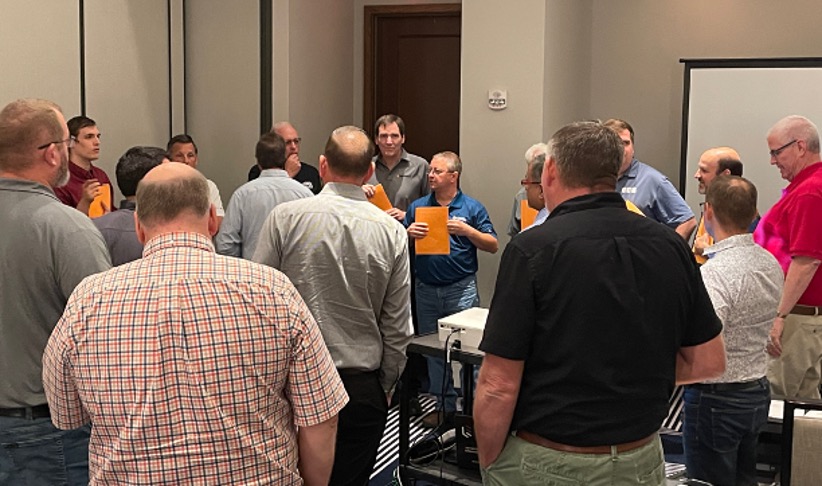
Great Results Teambuilding delivers intentional, facilitated programs for groups of 8 to 800. Every program is fully customized based on pre-event discovery. Every attendee receives a published book. Every debrief is designed to produce specific insights your team applies on Monday morning.
Past clients include Cisco, John Deere, the CDC, Emory University, Ecolab, Southern Company, the USPTO, and World Wide Technology – Over 100 client testimonials and 20 five-star Google reviews!