So, What Actually Changes Behavior Back at Work – Team Building Workshops or Escape Rooms?
The Short Answer is that escape rooms are excellent for short-term entertainment.
They are not designed to produce lasting workplace behavior change.
A facilitated team building workshop is designed specifically to improve communication, accountability, and collaboration back at work through structured activities, skilled debriefing, and shared frameworks people carry forward on Monday morning.
If fun is the goal, book a recreational activity.
If behavior change is the goal, book a facilitated workshop.

.
Most organizations have done both.
They have booked escape rooms, done the cooking classes, sent everyone bowling. The energy is great. The post-event survey looks good. And then three weeks later, the team is back to the same communication patterns, the same silos, the same unspoken frustrations.
That is not a coincidence. It is the predictable result of confusing recreation with development.
I have spent 20 years facilitating teams, first as a basketball coach turning around underperforming programs, then as a corporate facilitator working with organizations from Cisco and John Deere to the CDC and Emory University. The single most important thing I can tell any leader considering a team event is this: the activity is not the point.
The debrief is the point.
And most recreational activities have no debrief at all.
Why Organizations Get This Wrong
The team building industry is flooded with options that look like team building but function as entertainment.
Escape rooms, ropes courses, cooking classes, scavenger hunts. These are marketed as team building experiences, and they genuinely feel that way in the moment. People collaborate, laugh, and connect in ways they do not normally get to at work.
But here is the honest question to ask after any team event: what did your team learn about themselves?
Did anyone discover why they tend to dominate conversations under pressure, or why they shut down when conflict arises?
Did anyone gain a language to understand why their colleague always needs more time before committing?
Did anyone leave with a specific framework they can reference next Tuesday when a meeting gets tense?
An escape room teaches your team how to solve a fictional puzzle. A team building workshop teaches your team how to solve each other.
That is the difference between Team Bonding and Real Team Development.
Ad that distinction is everything. Not the room, not the activity, not even the energy level. It is what people learn about themselves and each other, and what they carry back to the work that actually matters.
What Escape Rooms Actually Do Well
Let me give credit where it is due, because the answer is not that escape rooms are bad. They serve a real purpose.
- They create a shared experience and temporary connection across team members who rarely interact
- They reduce formality and loosen up reserved team members in a low-stakes environment
- They generate memorable shared stories that become conversation starters
- They are easy to plan, predictably fun, and require no pre-event preparation from the meeting planner
If your team has strong communication, high trust, and the goal is celebration or morale after a good quarter, a recreational activity is a perfectly reasonable choice. You are not trying to fix anything. You are rewarding people and creating shared enjoyment.
The problem is when organizations use recreational activities as a substitute for development. When there are real communication problems, real accountability gaps, real cultural friction, and the response is to book something fun and hope it transfers. It rarely does.
A Real Client Example
Ray Mashburn, Executive Director at Waikato Enterprises, reached out after experiencing this difference firsthand. His organization had tried other team events before booking a facilitated workshop with me. Here is what he said three weeks after the event:
“Sean comes as advertised. Even in talking to him pre-event in a Zoom call, it was evident his profile matched his personality, acumen, and ability to deliver. Three weeks post event and a large section of our team is still talking about Sean and the event. They want him back, already. But it is not just him they talk about. They continue to talk about the details they learned about in the event. Sean’s ability to deliver the messages with key phrases has given us a reference in our everyday communications to continue working on becoming better teammates.”
That phrase, a reference in our everyday communications, is exactly what the Debrief Ratio produces. Shared language. Named frameworks. A vocabulary the team reaches for when real dynamics emerge at work.
An escape room does not produce that.
A well-facilitated workshop does
Side-by-Side Comparison
Here is an honest comparison across the dimensions that matter most to organizations investing in their people.
|
Dimension |
Escape Room |
Facilitated Workshop |
|
Primary Purpose |
Entertainment and short-term bonding |
Behavior change and team development |
|
Customization |
None. Same for every team. |
Fully customized to your challenges and goals |
|
Facilitation Depth |
Game master manages the activity |
Expert facilitator debriefs behavior and dynamics |
|
What People Learn |
How to solve a fictional puzzle together |
How to understand each other and communicate better |
|
Shared Language Created |
None |
Frameworks and vocabulary used for months after |
|
Lasting Impact |
A shared memory that fades |
Behavior change that compounds over time |
|
Monday Morning Test |
Fails. Nothing changes at work. |
Passes. People apply tools immediately. |
|
Take-Away |
A photo and a time score |
A published book and practical frameworks |
|
Best For |
Celebration, morale boost, bonding |
Communication, accountability, culture change |
“Team Building Is The Most Important
Investment You’ll Make”
– Forbes Magazine
The Debrief Ratio: Why the Activity is NOT the Point
Here is a concept I call the Debrief Ratio.
In a well-designed team building workshop, the quality of the debrief matters more than the quality of the activity itself. I would rather run a simple activity with a powerful debrief than a spectacular activity with no debrief at all.
The activity creates the moment.
The debrief creates the change.
When I facilitate “Welded Ankles” with a corporate group, participants are not just completing a challenge. They are surfacing, in real time, how their communication tendencies create bottlenecks for their teammates.
A Lion-style personality who drives hard toward the finish line without reading the room.
A Retriever is concerned about safety and the experience of others.
A Beaver who needs the full set of detailed strategy before they move.
An Otter who is focused on who is having fun instead of the next step.
The activity makes these dynamics visible. The debrief makes them named, understood, and actionable. That is what changes how people work together on Tuesday morning.
Escape rooms have no debrief. They have a score.
Those are not the same thing.
Most recreational team activities function the same way. The experience ends, everyone applauds or groans depending on the outcome, and then people go to lunch. Nothing gets named. Nothing gets examined. Nothing transfers to the work.
The escape room problem is really just one example of a much larger issue, which is why most team building fails even when employees enjoy it and feedback scores are high.
Choose an Escape Room If…
- Your team has strong communication and trust, and the goal is celebration or reward
- You are onboarding new team members and want a low-stakes way to mix people
- Morale is the primary need and there are no significant communication or accountability gaps to address
- Budget is very limited and a brief, fun shared experience is the best available option
- The event is clearly positioned as recreation, not development
Choose a Facilitated Workshop If…
- There are communication breakdowns, silos, or recurring friction on your team
- You want people to understand different personality styles and why conflicts actually happen
- Accountability is inconsistent and you want to address it in a constructive, structured way
- You are building a new team or navigating transition and need people to connect quickly and deeply
- You want something people are still talking about and applying three months from now
- You want every attendee to leave with a practical resource they can reference long after the event
What the Best Facilitated Workshops Include
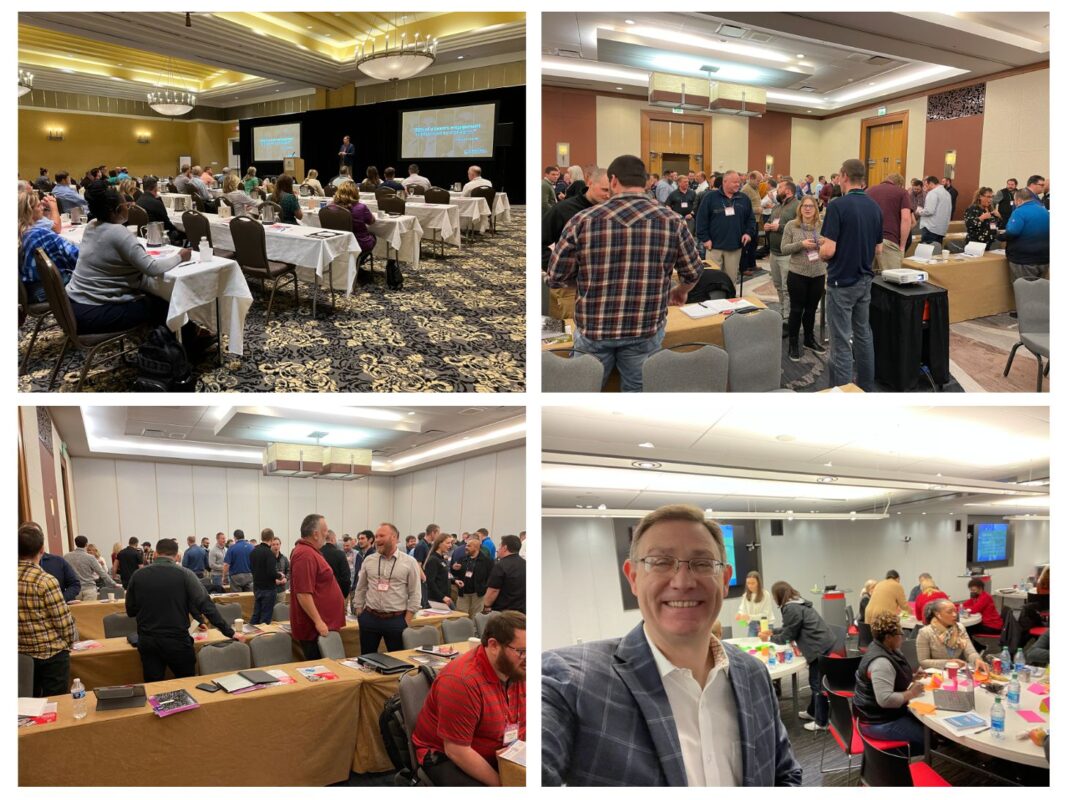
Not all facilitated team building workshops are created equal. Here is what separates a program that produces lasting change from one that is just a more expensive version of an escape room.
Pre-Event Discovery
Before designing anything, a skilled facilitator surveys attendees and conducts a discovery call with the meeting planner. What is the one thing this team does not talk about that everyone is thinking? Where does collaboration break down most often? What would success look like six months from now? The answers shape every facilitation decision.
Intentional Activity Sequence
Activities are chosen and sequenced to surface specific dynamics in a specific order. Trust before accountability. Self-awareness before peer awareness. The activity sequence is a curriculum, not a playlist.
Expert Facilitation and Debrief
The facilitator’s job is not to entertain the room. It is to observe what is actually happening, name it honestly, and draw out the insights people are thinking but not saying. That requires real experience leading teams, not just training in facilitation techniques. The debrief is the mechanism that converts experience into awareness, and understanding what a facilitator brings that a recreational vendor never can is what helps you choose the right program for your team
A Shared Language People Keep Using
The best programs give teams a vocabulary they use after the event. The G.R.E.A.T. model. The animal personality framework. The concept of winning teammates. When a team shares a language, their conversations change. Frustration becomes information. Differences become understood tendencies instead of personal affronts.
A Take-Away That Outlasts the Day
Every attendee in my programs receives a published book. Not a branded notebook or a certificate. An actual book they keep on their desk, reference in meetings, and lend to colleagues. The event plants the seed. The book extends the roots.
Frequently Asked Questions
Are escape rooms a good corporate team building activity?
Escape rooms are excellent for short-term entertainment, informal bonding, and celebrating a team after a successful stretch.
They are not well-suited for addressing communication breakdowns, accountability gaps, or cultural friction. Use them for recreation. Use a facilitated workshop for development. If you are moving away from recreational formats and looking for something with measurable impact, exploring team building activities that actually improve performance gives you a practical framework for evaluating your options.
How long should a team building workshop last?
Half-day programs are ideal for most corporate groups.
They allow enough time for multiple activities, meaningful debriefs, and a shared framework without consuming a full working day. Full-day programs go deeper and are best for teams navigating significant challenges or transitions. Keynote programs can be delivered in 60 to 90 minutes for conference settings.
What makes team building actually effective?
Three things: customization to the team’s specific dynamics, skilled facilitation with a structured debrief, and a shared language or framework people carry forward. Without all three, even a well-intentioned event produces minimal lasting impact.
What is the ROI of a facilitated team building workshop?
Forbes reports that 86 percent of workplace failures stem from poor collaboration and communication.
The cost of replacing one disengaged employee ranges from 50 to 200 percent of their annual salary. A single facilitated program that improves communication and reduces turnover risk by even one person typically pays for itself many times over.
How is a facilitated workshop different from a motivational speaker?
A motivational speaker inspires. A facilitator transforms.
Inspiration is valuable and fades within days without a framework to act on it. A skilled facilitator creates structured experiences that produce specific insights, gives teams a shared language, and builds a debrief that connects the activity to the actual dynamics in that room.
Ready to Invest in a Team Building Program
That Actually Changes Awareness & Behaviors?
Great Results Teambuilding delivers intentional, facilitated programs for groups of 8 to 800. Every program is fully customized based on pre-event discovery. Every attendee receives a published book. Every debrief is designed to produce specific insights your team applies on Monday morning.
Past clients include Cisco, John Deere, the CDC, Emory University, Ecolab, Southern Company, the USPTO, and World Wide Technology – Over 100 client testimonials and 20 five-star Google reviews!