
The short answer – If your team is dealing with real communication problems, friction between departments, a culture that has drifted from where it needs to be, or a group that has never quite gelled, you need a facilitator. Not a motivational speaker.
A motivational speaker delivers content to your audience.
A facilitator draws insight and awareness out of them.
Those are fundamentally different experiences with fundamentally different outcomes. A great motivational speaker can charge a room. A great facilitator can change one.
That is not a knock on motivational speakers.
They serve a real purpose. Annual conferences, awards banquets, kickoff events, and gatherings where the goal is alignment and energy are exactly the right context for a polished, high-energy keynote. But when your team walks back into the office Monday and the same unresolved tension is still sitting there, inspiration was never going to fix that.
Only a facilitated experience that surfaces the real issues, shifts how people see each other, and produces tools for working together differently has any chance of moving the needle.
The question is not which option is better in the abstract.
The question is which one your team actually needs right now. This page will help you answer that honestly.
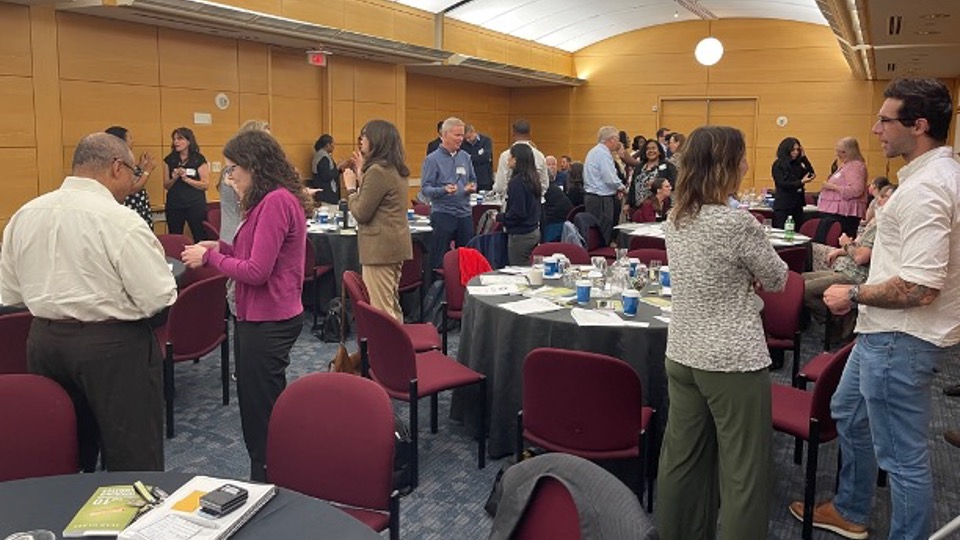
Motivation fades by Tuesday. Facilitated awareness and tools last for years.
The difference is whether someone tailored the program and asked your team the right questions… or just gave them an entertaining set of generic answers.
What Most Organizations Get Wrong When Booking a Speaker
Here is the most common mistake I see event planners and HR leaders make: they book a speaker when they actually need a facilitator. And the reason it keeps happening is that a motivational speaker is easier to evaluate in advance.
You can watch a demo reel. You can read a speaker bio.
You can check testimonials from other conferences.
The product is predictable and the outcome is measurable in real time. The room gets energized, the feedback surveys come back positive, and the event feels like a success.
But two weeks later, when you ask a manager what changed on their team, the honest answer is usually nothing. Not because the speaker was bad. Because inspiration without a practical framework to apply it is like a spark without fuel. It flares and disappears.
Facilitation works differently. A skilled facilitator does not walk in with a polished deck and a set speech. They walk in having already interviewed your team leads, identified the real pressure points, and designed an experience specifically for this group, in this moment, dealing with these challenges. The content that matters most does not come from the stage. It comes from the room.
That is a harder thing to evaluate in a demo reel.
It is also why organizations that have experienced real facilitation rarely go back to motivational speakers alone for team events. They have felt the difference.
“If I can ask you a question and you generate the answer yourself, the odds increase substantially.”Michael Bungay Stanier, author of The Coaching Habit |
That quote captures the core distinction precisely.
The distinction between a facilitator and a speaker matters most in the context of team experiences, and it explains why most team building fails when facilitation is treated as optional and the debrief gets cut from the agenda.
The insights that change behavior are the ones people arrive at themselves. A great facilitator creates the conditions for that to happen.
A speaker, however gifted, cannot manufacture it from a stage.
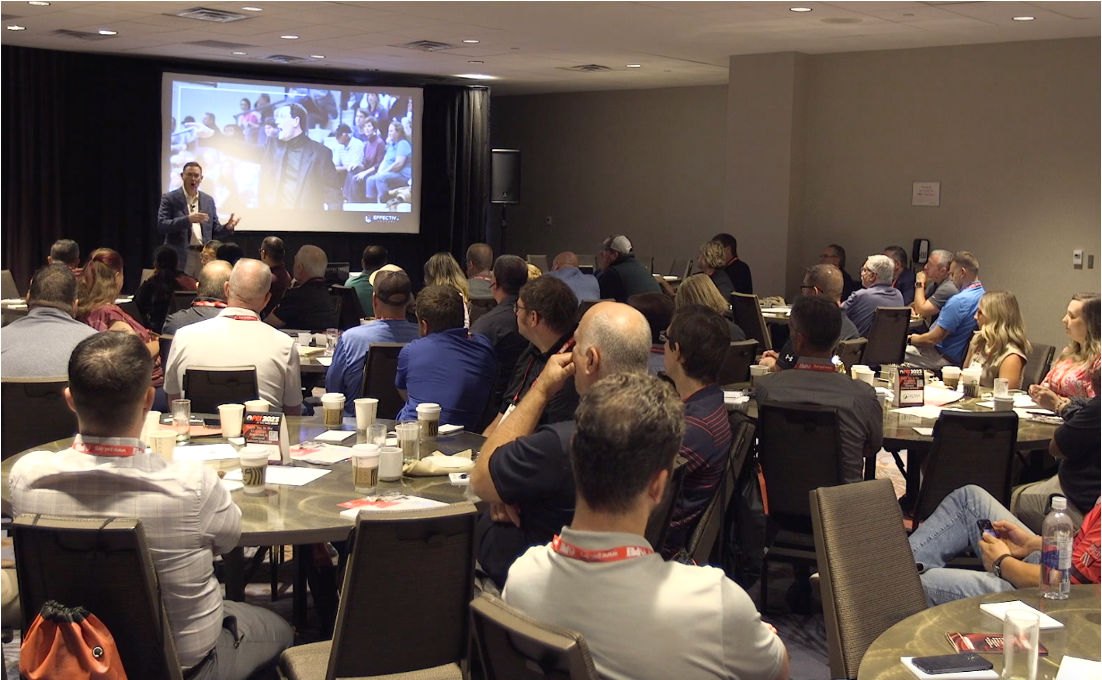
The Three Levels of Team Events: Where Are You Trying to Land?
Not every team event needs to produce transformation. Sometimes you genuinely just need people to relax and reconnect. Sometimes you need to send a group into a new year energized and re-committed.
And sometimes you need something to actually shift how your team operates. That is why you should not search for a team building facilitator near me – you search for the person who can accomplish the goals of the event!
I think about team events in three levels, and understanding which level you are aiming for is the most important decision you make before you book anything.
|
Level |
Type |
Examples |
What You Get |
|
Level 1 |
Entertainment |
Escape rooms, bowling, trivia nights |
People relax and have fun together |
|
Level 2 |
Inspiration |
Motivational speaker, celebrity keynote |
People feel energized and re-committed |
|
Level 3 |
Transformation |
Facilitated team development with debrief |
People change how they see and work with each other |
Most organizations spend their budget on Level 1 and Level 2 and then wonder why nothing changes. Level 3 events cost more in time, planning, and attention.
They require a facilitator who has done the pre-work to understand your team’s actual challenges.
They demand that someone in your organization is willing to let the conversation go where it needs to go, even if that is uncomfortable.
But Level 3 is the only level where people walk out having genuinely changed how they see their teammates. It is the only level where the investment shows up in behavior six months later. And it is the only level where a team member who was dreading the event walks out telling their manager it was the best team experience they have ever had.
I hear that specific sentence after almost every facilitated program I run. It does not happen after escape rooms. It does not happen after most keynotes. It happens when people feel genuinely seen, when they understand something about their teammates they did not understand before, and when they leave with a shared language for the differences that were always there.
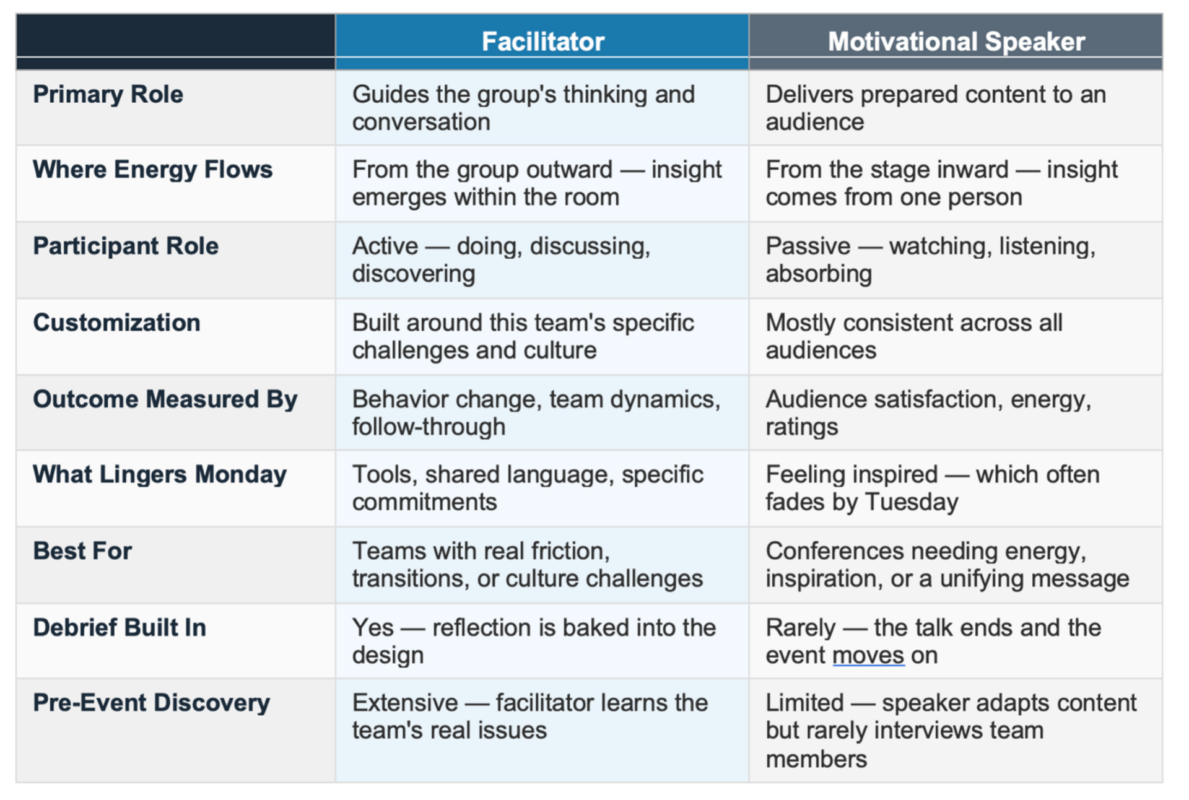
Facilitator vs Motivational Speaker: A Direct Comparison
Which One Does Your Team Actually Need?
A Decision Guide
|
Book a Facilitator When… |
Book a Motivational Speaker When… |
|
Your team has real friction, conflict, or communication breakdowns |
You need to open a conference or annual meeting with energy and momentum |
|
You are planning an offsite or leadership retreat with specific culture goals |
You want a high-profile name to draw attendance to an event |
|
You want people to leave with tools they can use the following week |
You want to recognize achievement and send your team into the new year inspired |
|
You need a customized experience built around your team’s actual challenges |
You have a broad, mixed audience with no single shared team dynamic |
|
You want the conversation in the room to do as much work as the content |
You need a polished, time-bound presentation that fits a packed agenda |
|
You want lasting behavior change, not just a memorable afternoon |
You need a proven message delivered consistently to a large group |
What Happens When an Organization Gets the Decision Right
I worked with a manufacturing company that had booked a well-known motivational speaker for their leadership summit two years in a row. Both events generated strong post-event survey scores.
he room was energized.
The leadership team felt good about the investment.
When they came to me for year three, the HR director was candid: nothing on the team had actually changed. The same managers who struggled to give direct feedback were still avoiding it. The same departments that operated in silos were still siloed.
The energy from the speaker wore off within two weeks and they were right back where they started.
We redesigned their summit entirely.
Before I walked in the room, I had interviewed six of their team leads, identified three specific friction patterns that were costing the organization productivity and trust, and built the day around surfacing and addressing those patterns directly. The event included structured activities, facilitated group discussions, DISC-based communication work, and a debrief process that gave every leader in the room a specific, named commitment to carry back to their team.
Months later, the HR director reported that managers were using the language from the session in their one-on-ones. Two departments that had been in chronic conflict had created a standing joint meeting to stay aligned.
One manager who had never addressed a performance issue directly had used the POINT feedback framework to have a conversation he had been putting off for over a year.
None of that happens from a keynote.
t happens when the experience is designed to produce specific behavior change, when the facilitator has done the pre-work to understand where the real friction lives, and when the debrief asks people to name exactly what they are going to do differently starting Monday.
What a Great Facilitator Actually Does: The G.R.E.A.T. Model in Action
When I facilitate a team event, every part of the design connects to the five pillars of the G.R.E.A.T. culture model. This is what separates a facilitated experience from a talk, and it is also what makes the outcomes durable rather than temporary.
- Goals: Before the event, a skilled facilitator spends time understanding what success looks like for this specific group. Not just what the event planner wants people to feel at the end of the day, but what the team actually needs to be able to do differently. That goal-clarity shapes every activity and every debrief question.
- Relationships: Facilitated experiences are specifically designed to build genuine connection between people who often only know each other through the filter of their job titles and deliverables. The activities that seem lightest on the surface often do the heaviest relational work. When people laugh together, struggle through something together, or share something honest in a group debrief, walls come down that weeks of ordinary working life could not touch.
- Expectations: A motivational speaker cannot address your team’s specific expectation gaps. A facilitator can. When the program is built around your team’s actual challenges, the conversations that surface unspoken assumptions and misaligned expectations have a place to happen. That is not possible in a generic keynote and it is the reason facilitation changes dynamics that inspiration cannot.
- Accountability: The debrief is where accountability gets created. A facilitator does not let the energy of a great activity simply evaporate. They stop the room and ask the question that forces application: What does this mean for how we work together? What will you do differently starting Monday? When people name a commitment out loud in front of their teammates, the odds of follow-through increase dramatically.
- Thanks: A great facilitated experience ends with recognition. Not manufactured positivity, but specific, genuine acknowledgment of what was shared, what was risked, and what the group showed up to do. That closing creates the emotional anchor that makes the learning stick. People remember how they felt at the end of a well-facilitated day far longer than they remember what was said at the beginning.
This is why I describe myself as a team building facilitator and leadership speaker, not a motivational speaker. The distinction is not about ego or billing. It is about what the work is actually designed to do. Motivation is a byproduct of great facilitation.
But facilitation is never a byproduct of motivation.
You have to build for the outcome you actually want.
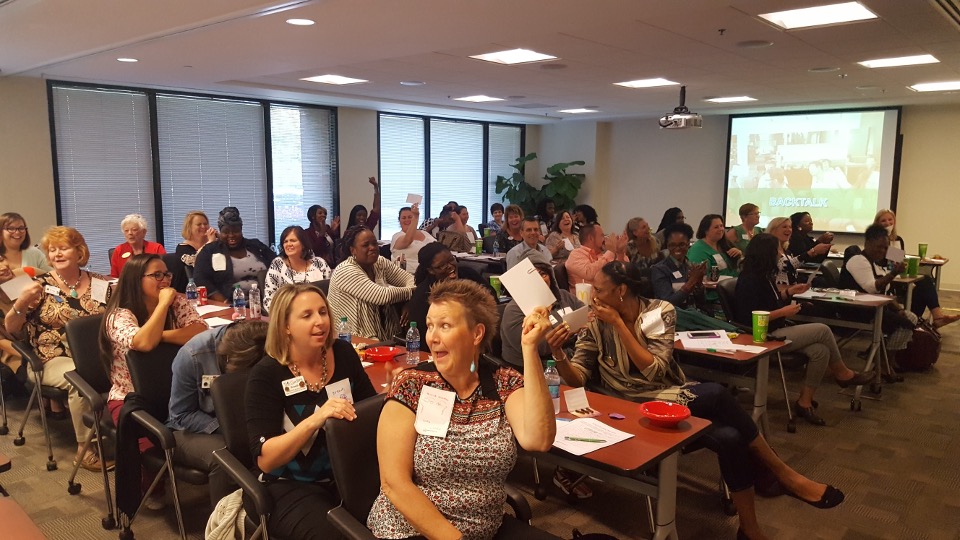
Frequently Asked Questions
What is the difference between a facilitator and a motivational speaker?
A motivational speaker delivers prepared content to an audience with the goal of inspiring, energizing, or educating. A facilitator guides a group through a structured experience designed to draw insight, shift perspective, and produce specific behavior change. A speaker talks to the room. A facilitator works with it. The outcomes are different, the preparation is different, and the lasting impact is different. Once you understand what kind of experience your team needs, the practical next step is learning how to choose a workplace culture speaker who fits your specific organizational challenge rather than defaulting to whoever the bureau recommends.
When should I book a facilitator instead of a motivational speaker?
Book a facilitator when your team has real friction, communication gaps, or culture challenges that need to be addressed directly. Book a facilitator when you want people to leave with tools they will actually use, not just a feeling of inspiration that fades within two weeks. Book a facilitator when the conversation inside the room needs to do as much work as the content coming from the front of it.
Can someone be both a facilitator and a keynote speaker?
Yes, and the best team building events often include both. A skilled practitioner can deliver a content-rich keynote that sets a framework and then shift into facilitation mode for the experiential and discussion components. The distinction is not about the person but about what the program is designed to do. If the event is designed for the audience to receive content, it is a keynote. If it is designed for the audience to generate insight and commitment through structured experience and guided conversation, it is facilitation.
Why does motivation from a keynote speaker wear off so quickly?
Because motivation that comes from outside is borrowed energy. It belongs to the speaker and the moment, not to the person who received it. Not every speaker fits neatly into one category, and exploring what the best leadership keynote speakers deliver beyond inspiration helps clarify what to look for when you want someone who equips as well as energizes. change that lasts comes from insight generated inside the person, usually through a question, a reflection, or an experience that shifts how they see something. That is what skilled facilitation is designed to produce. A keynote can create the conditions for that shift but rarely completes it without a structured debrief and application component.
What does a facilitator do before the event that a speaker typically does not?
A skilled facilitator invests significant pre-event time in discovery. This typically includes interviews with team leads or key stakeholders, a review of any relevant team data or culture challenges, and the design of an experience specifically tailored to this group’s dynamics and needs. Most motivational speakers customize their message to the industry and audience context. A facilitator customizes the entire design of the day around the specific friction and goals of this team.
What should I look for when hiring a team building facilitator?
Look for three things. First, do they do pre-event discovery? If they are willing to deliver the same program to every client, they are not facilitating, they are performing. Second, do they build a debrief into every activity? An activity without a structured debrief is just an icebreaker. The debrief is where the learning actually happens. Third, do they have real experience leading teams? Frameworks and activities can be learned. The instinct to know when to push a group deeper and when to give it space comes from having actually led people through adversity.
How much does a team building facilitator cost compared to a motivational speaker?
Facilitated team development programs from Great Results Teambuilding start at $4,500 for a half day and $6,500 for a full day, for groups of 8 to 800. Conference keynotes start at $7,500. The investment reflects the pre-event discovery, customization, and program design that go into a facilitated experience, not just the time in the room. Every attendee also receives one of Sean’s books as a take-away that reinforces the learning long after the event ends.
Your Team Deserves More Than a Great Afternoon.
It Deserves a Different Monday.
If your team is going to invest a day together, it is worth asking a harder question than whether the event will be fun. The question worth asking is what will be different the following week. What conversation will happen that has not happened before. What will people understand about their teammates that they did not understand before they walked in the room.
Those are facilitation questions. They are not keynote questions. And they are the questions that separate a team event people remember fondly from one that actually changes how a team operates.
Ready to Invest in a Program
That Actually Changes Awareness & Behaviors?
Great Results Teambuilding delivers intentional, facilitated programs for groups of 8 to 800. Every program is fully customized based on pre-event discovery. Every attendee receives a published book. Every debrief is designed to produce specific insights your team applies on Monday morning.
Past clients include Cisco, John Deere, the CDC, Emory University, Ecolab, Southern Company, the USPTO, and World Wide Technology – Over 100 client testimonials and 20 five-star Google reviews!