DISC vs Myers-Briggs for Improving Corporate Team Communication
Which Personality Assessment Changes How Your Team Communicates?
Which Personality Assessment Changes How Your Team Communicates?
The Short Answer is, If you are choosing a personality assessment for your corporate team and you want it to actually change how people communicate with each other, DISC is the right tool.
Myers-Briggs has its place, but that place is personal development and career counseling. It was not designed to solve the communication problems, conflict patterns, and collaboration breakdowns that most organizations are trying to fix.
DISC is built around observable behavior.
It tells you how someone acts at work, not just how they experience the world inside their own head. That distinction matters enormously when you are trying to get an engineering team and a marketing team to stop misreading each other, or when a manager needs to give difficult feedback to someone who shuts down every time the conversation gets direct.
The other practical difference is retention.
Most people who take a Myers-Briggs assessment cannot tell you their four-letter type six months later. Most people who learn their DISC animal introduce themselves with it years down the road. A tool nobody remembers cannot change behavior. That is the whole ballgame.
One of the most overlooked insights in organizational performance research is how communication style gaps quietly drive team underperformance even when every team member is individually skilled and motivated.
The most common mistake I see is choosing Myers-Briggs because the name is familiar. It has been around since the 1940s, it shows up on LinkedIn profiles, and HR leaders have heard of it. That brand recognition makes it feel like the responsible choice.
But familiarity with a tool is not the same as fitness for purpose.
Here is the honest truth about MBTI: the academic research on its test-retest reliability is shaky. Studies have found that a significant percentage of people get a different four-letter type when they take the assessment again just weeks later.
That does not mean the tool is worthless. It means it is better understood as a reflective exercise than a behavioral map.
DISC does not have that problem because it measures something different.
It measures behavior, which is observable and specific.
When a Lion charges into a meeting and cuts off a Retriever mid-sentence, you do not need a 90-question assessment to explain what just happened. But when the team has DISC language, the Retriever can name what they experienced and the Lion can course-correct in real time. That is the power of a shared framework grounded in what people actually do.
DISC also solves the organizational problem that Myers-Briggs cannot: it gives teams a common language that managers actually use. Patrick Lencioni, whose Five Dysfunctions of a Team has sold over six million copies, built his Five Behaviors program on the DiSC model for exactly this reason. He understood that the gap between insight and action gets closed by simple, behavior-focused tools, not complex typologies.
“I really don’t understand how a person can go about leading a team, working with other people, managing an employee, or working for a boss without understanding their unique personality types.”Patrick Lencioni, author of The Five Dysfunctions of a Team |
Lencioni was talking about personality tools broadly, and his own team development framework runs on DiSC. The quote captures something true: understanding behavioral styles is not optional for leaders who want to build high-functioning teams.
The question is just which tool gives you the most traction, fastest.
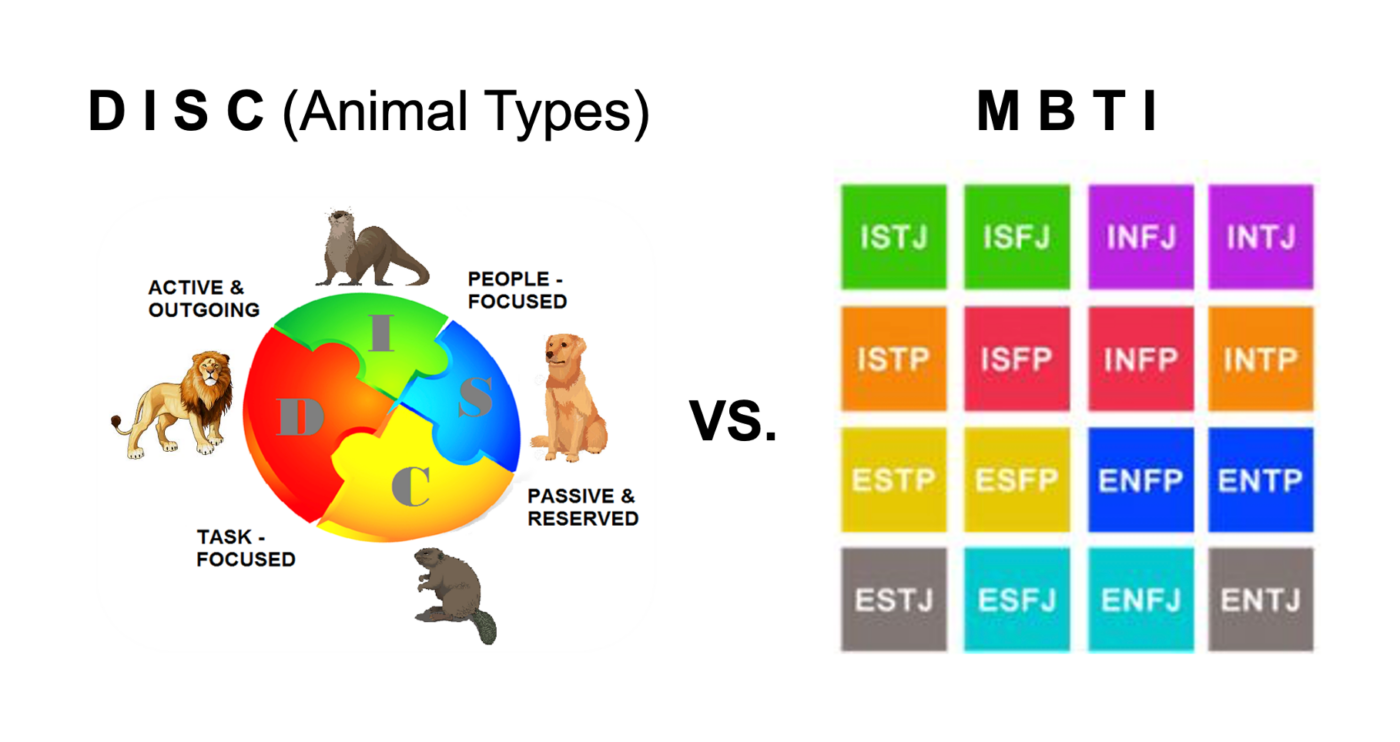
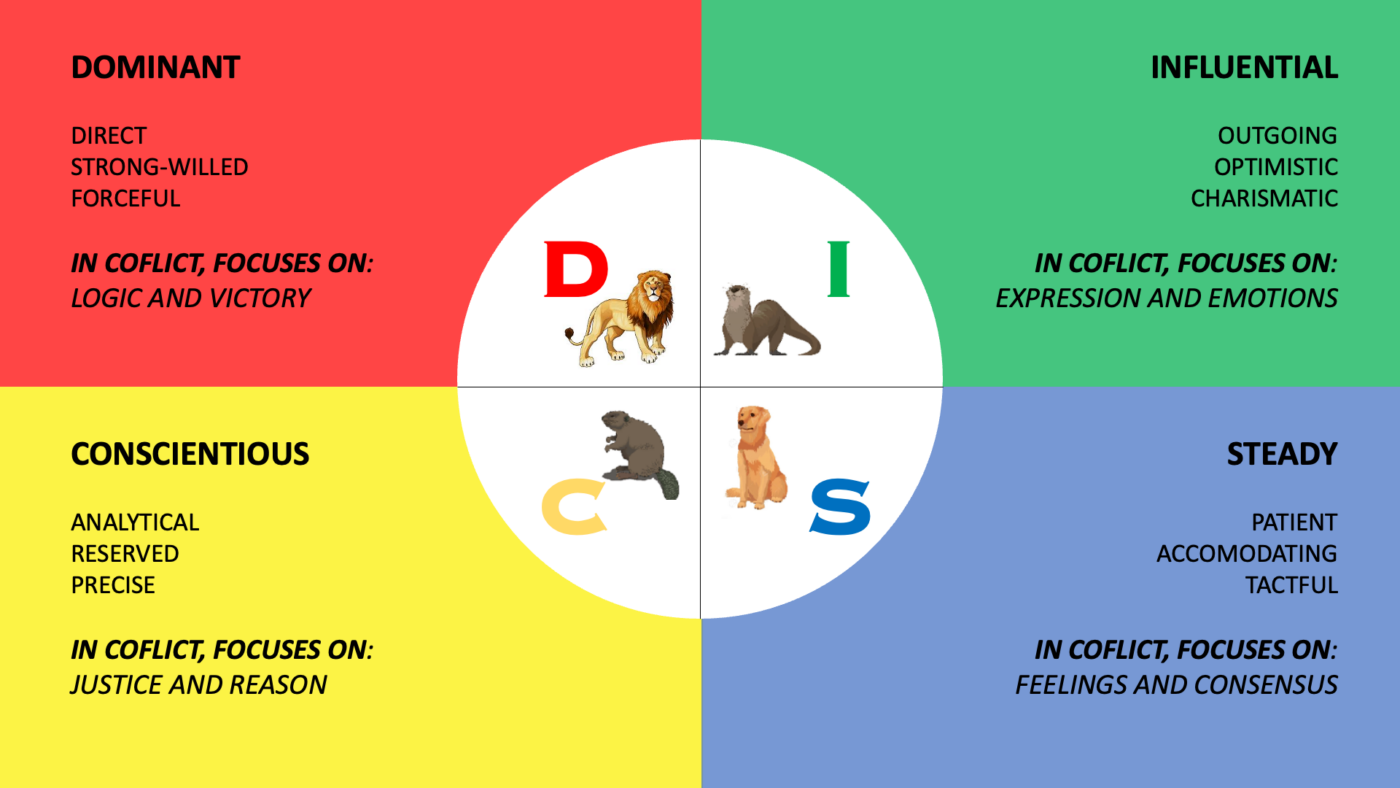
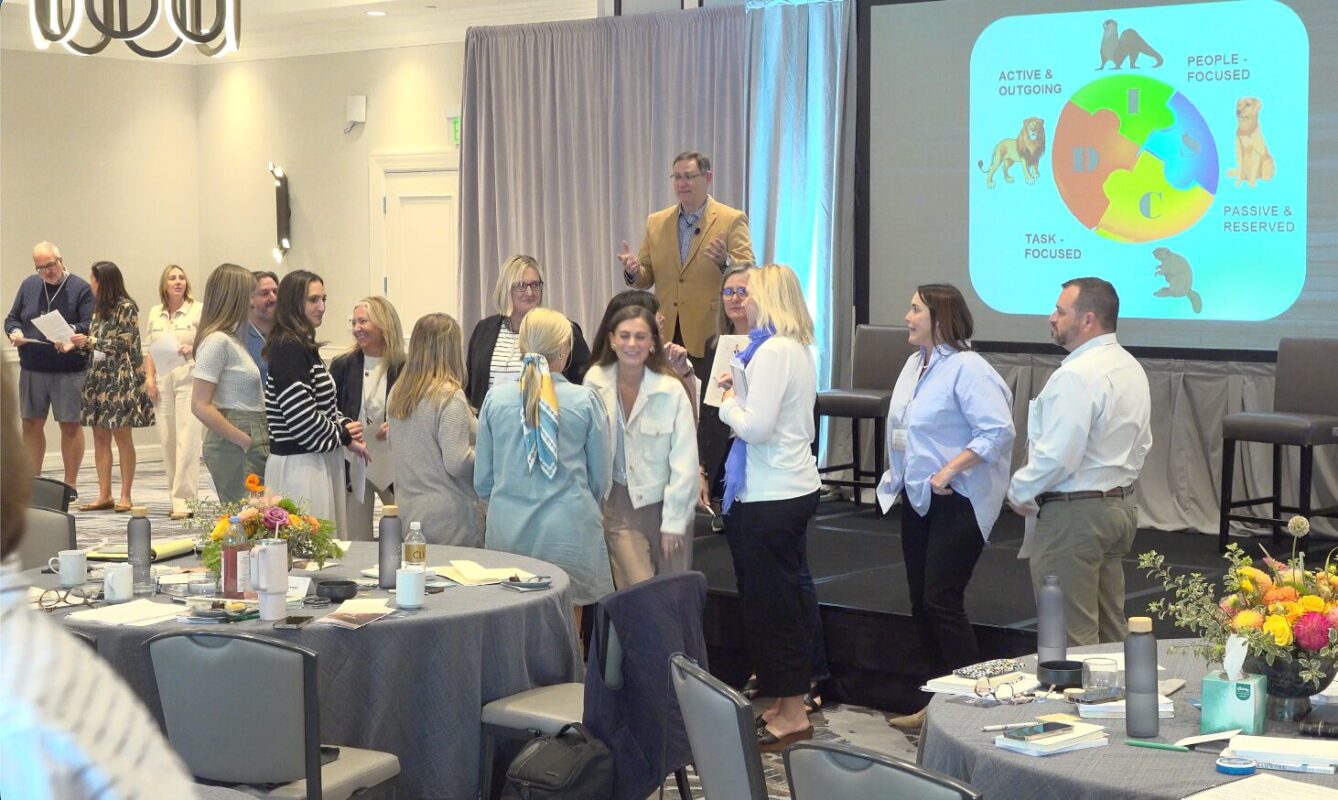
DISC organizes human behavior into four team personality types. In the programs I run with corporate teams, I use an animal shorthand that makes the framework memorable long after the workshop ends.
When a team learns these four styles, something fundamental shifts.
The Lion who always interrupts is not rude. He is wired for speed and directness. The Retriever who never speaks up in meetings is not disengaged. She is processing carefully and waiting to feel safe enough to contribute. The Beaver who asks seventeen follow-up questions before agreeing to a plan is not obstructionist. He needs clarity before he can commit.
Giving people language for those differences does not excuse bad behavior.
It gives teams a starting point for real conversation instead of silent frustration. That is the work.
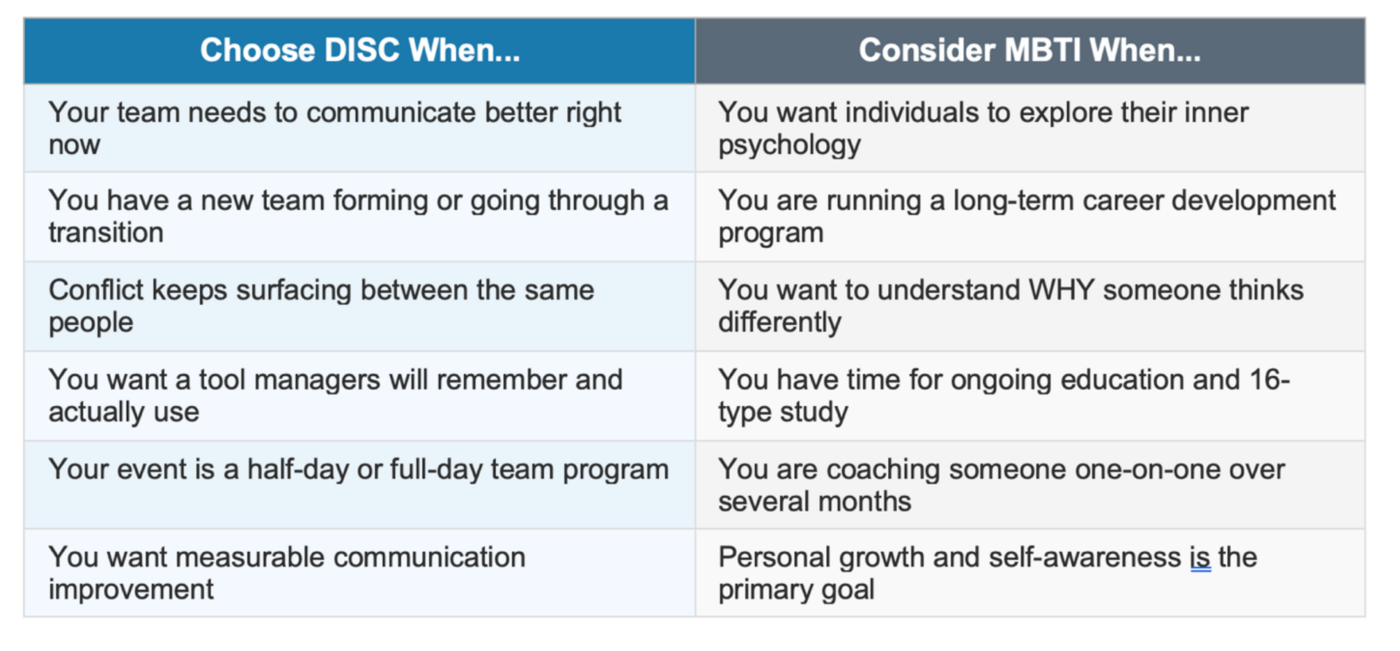
DISC accelerates what takes most teams months to figure out on their own, particularly when it comes to building trust across different personality styles and understanding why the same behavior lands differently with different people.

|
|
DISC (Animal Styles) |
Myers-Briggs (MBTI) |
|
Primary Focus |
Observable behavior and communication style |
Psychological preferences and personality type |
|
Designed For |
Workplace communication and team dynamics |
Personal development and career counseling |
|
Number of Categories |
4 styles (easy to remember) |
16 types (requires ongoing study) |
|
How Long Results Stick |
Most people remember their animal years later |
Most forget their 4-letter code within weeks |
|
Immediate Applicability |
Can change how you communicate by Monday morning |
Better insight, harder to act on daily |
|
Team Conflict Tool |
Direct: shows why styles clash and how to adjust |
Indirect: explains preferences, not behaviors |
|
Behavior vs. Preference |
Measures what you DO |
Measures how you THINK and FEEL internally |
|
Scientific Backing |
Grounded in observable behavior, high reliability |
Peer-reviewed criticism of test-retest consistency |
|
Best Fit |
Team building, leadership development, HR programs |
Career coaching, individual self-awareness work |
I worked with a healthcare organization whose clinical staff and administrative team had been grinding against each other for over a year. The clinicians thought the administrators were slow, bureaucratic, and obsessed with paperwork that had nothing to do with patient care.
The administrators thought the clinicians were reckless, impatient, and impossible to get a straight answer from on scheduling and compliance.
Both groups were right. And neither understood why.
We ran a half-day DISC workshop with the combined team.
Within the first two hours, a senior physician recognized that her Beaver administrator was not dragging his feet because he was difficult. He needed all the relevant information before he could give her a confident answer. She had been reading that as obstruction. He had been reading her impatience as disrespect.
The administrator, for his part, finally understood why the physician talked over him in meetings.
She was a high Lion. She had already processed the information and made a decision before she walked in the room. She was not dismissing him. She was operating at her natural pace and expecting everyone else to keep up.
After the debrief, those two had a conversation in front of the entire room about how they would work together differently. Not because I told them to. Because they finally had the words for what had been happening between them.
That is what a good DISC workshop does.
It does not fix people. It gives teams a shared language for the differences that were already there, and a framework for using those differences as assets instead of sources of conflict.
DISC is not a standalone activity in the programs I run. It integrates directly with the G.R.E.A.T. culture framework that anchors everything I do with corporate teams. Here is how that connection plays out across each of the five pillars.
DISC measures observable behavior and communication style. Myers-Briggs measures psychological preferences and how someone internally processes information and makes decisions. DISC is designed for workplace application and team development. Myers-Briggs is more commonly used for individual self-awareness and career counseling. Both have value, but they serve different purposes and different contexts.
DISC is better suited for corporate team building because it is simple, behavior-focused, and immediately applicable. Teams that go through a DISC workshop leave with a shared language they can use the following Monday. The four-style framework is easy to remember and transfers directly into how people communicate, give feedback, handle conflict, and lead meetings. Myers-Briggs tends to produce more insight than behavior change in group settings.
Academic research on Myers-Briggs test-retest reliability has raised consistent questions. Studies suggest that a meaningful percentage of people receive a different four-letter type when retaking the assessment just weeks later. Assessment results are only as useful as the conversation that surrounds them, and a skilled facilitator makes the difference in how well assessments translate into real behavior change. That does not make the tool useless, but it does mean MBTI is better understood as a reflective exercise than a definitive behavioral map. DISC, which measures observable behavior rather than internal preference, tends to show stronger consistency.
The assessment itself takes about ten to fifteen minutes. A facilitated workshop using DISC results typically runs two to four hours for teams, and can be built into a half-day or full-day program for deeper integration. Great Results Teambuilding designs DISC experiences for groups of 8 to 800, available in-person and virtually, with every session customized based on pre-event discovery conversations.
DISC can inform conversations about communication style and team fit, but it should not function as a hiring filter on its own. The most valuable application in hiring is understanding what behavioral styles are currently underrepresented on your team and what a new hire might contribute to that mix. Using any personality tool as a pass-fail screening mechanism raises legal and ethical concerns and misses the point of what assessments are designed to do.
The animal system maps the four DISC styles onto four animals that are far easier to remember than letter codes or clinical terminology: Lion (D style), Otter (I style), Retriever (S style), and Beaver (C style). Most people still introduce themselves by their animal years after a workshop. That retention is the point. An assessment that people forget cannot change behavior.
Great Results Teambuilding offers facilitated half-day programs starting at $4,500 for groups of 8 to 800. Full-day programs start at $6,500 and include deeper DISC application, team communication exercises, and facilitated group discussion. Every attendee receives one of Sean’s books as a take-away that reinforces the learning long after the event ends.
Most teams are not struggling because people are bad at their jobs. They are struggling because people with genuinely different communication styles have never been given a framework for understanding each other. A DISC workshop does not fix everyone’s problems.
But it gives teams a common vocabulary for the differences that are already there, and that vocabulary changes conversations permanently.
Great Results Teambuilding delivers intentional, facilitated programs for groups of 8 to 800. Every program is fully customized based on pre-event discovery. Every attendee receives a published book. Every debrief is designed to produce specific insights your team applies on Monday morning.
Past clients include Cisco, John Deere, the CDC, Emory University, Ecolab, Southern Company, the USPTO, and World Wide Technology – Over 100 client testimonials and 20 five-star Google reviews!
Ready to talk about your team?
Book a Call