Why Do Talented
Teams Underperform?
The Answer Is Almost Always Culture, not Strategy
The Answer Is Almost Always Culture, not Strategy
The short answer is that talented teams underperform because of culture gaps, not skill gaps. When people do not have real relationships with their colleagues, a shared language for communication style differences, clear and aligned expectations, and recognition that makes their effort feel visible, talent is wasted regardless of how impressive it looks on paper.
Good talent and strategy are essential, but never sufficient.
According to Gallup’s research, disengaged employees cost organizations significantly in lost productivity every year, and that loss is not caused by a shortage of skill. It is caused by cultures that are not intentionally built to allow talent to function as a team
The most talented team I ever coached lost in the first round of the playoffs.
We had the best individual player in our conference. We had depth. We had skill. We had everything on paper that should have produced a championship run. What we did not have was chemistry. Players did not trust each other in clutch moments. They competed against each other as much as against their opponents. When pressure arrived, they did not pull together. They pulled apart.
I have spent the twenty years since that season watching the same dynamic play out in corporate organizations across the country. Rooms full of smart, skilled, motivated people who are collectively producing results far below what anyone would predict from looking at their individual talent.
The problem is almost never the talent.
The problem is almost never the strategy. The problem is the culture, and specifically the absence of the intentional leadership behaviors that turn talented individuals into a team that actually wins together.
In most organizations, people are hired for their technical skill, and then either fired or admired based entirely on their interpersonal skills – the ability to work with the people around them. |

There is a deeply embedded assumption in most organizations that talent is the primary lever of team performance. Hire the best people, give them clear objectives, get out of their way, and results will follow. It is a clean model. It is also wrong in ways that are costing organizations billions of dollars every year.
The data on this is not subtle.
According to Gallup’s 2024 State of the Global Workplace report, declining employee engagement, which is a direct measure of whether talented people are actually applying their abilities to the team’s goals, cost the global economy an estimated $438 billion in lost productivity in 2024 alone.
That number is not the result of a talent shortage.
There is plenty of talent in most organizations. That number is the result of talented people showing up physically and checking out mentally because something about the culture is not working.
The leaders who break this pattern are not the ones who hire better.
They are the ones who understand that getting a group of talented people to genuinely function as a team requires a different kind of investment than any hiring decision will ever produce.
In the organizations where talent consistently underperforms, I almost always find the same four gaps. They are rarely dramatic. Most of them are invisible to the leaders who are living inside them.
None of these gaps require a talent upgrade to fix.
All four of them respond to intentional leadership behaviors that most leaders have simply never been taught.
Culture gaps rarely fix themselves, and accountability without micromanaging is the skill most leaders struggle to develop because it requires a fundamentally different approach than simply enforcing expectations.
Here is the argument I make from every stage I stand on, and it is the one that lands most directly with leaders who are frustrated by underperforming teams: your culture is not what you wrote in your mission statement.
Culture is the sum of behaviors that are allowed and repeated in an organization.
The team that sees their manager protect a high-performing but toxic colleague learns that numbers matter more than behavior. The team that never hears specific recognition learns that effort is optional. The team that watches leadership avoid a difficult conversation learns that honesty is not actually safe here.
These lessons are taught without a word being spoken.
And they compound over time into the culture you have, which may bear no resemblance to the culture you believe you have.
Conversely, the leader who demonstrates genuine concern for people, keeps commitments large and small, communicates clear expectations, addresses performance issues directly and respectfully, and specifically recognizes effort and growth, that leader builds a culture where talented people want to bring their best regardless of whether anyone is watching.
In my book The 10 Commandments of Winning Teammates, I make an argument that I have been watching prove itself on basketball courts and in boardrooms for two decades: the interpersonal skills that determine whether a talented group functions as a genuine team are not soft skills.
They are the hardest skills most organizations consistently underinvest in.
Technical skills get people hired. Winning teammate behaviors determine whether those people produce together.
|
Winning Teammate Behavior |
What It Looks Like in Practice |
|
Be Trustworthy |
Does what they say. Reliable across small commitments and large ones. The foundation every other behavior is built on. |
|
Be Genuinely Interested in Others |
Asks questions. Listens. Remembers. Treats colleagues as people worth knowing, not just resources worth using. |
|
Encourage Teammates Daily |
Notices effort and names it specifically. Sees potential in people before they see it themselves. |
|
Be Coachable |
Receives feedback without defending. Stays curious about how to improve. Puts growth above ego. |
|
Be an Active Listener |
Gives full attention. Does not formulate a response while someone else is still talking. Asks the next question. |
|
Be Accountable |
Owns results and errors both. Does not point fingers. Focuses on the next play rather than relitigating the last one. |
|
Be Selfless |
Makes the decision that helps the team even when a different decision would benefit them personally. |
|
Be a Problem Solver |
Brings solutions alongside problems. Does not wait for someone else to name what they already see clearly. |
None of these behaviors require a title. None require permission.
Every single person on a team can start doing these tomorrow. The ones who do become the culture regardless of their position on the org chart.
I worked with a company whose leadership team had been together three years.
By every metric they should have been a high-performing unit.
The individuals were experienced, credentialed, and genuinely committed to the organization’s mission. But the culture was closed. People were polite and non-confrontational in ways that were actually costing the company real money. Decisions that needed to be made were getting deferred. Problems that needed to be named were getting avoided. The team was talented and stuck.
We ran a full-day facilitated experience that did two things.
First, we introduced the DISC animal framework and spent half a day helping people understand why their colleagues made decisions differently, communicated differently, and responded to pressure differently.
Within an hour of that session, a VP who had been considered difficult by most of her peers made a comment that stopped the room: ‘I have been reading everyone else’s need to slow down and process as a lack of commitment. I had no idea that was about their style, not their engagement.’
Second, we asked each person to identify one behavior they wanted to strengthen in their own leadership. They shared those commitments publicly. They were specific. And they were made in front of people who would see them every day.
Six months later the CEO told me that the team was making decisions faster, addressing issues more directly, and that two people who had been in chronic tension had developed what he described as a genuine partnership.
The talent was identical. The culture was different.
The four gaps that kill talented teams, connection, shared language, clarity, and recognition, map directly onto the five pillars of the G.R.E.A.T. culture framework.
This is not a coincidence. The framework was built from observing exactly these patterns across hundreds of organizations.
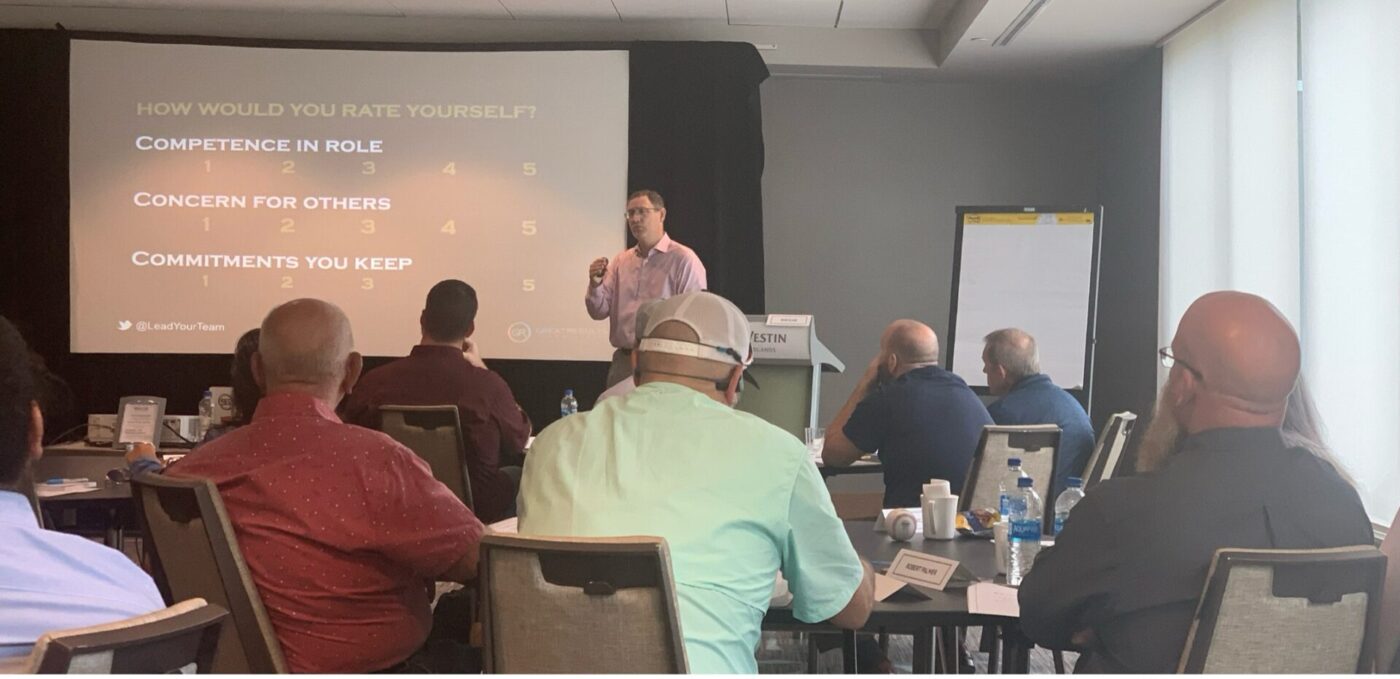
Talented teams underperform when the culture is not functioning. The four most common causes are: lack of real connection between team members, no shared language for communication style differences, unclear or unspoken expectations, and absent or generic recognition. None of these require a talent upgrade to fix. All four respond to intentional leadership behaviors.
A talented team has the skills and experience to produce great results. A winning team has the interpersonal behaviors, the trust, the shared language, the accountability, and the commitment to each other that allows that talent to be directed toward a common goal. Talent is necessary. Winning teammate behaviors are what make it sufficient.
Culture shapes everything: how honestly people communicate, how quickly problems get surfaced and addressed, how much discretionary effort people bring, and how loyal people feel to the organization. Organizations that invest in new tools before addressing culture gaps often find that how AI can amplify a culture gap rather than close it is a lesson they learn the hard way. Gallup research links high-engagement cultures directly to 23 percent higher profitability, 51 percent lower turnover, and measurably higher productivity. Culture is not a soft concept. It is a performance variable.
Winning teammate behaviors are the interpersonal skills that determine whether talented people function as a genuine team. They include being trustworthy, being genuinely interested in others, encouraging teammates, being coachable, being accountable, being selfless, and being a problem solver. None require a title. All of them can be practiced by anyone on any team starting immediately.
Start with awareness. Most culture problems persist because people do not fully understand how their own behavior is affecting the people around them. A well-designed, well-debriefed team experience creates that awareness in a way that individual coaching conversations rarely can. Then layer in the structural elements: clear expectations, regular one-on-ones with genuine relationship investment, direct feedback using a structured model, and specific consistent recognition.
High-performance cultures are built around five pillars: aligned goals that the whole team understands, genuine relationships that go beyond job titles, clear and shared expectations, real accountability that comes from caring about the team rather than fearing consequences, and consistent recognition that makes people feel seen. These are the five pillars of the G.R.E.A.T. culture model and the framework behind every program Great Results Teambuilding delivers.
If your team has the skill and the experience and is still not performing at the level you know they are capable of, the leverage is almost certainly not in adding more talent. It is in building the culture that allows the talent you already have to actually function together.
Great Results Teambuilding delivers intentional, facilitated programs for groups of 8 to 800. Every program is fully customized based on pre-event discovery. Every attendee receives a published book. Every debrief is designed to produce specific insights your team applies on Monday morning.
Past clients include Cisco, John Deere, the CDC, Emory University, Ecolab, Southern Company, the USPTO, and World Wide Technology – Over 100 client testimonials and 20 five-star Google reviews!
Ready to talk about your team?
Book a Call