
Most team building events don’t change anything… because fun without intention is just entertainment.
I’ve been facilitating team building programs across Atlanta and the Southeast for years, and I’ve seen the same pattern repeat itself. A company spends money on a bowling outing, a cooking class, or an escape room.
Everyone laughs.
They go back to work on Monday.
And two weeks later, nothing is different. The same two people who never got along still don’t get along. The same silos remain. The same frustration simmers.
That’s not a team building problem. That’s a facilitation problem.
The Difference Between Recreation and Transformation
There’s nothing wrong with having fun as a team. But fun alone doesn’t shift awareness, and it doesn’t change behavior. Real team building — the kind that actually improves how your people treat each other — requires intentional facilitation.
What does that mean? It means the activities are designed with a purpose beyond entertainment. It means the conversations that follow those activities are just as important as the activities themselves. It means participants are guided to reflect on why they behave the way they do, how their personality and communication style affects the people around them, and what they’re willing to do differently going forward.
That’s the difference between a good time and a genuine shift in workplace culture.
Organizations across Atlanta — from healthcare systems and universities to corporate offices and government agencies — are increasingly recognizing that their teams need more than a day off together. They need structured experiences that create real insight and lasting connection.
And research backs this up: teams with high psychological safety — meaning people feel safe to speak up, disagree, and be themselves — outperform their peers on nearly every measure of productivity and innovation.
You don’t build that with a trivia night. You build it with intention.
What Intentional Facilitation Actually Does
When a team building program is built around intentional facilitation, three things happen that don’t happen at your average recreational outing.
First, it creates awareness. Most workplace friction isn’t caused by bad intentions — it’s caused by blind spots. People who communicate directly assume that quiet colleagues are checked out. People who need time to process feel steamrolled by teammates who move fast. Facilitated activities surface these differences in a low-stakes environment and give participants a new vocabulary for understanding each other.
Second, it shifts behavior. Awareness alone isn’t enough — but when people laugh together, struggle together, and debrief together, something opens up. They become willing to examine how their default style impacts others.
They make commitments — out loud, in the room — to do something differently. T
hat social accountability is powerful. Studies on peer accountability show that people are 65% more likely to follow through on a goal when they’ve committed to someone else. A well-facilitated team building program turns that principle into real-time culture change.
Third, it builds genuine connection. Teams that understand each other are teams that trust each other. And teams that trust each other collaborate better, hold each other accountable more effectively, and create a culture where people actually want to show up and contribute.
That’s not theory. I’ve watched it happen in rooms across Atlanta.
The Day Employees Who Were Dreading It Couldn’t Stop Talking About It
A few years ago, I had the privilege of working with the team at Midtown Neurology right here in Atlanta. Like many medical offices, they were dealing with the kind of challenge that doesn’t show up in a patient chart — internal personality clashes and a lack of collaboration among staff.
In a medical setting, that’s not just a morale issue.
Poor communication and unresolved conflict between team members has a direct impact on patient experience.
The stakes were real.
And honestly, so was the skepticism.
A number of employees were dreading the event before it started.
That’s not unusual. I’ve learned over the years that the people most resistant to team building are often the ones who’ve been burned by bad team building before. They’ve sat through the forced icebreakers and the corporate buzzword sessions and the trust falls, and they’ve come back to work unchanged. Their skepticism is earned.
So we didn’t do any of that.
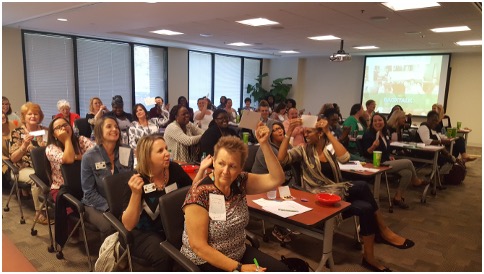
Instead, we moved through a series of interactive challenges — activities designed to create real conversation, surface differences in how people think and communicate, and generate genuine laughter along the way. The debrief discussions that followed weren’t just “what did you notice?” questions. They were guided reflections that connected the experience directly to how team members show up for each other every single day.
By the end of the day, something had shifted.
Here’s what Deirdre Plato, administrator at Midtown Neurology, shared afterward:
“The experience we had was really remarkable – to be honest with you, a number of employees were dreading the event, and those same employees ended up loving it! I have had numerous employees tell me how much they enjoyed the event and how helpful they thought it was. One employee commented that she had done team building exercises at previous workplaces and they were nowhere near as great as the experience she had with you.
As a result of you being here, two employees that had never gotten along have made a commitment to work together and be friendly and professional to one another. I notice a positive difference with the staff and they notice the change also. Employees are going out of their way to be helpful to one another — everyone had a lot of fun, too!”
— Deirdre Plato, Midtown Neurology, Atlanta, GA
Two employees who had never gotten along made a public commitment to work together.
That’s not a small thing. In a medical office where patient care depends on staff coordination and trust, that’s transformational.
What a Half-Day or Full-Day Program Actually Looks Like
Whether your team does a half-day or full-day program, the goal is the same: participants leave with more self-awareness, more appreciation for their teammates, and more clarity about what it means to be a winning teammate in your specific environment.
A half-day Atlanta Team Building program is ideal for teams who need a focused reset — a shared experience that surfaces key insights and creates real conversation without pulling people away from work for an entire day. It’s high-impact and practical.
For most teams, three to four hours of intentional facilitation produces more genuine culture movement than a full day of recreational activities.
A full-day program goes deeper. There’s more time for facilitated discussion, more space for participants to sit with what they’re learning, and more opportunity to translate insights into specific team agreements and behavioral commitments.
For teams dealing with persistent conflict, low morale, or significant culture challenges, the full-day format tends to produce the most lasting change.
In both formats, participants will laugh together.
They’ll be challenged in ways that feel relevant — not contrived. They’ll see themselves and their teammates in a new light. And the conversations that come out of the debrief are often the most meaningful professional discussions people have had in years.
The activities are designed so that everyone can participate and succeed — not just the extroverts or the most competitive people in the room. Because real team building isn’t about who wins a game. It’s about what every person in the room learns about themselves and about each other.
Culture Doesn’t Improve by Accident
Here’s what I’ve learned from years of coaching basketball and facilitating team building programs across Atlanta and beyond: culture is never an accident. It’s either built intentionally or it drifts — and when it drifts, it almost always drifts toward dysfunction.
The medical office where two feuding employees made a public commitment to work together didn’t get there by accident. They got there because someone in leadership decided that a recreational outing wasn’t enough — that what their team needed was a facilitated experience designed to shift awareness and change behavior.
That decision changed their culture.
If your Atlanta team is dealing with communication breakdowns, personality clashes, low morale, or a lack of collaboration — or if you simply want to build a stronger foundation before problems emerge — intentional team building is the most efficient investment you can make in your people.
The goal isn’t just for people to have fun. The goal is for people to walk away treating each other better than they did when they walked in. To understand their teammates at a deeper level. To feel like they are part of something worth contributing to.
That’s what winning teammates do. And that’s exactly what a well-facilitated team building program makes possible.
———
If you’re looking for a team building facilitator in Atlanta who combines real-world leadership experience with interactive programs designed to create lasting behavioral change, I’d love to connect. Visit GreatResultsTeambuilding.net to explore half-day and full-day programs for your team — or reach out directly to start a conversation.
Sean Glaze is a sought-after leadership and workplace culture speaker, who gained valuable insights on turning talent into teamwork as a successful basketball coach – and now he travels around the country to share those actionable lessons.
Sean’s engaging conference leadership keynotes and custom team building programs have helped clients like Cisco, John Deere, the CDC, and Emory University to increase collaboration, boost productivity, and build Sticky Cultures that inspire more profitable teamwork. Sean’s books, Rapid Teamwork, What Effective Leaders DO, The 10 Commandments of Winning Teammates, and Staying Coachable are entertaining parables that accelerate the growth of leaders and teams!