

Your team already knows what it feels like to work for you.
They’ve known for a while.
They know whether you’re someone they can bring a bad day to, and they know whether your standards are real or just things you say in meetings. The only person who may not know is you.
Culture is always a symptom of leadership.
t’s the sum of the behaviors you allow and repeat, and the two things that shape those behaviors most are the quality of your relationships and the clarity of your standards. This tool lets you measure both in about five minutes.
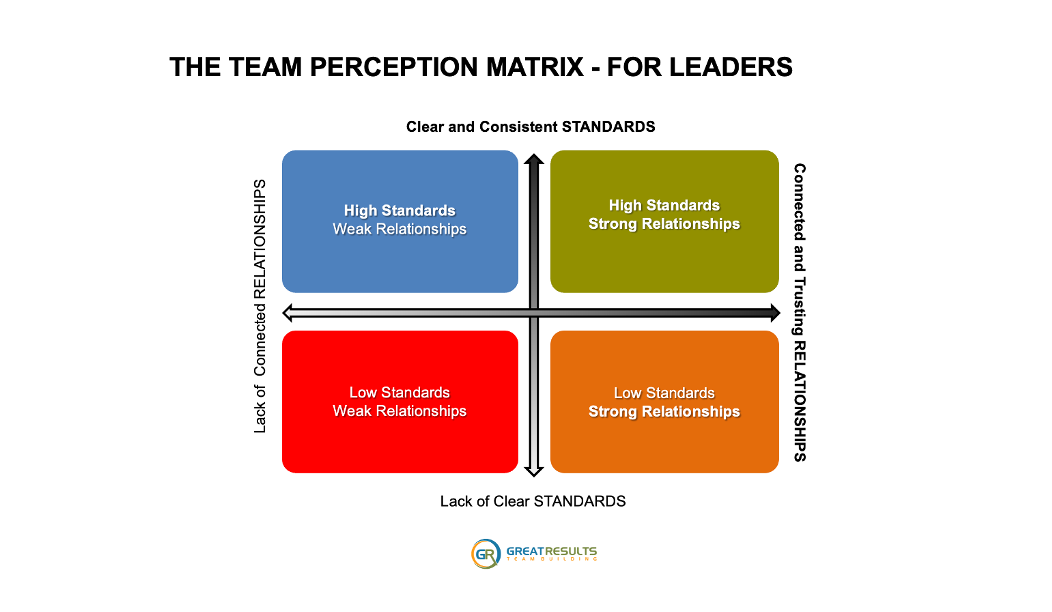
The Team Perception Matrix
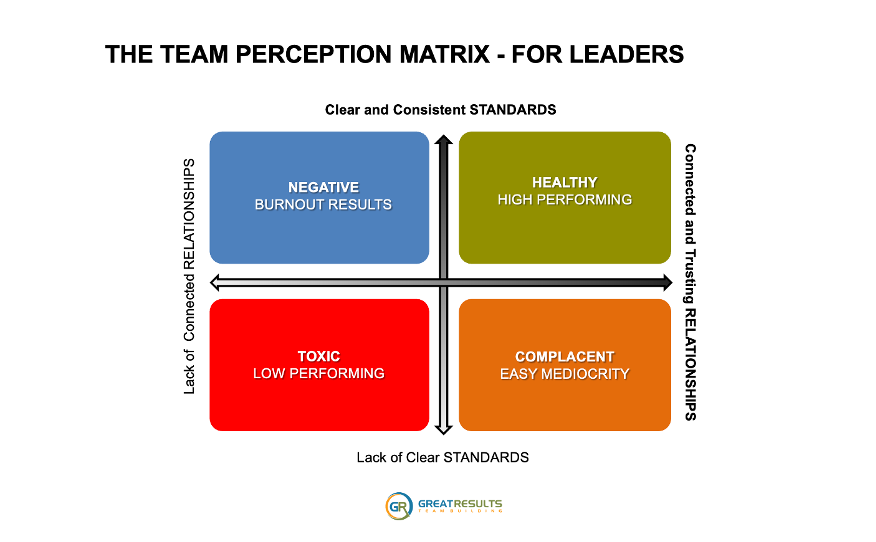
Picture a simple grid. Across the bottom, relationships run from weak on the left to connected and trusting on the right. Up the side, standards run from unclear at the bottom to clear and consistent at the top. That gives you four quadrants:
- Top left: Negative Burnout Results. High standards, weak relationships.
- Top right: Healthy High Performance. High standards, strong relationships.
- Bottom left: Toxic Low Performance. Unclear standards, weak relationships.
- Bottom right: Complacent Easy Mediocrity. Strong relationships, unclear standards.
Where you land is not a verdict on your character.
It’s a snapshot of how your team experiences you right now, and snapshots can change.
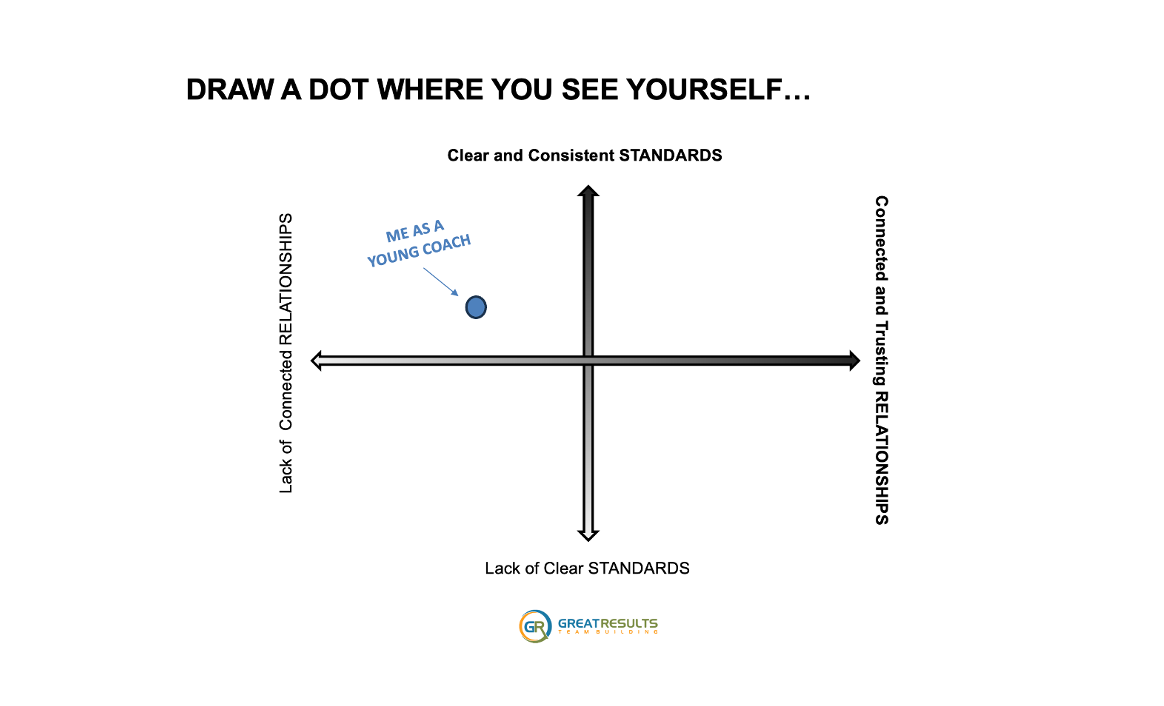
Step 1: Plot Yourself
Grab a pen and make a dot where you believe your team would place you. Not where you intend to be or where you were on your best day. Where they would put you on a Tuesday afternoon when a deadline is close.
Be careful in this step. Self-reflection is where every leader starts, and it’s also where we’re most generous with ourselves. Treat your dot as a guess.
Step 2: Take the Courageous Step
Now hand the matrix to your team members and ask each of them to place a dot where they honestly see you. Do it during your next one on one.
Yes, that’s uncomfortable, and that’s the point. Three things will help:
- Say why you’re asking. Tell them you’re working on being a better leader and their view matters more than your own.
- Make it easy to be truthful. Let them mark a printed copy and hand it back, or drop it on your desk later.
- Ask one follow up question. “What’s one thing I could do that would move this dot?” Then stop talking and listen.
The distance between your dot and theirs is the most valuable information in this whole exercise. A big gap means you’ve been leading from a story about yourself that your team doesn’t share.
This is different from the Interaction Matrix in my book What Effective Leaders DO. That tool helps you have more meaningful interactions. This one measures perception, so you can see which area of your culture needs the most urgent attention.

Step 3: Read Your Quadrant
Top left: Negative Burnout Results. I know this quadrant personally.
Looking back on my coaching career, I was in the top left far too often.
We set high standards and we kept them.
What I did poorly was build relationships on purpose. I didn’t connect with my players or invest in them off the court, so the accountability I attached to those standards was often resented.
They didn’t hear “I believe in you.” They heard “I’m keeping score.”
My early missteps were largely the result of neglecting the relationships that would have made everything more meaningful. Standards without relationships feel like pressure. Eventually people either burn out or check out.
Top right: Healthy High Performance. People know what excellent looks like, and they trust you enough to hear it when they miss. Your job here is to protect it.
Keep doing the small things that built it, because this quadrant erodes quietly when you get busy.
Bottom right: Complacent Easy Mediocrity. Everyone likes each other and nobody is challenged.
It feels great until results slip and nobody wants to say why. The fix is clarity. Define what good, better, and excellent look like, then have the conversations you’ve been avoiding.
Bottom left: Toxic Low Performance. This is the hardest place to be, and also the easiest to misdiagnose. Leaders here often reach for standards first, because accountability feels like the obvious move.
Resist that. Start with relationships. Trust is what makes any standard believable.
Step 4: Use the GREAT Model to Move
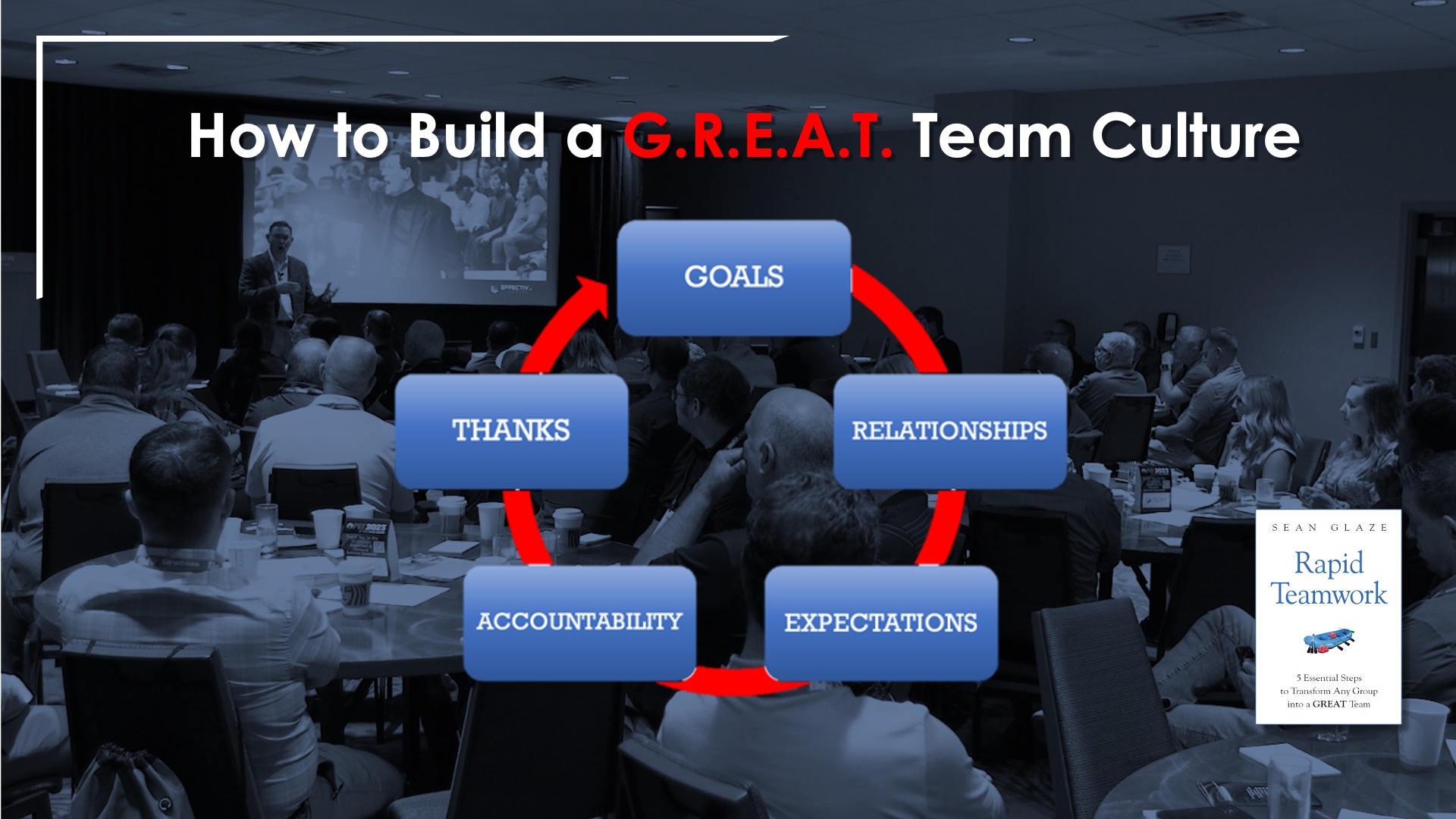
Here’s where the matrix turns into action. My GREAT Culture Model gives you five areas you can directly influence, and each one moves your dot in a specific direction.
To move right, build relationships:
- R is for Relationships. Get to know people as people. Learn how each person communicates and what motivates them. Trust grows from small, consistent moments, not from one big offsite.
- T is for Thanks. Specific, sincere recognition tells people you notice them. “Great job” is forgettable. “Here’s what you did and what it made possible” sticks.
To move up, strengthen standards:
- E is for Expectations. Say out loud what good looks like, for the team and for each role. Standards the team helps build carry far more weight than standards handed down once and never mentioned again.
- A is for Accountability. Accountability done well feels like investment, not punishment. It lands when the relationship is already there, which is why the order matters.
And G ties them together.
- G is for Goals. A compelling common purpose gives both your relationships and your standards a reason to exist. People will hold themselves to a standard when they know what it’s for.
If you landed low on both, start with R.
Standards will not stick on weak relationships. I learned that the hard way.
Your Growth Activity for This Week:
- Plot your dot on the matrix before you talk to anyone.
- Ask every direct report to plot theirs in your next one on one.
- Pick one GREAT area and take a specific action on it before Friday.
Then do it again in ninety days. Watch which way the dots move.
Want Help Having the Conversations You’ve Been Avoiding?
This tool works best when a team has the language and the trust to talk about what they see. That’s exactly what I help leadership teams do in a keynote or a facilitated team building session.
We build awareness of yourself and your team, have the conversations that have been waiting, and create a culture where people can thrive.
If that sounds useful for your team, reach out and let’s talk about what a session could look like.

Sean Glaze is a workplace culture keynote speaker and team building event facilitator who spent 20 years coaching basketball before transitioning to corporate speaking. He has worked with organizations including Cisco, John Deere, CDC, Emory University, and Southern Company, helping teams build accountability, trust, and stronger collaboration.
He is the author of several leadership books including Rapid Teamwork, What Effective Leaders Do, and The 10 Commandments of Winning Teammates, and he built the G.R.E.A.T. Culture Model, a framework leaders use to diagnose and strengthen team dynamics.