

Your Core Team Values are probably not the issue…
Integrity. Ownership. Respect. Respoinsiveness.
They look good on the website, and nobody in the building would argue with them.
The problem is that they never leave the poster.
I watch it happen in organizations of every size. A leadership team spends a retreat writing values, rolls them out with a nice email and a new slide, and then waits for the culture to change. Six months later, the same behaviors are still being tolerated, and the values have quietly become decoration.
Gallup’s research shows how wide that gap has grown. In 2024, just 46% of employees said they clearly know what is expected of them at work, down from 56% in March 2020 (Gallup).
That isn’t a values problem.
It’s a flow problem.
Culture works like a fountain. Clarity has to flow down from the top, land somewhere people actually live every day, and then get pumped back up by the team, over and over. Miss any part of that and the whole thing runs dry.
I call it the Team Alignment Fountain. Here’s how to build one that keeps flowing.
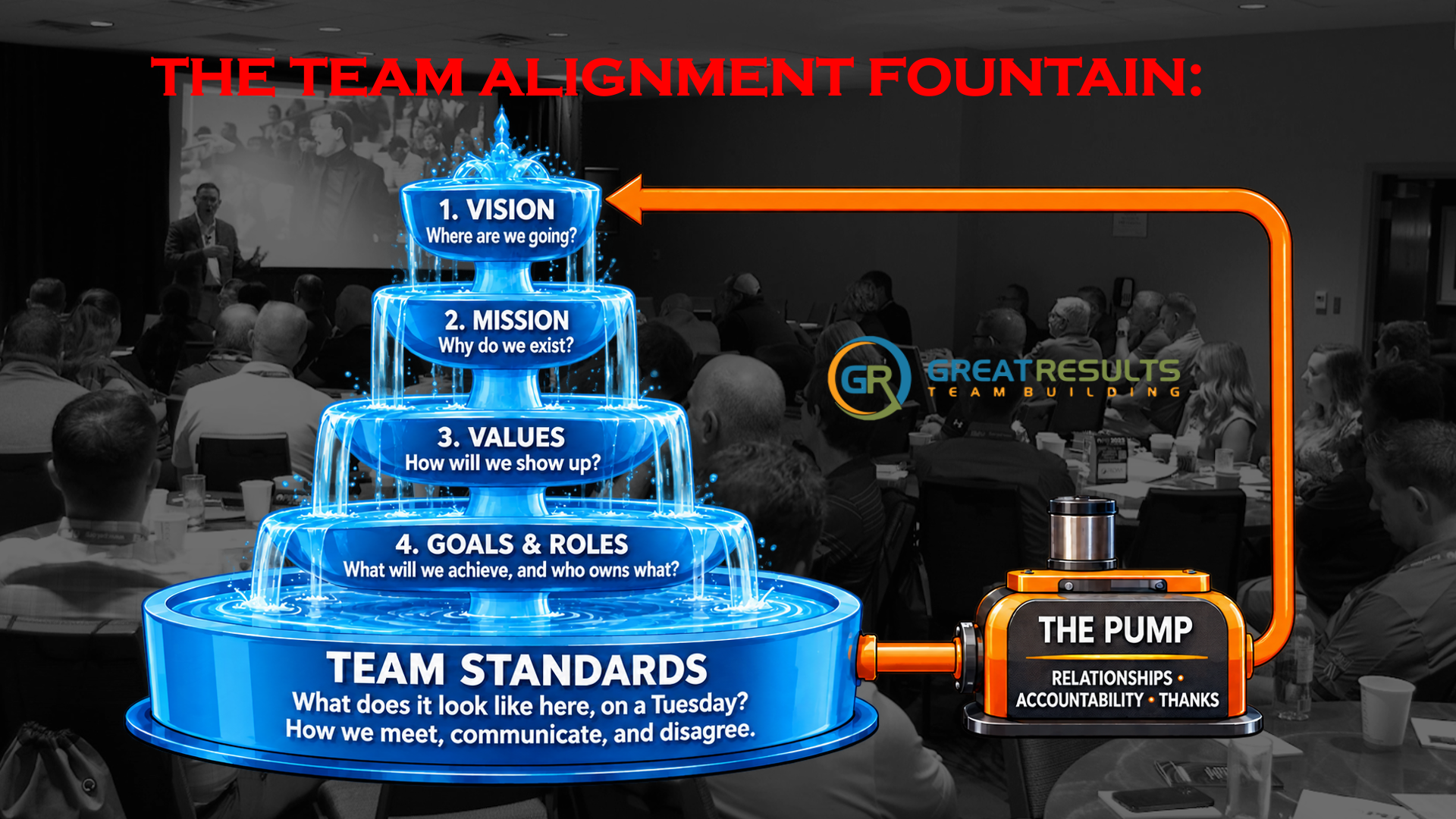
The Team Alignment Fountain
Build it in this order: the leader sets the tiers from the top, the team fills the basin, and the whole team runs the pump.
The Team Alignment Fountain · 4 tiers, a basin, and a pump
Each part answers one question, and each one ties to a pillar of my G.R.E.A.T. culture model: Goals, Relationships, Expectations, Accountability, and Thanks.
You may have heard this called an alignment cascade.
I used that word myself for years.
But a cascade only flows one way, and culture doesn’t.
Start at the Top: Clarity Flows Down
The leader owns the top of the fountain.
These are the decisions a team can’t make for you, and they need to be made before you ask anyone to commit. Vision, Mission and Values are each different and important…
1. Vision: Where are we going?
Vision is the future you are committed to creating. It’s the spout, the highest point, and everything else flows from it.
Keep it to one sentence a new hire could repeat by Friday. If your team can’t say where you’re headed, each person will quietly pick their own destination.
2. Mission: Why do we exist?
Mission is what you do, whom you serve, and why it matters, today and every day. Vision is the future. Mission is the present.
Blending the two is one of the most common mistakes I see. It leaves teams with a statement that sounds inspiring and guides nothing.
Getting it right pays off. Gallup estimates that a 10% improvement in employees’ connection with their organization’s mission or purpose would mean an 8.1% decrease in turnover and a 4.4% increase in profitability (Gallup). Your mission isn’t a plaque. It’s a retention tool.
3. Values: How will we show up?
Values are the principles that guide how you work on the way there. Choose three. Five at the very most.
The leader sets them, and they are not up for a vote. But a value without a story gets nods and then gets ignored, so attach a real moment from your own career to each one.
4. Goals and Roles: What will we achieve, and who owns what?
Goals turn your vision into a scoreboard. Make them measurable and timely so people know what winning looks like this quarter.
Roles connect each person to those goals. When someone doesn’t know what success looks like for them, they invent a version. It’s usually wrong, and it’s often resentful.
The top tiers give your team direction.
They don’t give your team a culture. Not yet.
This is where a lot of culture work stops.
The statements are written, the slide is polished, and leadership assumes the water will keep flowing on its own.
It won’t.

The Basin: Where Culture Actually Lives
Every drop that flows down the fountain lands in the basin. In your culture, the basin is your team standards.
Values tell your team what matters. Standards show what that looks like here, on a Tuesday.
“Respect each other’s time” is a value. “We start and end meetings on time, and we tell the team early when we’re running behind” is a standard. One sounds good. The other can be seen, coached, and celebrated.
The basin matters for four reasons.
- It’s where people work every day. Nobody touches your vision on a Tuesday afternoon. They work inside your standards.
- It catches everything above it. For every tier above, you should be able to point to a standard in the basin. If you can’t, that tier is just spray.
- The team fills it. Leaders set values. Teams build the standards, including how we meet, communicate, and disagree. People hold themselves to what they helped build.
- New hires see it first. Someone joining your team meets your standards on day one. They may not hear your vision for weeks.
Here’s a quick test. Could a camera record it? Could a teammate say, “That missed the standard”? Then it’s a standard. If two good people could read it differently, it’s still a value.
A leaky basin drains the whole fountain, no matter how beautiful the top looks.

.
The Pump: What Keeps It Flowing
Here’s the part I left out of my own fountain diagram years ago.
A real fountain doesn’t run on gravity. Gravity only moves water one way: down. A pump pulls water from the basin back up to the top so it can flow again. Without the pump, a fountain is just a statue with a puddle at the bottom.
In a team, the pump is three things the whole team does together.
Relationships prime the pump. People feel seen before they feel committed. Gallup found that only 39% of employees strongly agree that someone at work cares about them as a person (Gallup). Trust is what lets the next two parts happen without defensiveness.
Accountability keeps the water moving. You can’t hold someone accountable to a vision. You can hold them to a standard they helped write. The strongest version isn’t the boss enforcing it. It’s a teammate saying, “We don’t do that here,” before the leader ever has to. When a leader does need to step in, my POINT feedback model keeps the conversation on behavior and next steps instead of blame.
Thanks shows what gets repeated. Specific recognition tells everyone watching which behaviors matter here. Name the person. Name the exact behavior. Explain why it mattered. Three sentences that will outlast almost anything else you say that week.
Every time the pump runs, the team’s behavior becomes its next shared experience, and that experience shapes what people believe about the team. That’s the Culture Awareness Loop at work. Run the pump on purpose and confidence compounds. Let it sit idle and cynicism compounds just as reliably.
Clarity flows down.
Commitment gets pumped back up. You need both.
.
How to Start Building Your Fountain This Week
You don’t need an offsite to begin. Start with these five moves.
- Write your vision and mission in one sentence each. If you can’t, that’s your first job, and it’s yours alone.
- Pick three values and attach a story to each. Explain the why before you ask anyone to live it.
- Run a standards conversation with your team. Ask, “Who’s the best teammate you ever had, and what did they actually do?” Turn their answers into specific behaviors under each value.
- Decide what happens when a standard gets missed, while things are calm. That one conversation makes peer accountability possible later.
- Recognize one specific behavior every week. That’s your pump. Don’t let it stop.
Then check the basin every month. Pick one standard, ask the team how it’s going, and publicly back anyone who holds the line.
Alignment isn’t everyone moving in the same direction. It’s everyone moving toward the same destination, and keeping each other on course the whole way there.
If you’re building a culture from scratch, or rebuilding one that has run dry, my free First 90 Days Team Culture Playbook walks you through each of these steps, week by week. [LINK TO PLAYBOOK]
And if you want a guide in the room, I help leadership teams build the standards that fill the basin through interactive keynotes, facilitated workshops, and one on one leadership coaching. Let’s talk about what your team needs next.
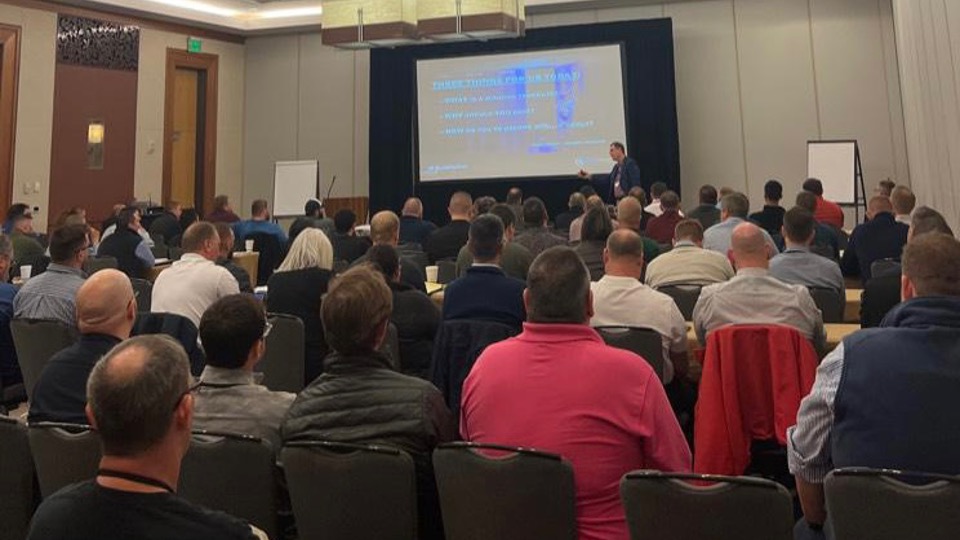
Sean Glaze is a teamwork keynote speaker and team building event facilitator who spent 20 years coaching basketball before transitioning to corporate speaking. He has worked with organizations including Cisco, John Deere, CDC, Emory University, and Southern Company, helping teams build accountability, trust, and stronger collaboration.
He is the author of several leadership books including Rapid Teamwork, What Effective Leaders Do, and The 10 Commandments of Winning Teammates, and he built the G.R.E.A.T. Culture Model, a framework leaders use to diagnose and strengthen team dynamics.