

Most leaders I know are doing something every single day that quietly destroys team morale, slows performance, and kills ownership on their team.
The frustrating part? They think they are being helpful.
They are looking in the rearview mirror and calling it leadership.
I know because I did it too. For years.

A Lesson from the Locker Room
When I was a basketball coach, I had a habit. Every time a player came off the court, I would bark at them.
Stuff like… “Why didn’t you run the play? Why didn’t you block out?”
I thought I was coaching. I thought I was holding people accountable.
What I was actually doing was making them anxious, defensive, and afraid to make decisions on the floor.
In business, the language sounds a little different.
“Why didn’t you get that report done? Why did you miss that deadline? I asked you to handle that two weeks ago.”
Sound familiar?
One day, my assistant coach Keith Minnifield pulled me aside after practice at Woodstock High School. We had inherited a program that had won only three games in the two years before we arrived. Keith had watched me wear out my players with backward-facing criticism for months.
And he finally said something I didn’t love hearing but have never forgotten. He told me I might do better if I stopped sharing rearview criticisms.
I pushed back at first. But he was right. Dead right.
Three years later, we recorded the most season wins in the history of that program. The talent didn’t change overnight. The culture did.
And the shift that followed changed the way I led every team after that.
It will change the way you lead yours too.
Nobody can go back and change the past. But every leader can shape what happens next.
What Championship Teams Know That Most Leaders Don’t
You don’t have to follow sports to recognize this pattern.
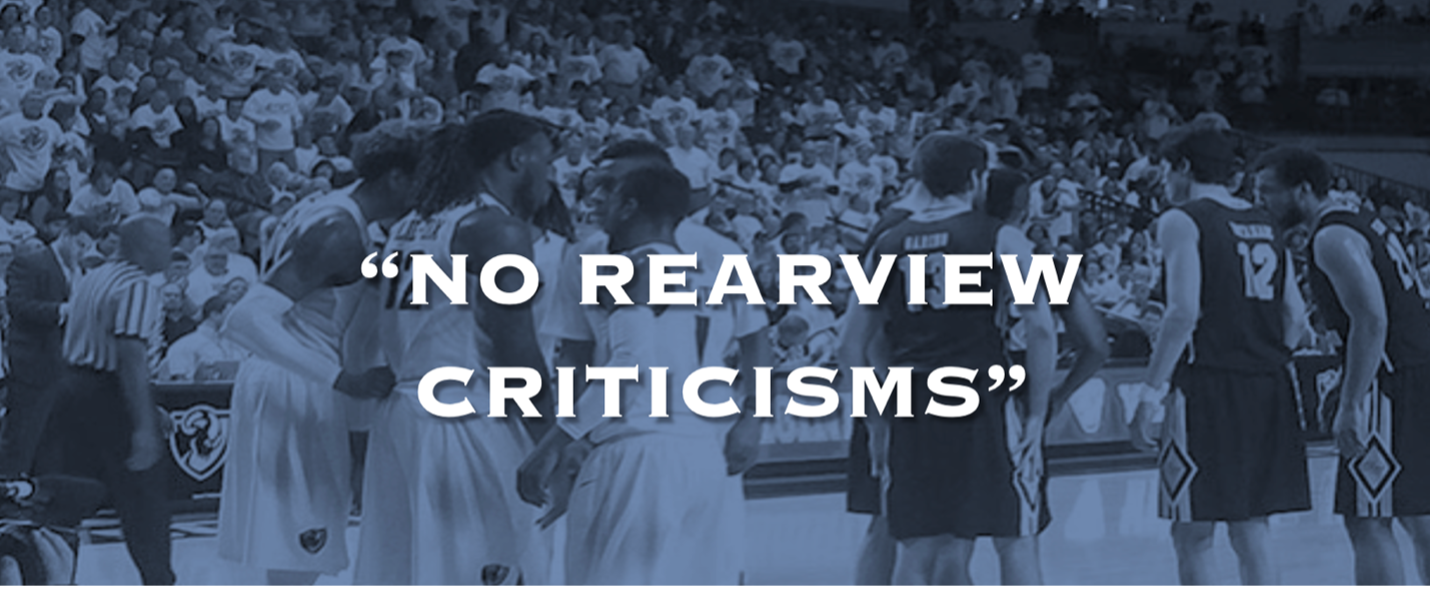
Watch any high-performing team compete at any level. Watch what happens when a player gets fouled and steps to the free throw line. Before the shot, the whole team huddles up. They crowd around each other and say something. They are not standing around replaying the bad pass that led to the foul. They are not reviewing the defensive breakdown from three possessions ago.
They are looking ahead. They are picking each other up.
They are focusing on the next play.
That is what great culture looks like from the inside. And it is one of the most transferable lessons from athletic competition to business leadership that I know.
The most resilient, connected, high-performing teams in every industry share this habit. When something goes wrong, they process it briefly and pivot forward. They ask the one question that actually moves the needle: What do we need to do next?
Why Rearview Criticism Costs You More Than You Think
Here is what most leaders underestimate. When you default to rearview criticism, you are not just making someone feel bad in the moment. You are training your whole team to be reactive instead of proactive.
People start to play it safe. They stop taking initiative. They wait to be told exactly what to do because they’ve learned that mistakes bring criticism, not coaching. Over time, ownership disappears. Innovation slows. And your best people start looking for a culture somewhere else that actually lifts them up.
According to Gallup research, managers account for 70% of the variance in team engagement scores. The way a leader communicates after a setback is one of the single biggest factors in whether people feel engaged or disconnected. Rearview criticism disconnects people.
Forward-focused reminders build them back up.
Think about what a team building speaker or a team building facilitator actually does when they come into your organization for a conference or event. They don’t stand up and catalog everything that went wrong last quarter.
They tell stories, facilitate activities, and guide conversations that shift the way your people think about each other and about their work.
The best ones create experiences that change beliefs first, because changed beliefs are what lead to changed behaviors. Your team leaves not just feeling good, but thinking differently. Acting differently.
That is what a Next Play mindset does inside your organization every single day. It is a culture of forward momentum, built one conversation at a time.
The Practical Shift: From Critic to Coach
So what does this actually look like in practice? Here are three specific moves that separate leaders who get results from leaders who just get grudging compliance.
1. Replace the question you ask after a mistake
Instead of: What happened? Why did you drop the ball on this?
Try: What do we need to do right now to get back on track?
The first question sends people backward, sifting through blame and defensiveness. The second question sends people forward, into problem-solving mode. You still hold people accountable. You just do it in a way that generates solutions instead of excuses.
2. Build the huddle habit on your team
Think about those free throw huddles. What if you started your team meetings with 60 seconds of acknowledgment before any agenda items? What if you started project check-ins with what’s working before pivoting to what isn’t?
This is not about ignoring problems. It is about sequencing your conversations differently so your team arrives at challenges with energy instead of dread. Great leaders create moments where people feel supported before they are pushed.
3. Give reminders instead of recriminations
Here is one of the most powerful things I learned from coaching. When a player made a mistake, the most effective thing I could do was remind them of what they were capable of, not replay what they just did wrong.
Research from Harvard Business Review confirms that the ratio of positive to corrective feedback matters enormously. High-performing teams consistently show a higher ratio of affirming interactions to critical ones. Not because they avoid accountability. Because they build enough trust and belief first that accountability lands like coaching instead of criticism.
Sharing reminders and encouragements instead of rearview criticisms is something I share in my book, The 10 Commandments of Winning Teammates. And it is one of the most powerful ways to build ownership, lift performance, and create the kind of culture where people actually want to do their best work.
The goal isn’t to avoid hard conversations. It’s to have those conversations in a way that moves people forward instead of shutting them down.

What Changes When You Think Next Play
I’ve had the privilege of working with teams at companies like Cisco, John Deere, the CDC, and Emory University. And the pattern I see in the highest-performing teams, across every industry, is consistent.
They do not dwell. They debrief briefly, they extract the lesson, and they move forward together.
Leaders in those cultures still set high expectations. They still have hard conversations. But when someone falls short, the first response is a forward-focused question. The first instinct is to figure out the next play, not to review the last missed shot.
And over time, that habit becomes contagious. It becomes the way your team communicates with each other, not just how you communicate with them. Teammates start picking each other up instead of pointing fingers. People start owning their mistakes faster because they trust that the conversation after the mistake is going to be constructive, not punishing.
That is what team culture feels like from the inside when it’s working. It feels like a huddle, not an interrogation.
The Experience Matters as Much as the Message
Here is something I want every leader reading this to understand. Culture change doesn’t happen because someone reads an article. It happens because people have experiences that shift their perspective and then practice new behaviors until those behaviors become habits.
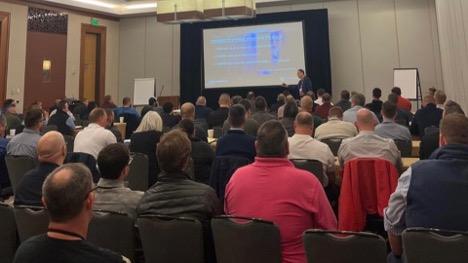
That is why the most effective leadership keynote speakers and team building facilitators don’t just talk at people. They create interactive moments, guided activities, and shared experiences that make the lessons feel personal and real. When someone laughs, makes a discovery about themselves, or connects with a colleague in a new way during a session, that experience gets encoded differently than a slide deck ever could.
Your conference is not just a meeting.
It’s an opportunity to change how your people think about each other, about communication, and about what great teamwork actually requires. The right keynote or facilitated team building event can do that. But only if the experience is intentional, customized to your team’s real challenges, and built around principles that stick.
The Next Play mindset is one of those principles.
Because every team, no matter how talented, needs a leader willing to pull them forward instead of dragging them backward.
Where Do You Go from Here?
Start simple. Tomorrow, when something goes wrong on your team, before you ask what happened, ask what needs to happen next.
Watch what changes.
Watch how people respond when they feel supported instead of scrutinized. Watch how accountability shifts when it comes from a place of forward momentum instead of backward blame.
And if you want your next conference or company event to create that kind of shift at a deeper level, I’d love to talk. Every event I deliver is customized to your team’s specific challenges, built around stories and activities that change awareness, shift beliefs, and inspire the behaviors your organization needs to win together.
Because nobody can change what already happened.
But the right leader can absolutely change what happens next.
Sean Glaze is a leadership keynote speaker, team building facilitator, and author based in Atlanta, Georgia. His engaging conference leadership keynotes and custom team building programs have helped clients like Cisco, John Deere, the CDC, and Emory University to increase collaboration, boost productivity, and build Sticky Cultures that inspire more profitable teamwork.
As a successful basketball coach, Sean gained valuable insights on turning talent into teamwork – and now travels around the country to share those lessons. Sean’s books, Rapid Teamwork, What Effective Leaders DO, The 10 Commandments of Winning Teammates, and Staying Coachable are entertaining parables that accelerate the growth of leaders and teams!