
Stop Searching for a Team Building Facilitator Near Me
Proximity is the worst reason to hire a team building facilitator.
I understand why people search that way.
You have a date on the calendar, a budget that has to get spent, and a room full of people who are not working together as well as they should be. Typing team building facilitator near me feels efficient. It narrows the list fast.
But look at what you are actually buying.
You are pulling an entire team away from their real work for half a day or longer. You are spending real money. And you are handing a stranger the microphone and asking that person to change how your people treat each other.
The drive time from their office to yours should be one of the last things you evaluate, not the first.
The most costly facilitator is the one who changes nothing.
You paid for the room, the food, and the lost productivity, and everyone went back to their desk exactly the same.
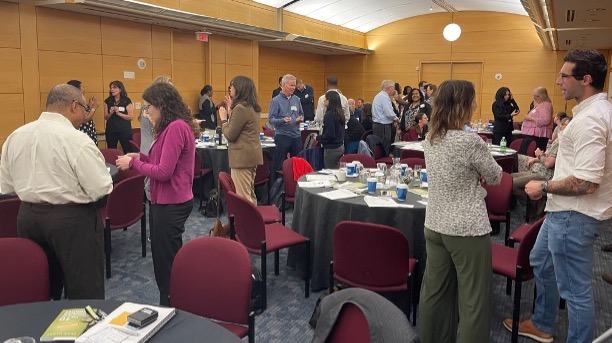
I have facilitated hundreds of these events, and I have watched plenty of them go sideways in the hands of people who were technically qualified and geographically convenient.
So here are the seven questions I would ask before hiring anyone (including me).
- What do we want people doing differently on Monday?
This is the question almost nobody asks, and it is the only one that matters.
When a planner calls me and opens with what activities do you offer, I know we are starting in the wrong place. Activities are the delivery mechanism. They are not the goal.
The better version of that conversation sounds like this. Our two departments do not talk to each other. Our new managers avoid hard conversations. People stopped speaking up in meetings about eighteen months ago and nobody knows why.
Now we have something to build around. A facilitator who cannot connect the experience to a specific behavior change is selling you an event, not an outcome.
If you cannot name what should be different on Monday, no facilitator on earth can deliver it for you.
- Are they facilitating, or are they running an activity?
There is an enormous difference, and most buyers cannot see it until they are standing in the room watching it not happen.
Running an activity means giving instructions, starting the clock, and keeping the energy up. Anyone with a decent personality and a stopwatch can do that.
Facilitating means reading the room while the activity is happening. Noticing who took charge and who went quiet. Catching the moment a team stopped listening to the one person who had the answer. Then knowing how to bring that moment back into the room afterward without embarrassing anyone.
Ask a prospective facilitator to describe something they noticed during a recent event and what they did with it. The answer tells you almost everything.
Activities create the experience. Facilitation creates the meaning. You are paying for the second one.
- What actually happens in the debrief?
The debrief is the most important part of any team building event, and it is the part most providers treat as a footnote.
An activity without a structured debrief is recreation. It might be enjoyable recreation. People might genuinely like it. But it does not transfer, because nobody ever made the connection between what just happened in that room and what happens every Tuesday in the real one.
So press on it. How long is the debrief? What questions get asked? How do you handle a group that gives you surface answers? What do you do when the real issue surfaces and it involves someone senior who is standing right there?
A skilled facilitator has thought carefully about all of that. Someone selling you a package has not.
If the debrief is fifteen minutes tacked onto the end, the event is entertainment with a receipt.
- What did they ask you before they answered?
Watch the direction of the first conversation.
If a provider spends the discovery call telling you what they do, they are going to deliver you the same program they delivered last week to a company in a different industry with different problems.
Before every engagement I run, I send a scouting report questionnaire to the organization and I survey the actual attendees. I want to know what the team says about itself when leadership is not in the room. Then I do a prep call with the planner to pressure test what I found.
By event day, the stories and the activities and the language are built around that specific group. Not because it sounds impressive in a proposal, but because people engage very differently when they can tell the content was made for them.
Customization is not a feature on a website. It is a process you should be able to see before you sign anything.
- Have they ever actually led a team?
Theory is cheap and widely available. Experience is not.
I coached basketball for twenty years before I ever stood in front of a corporate room. I had to hold a locker room together after a loss nobody saw coming. I had to tell a senior who had started for three years that he was coming off the bench. I had to figure out why a talented group with every advantage kept finding ways to lose to teams that were worse than they were.
None of that shows up on a certification. All of it shows up in the room, because people can tell within about four minutes whether the person in front of them has lived any of this or simply read about it.
Ask what they led, who they were responsible for, and what it cost them when it went badly. The stories will either be there or they will not.
Groups forgive a lot, but they do not follow someone who has never been where they are.
- What survives after everyone drives home?
This is the question that separates a good day from an actual investment.
The energy in the room on event day is not the return. The return is what people still remember and still use in six weeks, when the workload is heavy and the old habits are pulling hard.
So ask what participants leave with. A shared language they can use in a meeting. A framework simple enough that someone can apply it under pressure. Something physical they can hold onto. I give every attendee one of my books, because a conversation ends when the room clears out but a book sits on a desk and keeps working.
And ask what the provider does to reinforce it. If the answer is nothing, you are buying a memory.
Ask what people are still doing differently six weeks later. Then ask how the provider knows.
- Who decides whether it worked, and how?
Most team building gets evaluated by the wrong measure. Did people enjoy it. Did the survey scores come back high. Did anyone complain.
Those are attendance metrics. They tell you people showed up and did not hate it.
Before the event, agree with your facilitator on what success looks like in observable terms. More cross department conversations. Fewer issues that get escalated because two people would not talk directly. New managers who initiate a hard conversation instead of routing it through HR.
Those are visible. They are also the only evidence that anything actually changed.
Enjoyment is the entry fee. Behavior change is the result you paid for.
The Monday Morning Test
Here is the standard I hold my own work to, and I would hold anyone else to it as well.
On Monday morning, does anything look different?
Not the energy. Not the survey scores. The behavior. Do people start conversations differently. Do they reach across a department line they used to avoid. Do they reference something from the event when a real problem shows up. Does the person who has been quiet in meetings for a year say one thing.
If nothing changed on Monday, the event did not work. It does not matter how much fun everyone had on Thursday.
The Monday Morning Test is the only measure of team building that means anything. Ask a facilitator how they would pass it.
So What Should You Search For Instead of Team Building Facilitator near Me?
Not the nearest facilitator. The one who understands what you are actually trying to fix.
I would search for phrases closer to how you would describe the problem out loud. How to improve accountability across departments. Team building that changes behavior. Workplace culture keynote speaker. Leadership facilitator for new managers.
Those searches return people who think about outcomes. Near me returns people who happen to be close.
And if the right person is a two-hour flight away, the math still works. A facilitator who moves the needle is worth more than a convenient one who fills an afternoon. Travel is a line item. A wasted day with your entire team is a much larger one.
If You Want to Talk It Through
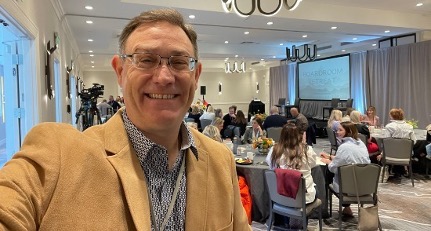
I am a workplace culture keynote speaker who also facilitates team experiences that turn the message into behavior. The keynote gives a room a shared idea.
The facilitated experience is where they practice it, feel it, and start using it on each other.
If you are planning a conference, an offsite, or a leadership retreat and you want it to pass the Monday Morning Test, let us have a conversation about what you need your people doing differently.
Bring the seven questions above. Ask me all of them.
– – – – –
Sean Glaze is a workplace culture keynote speaker and team building event facilitator who spent 20 years coaching basketball before transitioning to corporate speaking. He has worked with organizations including Cisco, John Deere, CDC, Emory University, and Southern Company, helping improve teamwork with better accountability, trust, and collaboration.
He is the author of several leadership books including Rapid Teamwork, What Effective Leaders Do, and The 10 Commandments of Winning Teammates, and he built the G.R.E.A.T. Culture Model, a framework leaders use to diagnose and strengthen team dynamics.