

Here is a question worth sitting with for a moment:
What if the single biggest factor in your team’s performance
had nothing to do with skills, strategy, or systems?
What if it came down to something far simpler (and far more neglected), like whether your people actually feel connected to each other?
Gallup research has found that employees who have a best friend at work are seven times more likely to be fully engaged in their jobs.
Seven times.
And yet, when most organizations think about team connection ideas, they reach for the same tired playbook: an annual company picnic, a pizza lunch, a holiday party where everyone smiles for the group photo and then goes home to forget it happened.
That gap between what drives genuine team performance and what most leaders actually invest in is costing organizations far more than they realize.
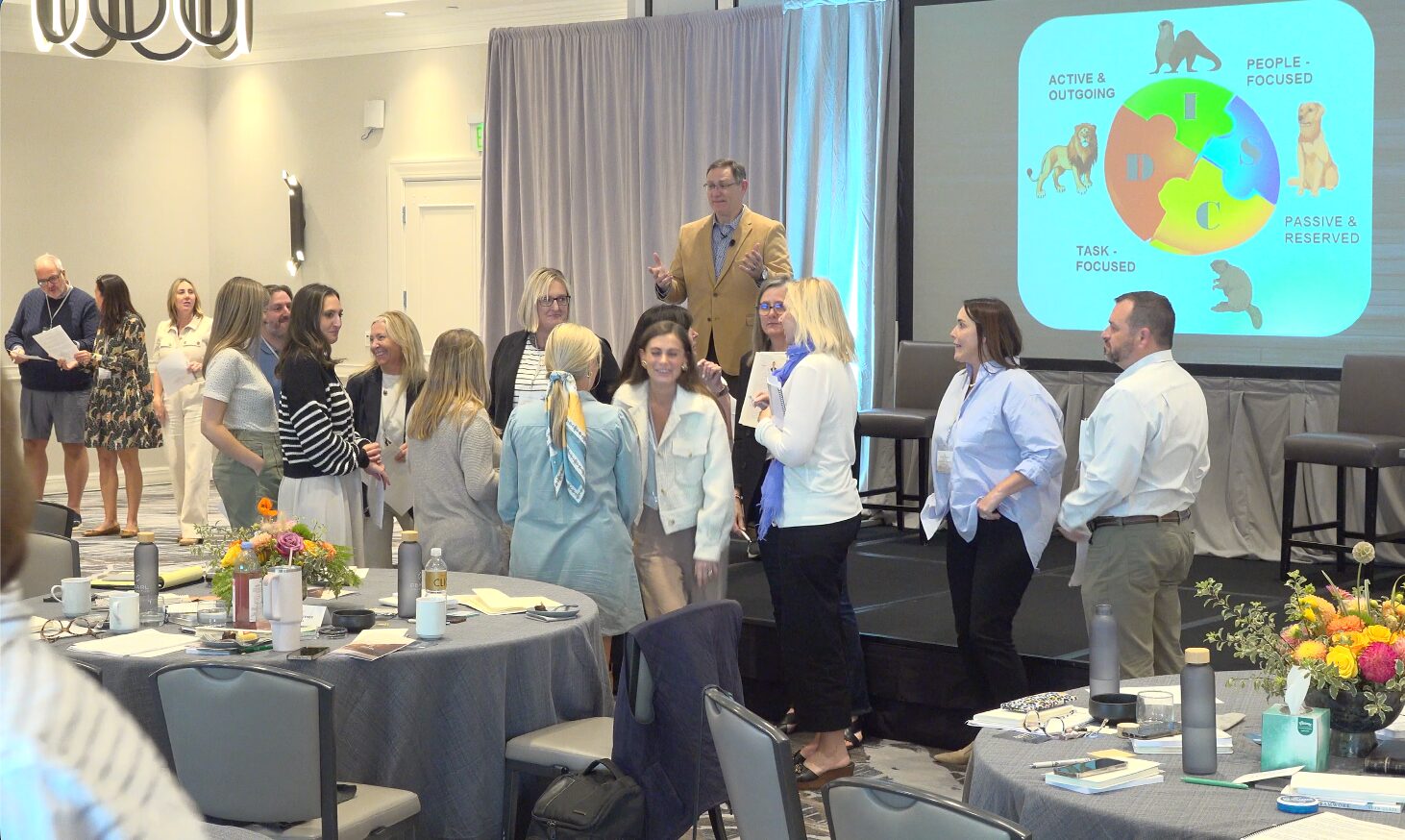
The Problem Nobody Wants to Name
Most leaders are extraordinary at the visible work of leadership. They acquire talent. They build strategies. They track metrics and run reviews and optimize processes. What they often skip, not from laziness, but from misplaced priorities, is the invisible infrastructure underneath all of that: the relational fabric that determines whether their team actually functions as a team, or just as a collection of individuals sharing a calendar.
When that fabric is weak, the consequences are expensive. Replacing an employee costs anywhere from one to two times their annual salary. Disengaged employees cost U.S. businesses an estimated $550 billion in lost productivity every year. And perhaps most painfully, your highest-potential people (the ones with the most options) are the first to leave when they don’t feel genuinely connected to something bigger than their job description.
The truth is this: culture doesn’t stay neutral. When leaders neglect intentional investment in team relationships, culture doesn’t hold steady… it drifts. And it almost always drifts toward dysfunction.
Culture doesn’t stay neutral.
When leaders neglect it, it doesn’t hold steady, it drifts. And it almost always drifts toward dysfunction.
Why Most Team Connection Ideas Fall Flat
Before offering solutions, it’s worth being honest about why so many common approaches don’t work… not to dismiss the effort behind them, but to understand the design flaw.
The annual company party is fun, but structurally useless as a connection builder. People self-sort into existing cliques. The same loud personalities dominate. Introverts endure it. By Monday morning, nothing has changed.
Forced icebreakers produce awkwardness more reliably than they produce connection. Asking someone to share a fun fact in a conference room creates performance, not vulnerability.
Happy hours and team lunches are social, but unstructured. Without intentional design, they reinforce existing relationships rather than building new ones.
The common thread through all of these?
They are recreational. They are designed to be enjoyed, not to accomplish anything specific. And there is a world of difference between a team activity that is fun and a team activity that actually changes how people see and trust and show up for each other.
That is the simplest answer to why most team building activities fail…
The distinction that matters is not what the activity is.
It is what it is designed to do.
What Genuine Team Connection Actually Requires
Thesis: The best team connection ideas are not activities your people enjoy. They are intentionally designed experiences that change how your people see, trust, and show up for each other.
That shift in framing changes everything about how you plan and invest.
MIT’s Human Dynamics Lab spent years studying what separates high-performing teams from average ones. Their finding was striking: the strongest predictor of team productivity was not individual talent or intelligence — it was communication patterns. Specifically, how often and how informally team members talked to each other. Connection is not soft. It is structural. And leaders who design for it outperform those who leave it to chance.
Here is what intentional team connection ideas look like in practice:
Trust-building through shared challenges. Teams that solve problems together (problems they genuinely could not solve alone) build trust faster than teams who only interact in professional, performance-focused contexts. When people experience each other’s thinking, creativity, and support under mild pressure, the relationship changes. Psychological safety — the #1 factor Google’s Project Aristotle identified in high-performing teams — is not declared by a leader. It is built through repeated shared experience.
Recognition rituals that go horizontal. Most organizations think of recognition as top-down: manager praises employee. But peer-to-peer recognition builds something more powerful… a web of mutual appreciation that creates belonging across the team, not just up and down the hierarchy.
Research from O.C. Tanner shows companies with strong recognition cultures see 31% lower voluntary turnover. A simple weekly ‘shoutout’ ritual in your team meeting, focused on specific behaviors rather than vague praise, can shift team culture meaningfully within weeks.
Shared language around values. Teams with a common vocabulary around what they stand for and how they want to work make faster decisions, handle conflict more productively, and recover from setbacks more resiliently. A values alignment conversation, where team members articulate personal non-negotiables and find overlap with team values, creates shared identity. Not just shared tasks.
Intentional digital connection for remote and hybrid teams. Loneliness is the second-most-cited challenge among remote workers, according to Buffer’s annual State of Remote Work survey. Virtual team connection ideas that work are structurally different from in-person ones. Randomized one-on-one virtual coffee pairings, async celebration channels, and online collaborative challenges designed around team dynamics all build connection across distance — but only when they are designed with purpose, not just dropped into a Slack channel and forgotten.
When people solve a problem together that they couldn’t solve alone, they become invested in each other’s success. That’s when the team starts to become real.

The Two Most Common Objections
(And Why They Don’t Hold Up)
“We don’t have the time or budget for this.” This is the most common response, and the most understandable. Leaders are stretched. But consider what the alternative actually costs. Disengagement, turnover, and reduced collaboration are not free. They are simply expensive in ways that are harder to see on a spreadsheet. Many of the most effective team connection ideas take 15 to 30 minutes and can be embedded into meetings that are already happening. The barrier is not time… it is intentionality.
“Team building activities are cheesy and no one takes them seriously.” This is absolutely true of bad team building. Forced fun is worse than no fun – it is FLUFF that breeds cynicism. But the issue is design, not category.
Activities designed to produce specific outcomes (trust, cross-team communication, shared accountability) produce different results than activities designed merely to entertain. That is profitable fluff, and the difference is in what the experience is built to change.
What Becomes Possible When You Get This Right
When team connection ideas are intentional and well-designed, the effects are not abstract. Engagement scores improve. Retention rates rise. Teams communicate more candidly and collaborate more fluidly. Creative output increases because people feel safe enough to take risks and pitch ideas that might not work.
Your best people stop shopping for their next opportunity, because they feel genuinely seen, valued, and connected to something that matters. And your culture stops being a liability to manage and starts becoming a competitive advantage that attracts the talent your competitors are trying to keep.
Skills and strategy matter enormously. But neither reaches its potential without the cultural and relational foundation underneath them.
That foundation is built through intentional team connection.
And it is more profitable than most leaders ever stop to consider.
– – – – –
Sean Glaze is a sought-after leadership and workplace culture speaker, who gained valuable insights on turning talent into teamwork as a successful basketball coach – and now he travels around the country to share those actionable lessons.
Sean’s engaging conference leadership keynotes and custom team building programs have helped clients like Cisco, John Deere, the CDC, and Emory University to increase collaboration, boost productivity, and build Sticky Cultures that inspire more profitable teamwork.
Sean’s books, Rapid Teamwork, What Effective Leaders DO, The 10 Commandments of Winning Teammates, and Staying Coachable are entertaining parables that accelerate the growth of leaders and teams!