

Most leaders treat meaning and purpose like a bonus feature.
Something you add after the real work of setting goals, clarifying expectations, and building accountability is done.
That is exactly backwards.
After two decades of coaching basketball teams and in conference rooms as a team building speaker, I can tell you with confidence that the teams that consistently outperform expectations share one thing in common. The people on those teams believe that their efforts and work matter… and that they matter as a person to the teammates they work with.
That is not a soft observation.
Gallup research has consistently shown that only about one in three employees strongly agree their work has meaning and purpose. That is not a morale problem. That is a performance drain hiding in plain sight.
Here is what I have learned about where meaning actually lives in a team culture.
It is not abstract. It is not a values poster on the wall.
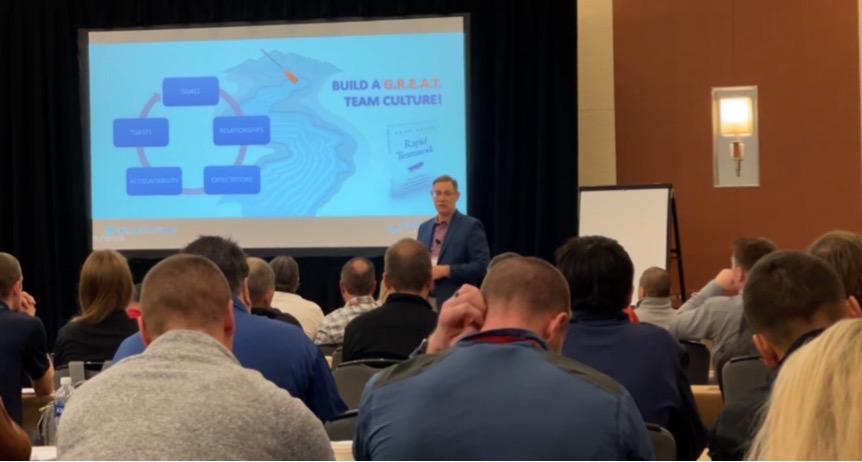
Meaning lives in exactly two places, and both of them are already inside the G.R.E.A.T. culture framework if you know where to look.
Meaning Lives in the Goals That Connect Your Team
Most leaders use goals for alignment. They want the team rowing in the same direction, and that is legitimate. But alignment and meaning are not the same thing.
Alignment answers the question “what are we doing?”
Meaning answers a deeper question: “why does it matter that we do this?”
I have sat in hundreds of team rooms over the years where everyone knew the quarterly targets. Revenue numbers. Completion dates. Headcount goals. And they were checked out anyway. Not because the goals were unclear. Because the goals were disconnected from anything that felt significant.
Think about the best team you have ever been part of. I would bet the goals in that environment did not just point somewhere. They pulled you somewhere. There was a reason behind the number, a person served by the outcome, a problem solved that actually mattered to someone.
When a player on my basketball team understood that we were playing for each other and for the community that showed up to cheer for us, effort went up. When it was just about wins and losses, effort was optional.
The same thing happens in your organization every day.
The practical question is not whether your team has goals. It is whether your goals carry any emotional weight. Can each person on your team draw a clear line from what they do on Tuesday afternoon to a real outcome that actually matters to a real person?
If they cannot, you have an alignment problem that looks like a motivation problem.
Great leaders do not just communicate goals. They translate goals into meaning. They tell the story behind the number. They name the customer who was helped. They connect the individual contribution to the larger outcome with enough specificity that people feel the importance of their own role.
Goals that carry meaning do not just tell people where to go. They give people a reason to care whether they get there.

Meaning Lives in Relationships That Go Beyond the Org Chart
Here is the piece most leaders underestimate.
Research on workplace retention consistently points to one factor that predicts whether someone stays through difficulty, volunteers effort beyond what is required, and becomes a genuine contributor to team culture over time. Not compensation. Not title. Not even the quality of their manager, though that matters enormously.
It is whether they have someone at work they genuinely consider a friend.
That finding always surprises leaders the first time they hear it. We are running businesses here, not social clubs. But the data does not care about that distinction. Human beings are wired for belonging, and belonging is built through relationships. When those relationships exist, people feel like they matter to someone in the room. When those relationships are absent, even high performers start quietly looking for the exit.
This is the R in your G.R.E.A.T. model doing work that most people do not fully appreciate.
We tend to present Relationships as the antidote to communication breakdown and conflict. And it is that. But it is also the primary delivery mechanism for the feeling of mattering. When a teammate notices your effort. When a peer celebrates your win. When someone checks in not because they need something but because they were thinking about you. Those moments are not soft culture fluff. They are the glue that makes people want to stay invested when things get hard.
I have never seen a person quit a team where they genuinely felt seen and valued by the people around them. I have seen plenty of people quit teams with great compensation packages and unclear relationships.
The practical question here is not whether your team is professionally collegial. Most teams are. The question is whether the relationships on your team have enough depth that people feel personally connected to each other beyond the task list.
That kind of connection does not happen by accident.
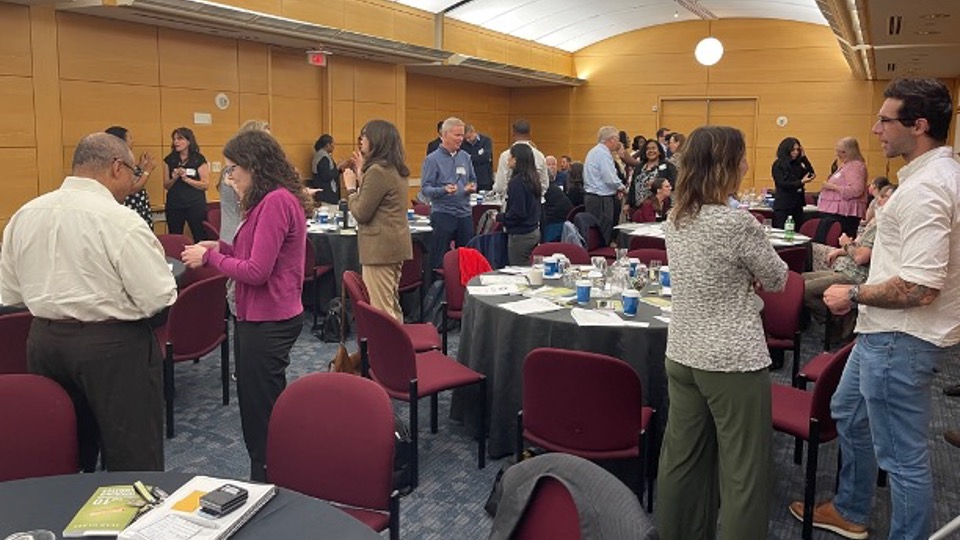
It happens through intentional, facilitated team building experiences that create space for real conversation. It happens when leaders invest in shared experiences that go beyond the work. It happens when you treat the Relationships pillar not as a checkbox but as the primary infrastructure for a culture where people feel like they matter.
The Place Most Leaders Get This Wrong
Here is the honest problem with how most organizations approach culture.
They build Goals and Relationships in isolation from each other.
They do a team offsite that is heavy on connection and light on direction. And it demonstrates why most team building fails. Or they do a strategic planning session that is heavy on direction and light on connection. And then they wonder why people are still disengaged six weeks later.
Meaning is not created by Goals alone.
It is not created by Relationships alone. It is created at the intersection of both.
A person needs to understand why the work matters AND feel like the people around them are genuinely invested in their success. Remove either element and the feeling of mattering collapses.
Think about it from the player’s perspective. If I understand the game plan but none of my teammates actually care whether I succeed, I am executing in isolation. If my teammates love me but nobody can tell me why this season matters, I am connected but directionless. You need both, operating together, reinforcing each other.
That is when people stop showing up for a paycheck and start showing up because they are part of something.
What You Can DO About This as a Leader
The answer is not an escape room. There is a big difference in pmact when you think abou meaningful team building vs escape rooms.
Before planning ANY event, sit with these two practical questions:..
First, on Goals: Can every person on your team articulate not just what they are working toward but why it matters to someone beyond the team?
If that answer is no, the meaning gap in your culture is a Goals communication problem, and it has a straightforward fix.
Second, on Relationships: Does each person on your team have at least one genuine connection at work that goes beyond project collaboration?
Not just a professional relationship. A real one.
If the answer is no for several people on your team, the meaning gap in your culture is a Relationships investment problem, and it requires intentional action, not just a happy hour.
Leaders who close both gaps do not just create better cultures. They create teams where people bring their full effort because they believe the work matters and believe the people around them are worth working hard for.
That combination is ridiculously powerful.
And it is built one intentional interaction at a time.
(I even put together a page full of team building resources for you to help with that)
If you are ready to create that kind of culture on your team, I would love to talk about what a facilitated experience could look like for your organization.
– – – – –
Sean Glaze is a leadership keynote speaker, team building facilitator, and author based in Atlanta, Georgia.
His engaging conference leadership keynotes and custom team building programs have helped clients like Cisco, John Deere, the CDC, and Emory University to increase collaboration, boost productivity, and build Sticky Cultures that inspire more profitable teamwork.
As a successful basketball coach, Sean gained valuable insights on turning talent into teamwork – and now travels around the country to share those lessons. Sean’s books, Rapid Teamwork, What Effective Leaders DO, The 10 Commandments of Winning Teammates, and Staying Coachable are entertaining parables that accelerate the growth of leaders and teams!