

Culture is the sum of the behaviors a group allows and repeats.
Not the attitudes it holds. Not the mission statement on the wall.
So, if you want to change a culture, stop asking how do we get people to believe something new. Start asking how do we get an entire team to actually do something new, together, often enough that it becomes what this group simply does now.
Most culture initiatives run on the same three step formula.
– Communicate the new value.
– Convince people it matters.
– Get their commitment.
I’ve watched that formula fail in enough conference rooms to know why. It asks people to believe before they’ve experienced anything, and belief without experience is just an opinion waiting to be tested by a hard Tuesday.
The model I use runs the opposite direction.
It’s called the Culture Awareness Loop.
(Some of you may know this as the Cycle of Culture from my books. I’ve renamed it the Culture Awareness Loop because the real power is in the loop: every repeated behavior becomes the next shared experience.)
The Culture Awareness Loop
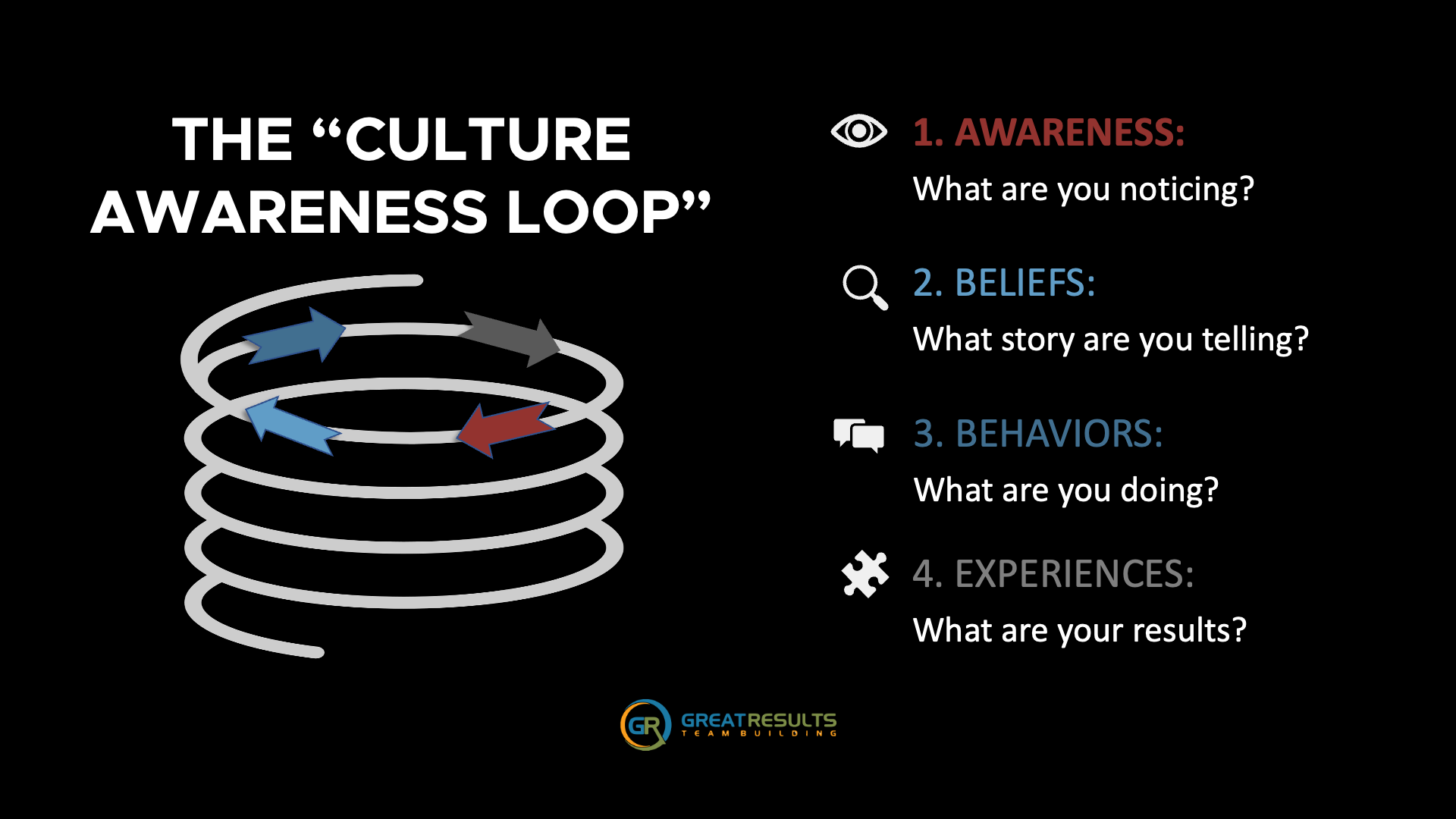
It isn’t a straight line, it’s a loop.
Every repeated behavior becomes the next shared experience, which sharpens awareness again, which strengthens or challenges belief again, which shapes the next behavior. Culture isn’t changed once. It’s reinforced on a loop, for better or worse, whether a leader is managing it on purpose or not.
Here’s what each stage actually means for a leader in the room.
Experience
Something happens that the whole team goes through together. Not a memo. Not a slide. An actual shared moment, whether that’s a facilitated exercise, a hard conversation, a project that goes sideways, or a win nobody expected.
Awareness
What did we notice? Every experience hands people new information about what’s possible, what’s tolerated, and what’s true about this team. Awareness is simply what stuck.
Belief
What are we telling ourselves now? Awareness hardens into belief once people start explaining the experience to themselves and each other. This is where a team decides whether something is worth repeating or worth avoiding.
Behavior
What do we do differently because of what we now believe? This is the only stage anyone outside the room can actually see.
& Repeat
Do we do it again. And again.
Enough times that it stops being a decision and starts being a habit. Once a behavior repeats without anyone stopping it, it isn’t an initiative anymore. It’s the culture.
Why This Model Disagrees with Simon Sinek
I want to say this plainly, because I respect the source before I disagree with it.
Simon Sinek has shaped how a generation of leaders think about purpose and trust, and in a widely shared talk on cultural change, he leans on real, well documented research. He uses Everett Rogers’ diffusion of innovation model, built from studying how farmers adopted new seed corn in the 1960s. Innovators make up about 2.5 percent of any population. Early adopters add another 13.5 percent.
Once you cross 16 percent or so, Sinek argues, an idea becomes unstoppable.
His advice to leaders: recruit your early adopters, let them build the new initiative with you, and trust their enthusiasm to pull the skeptical majority along behind them.
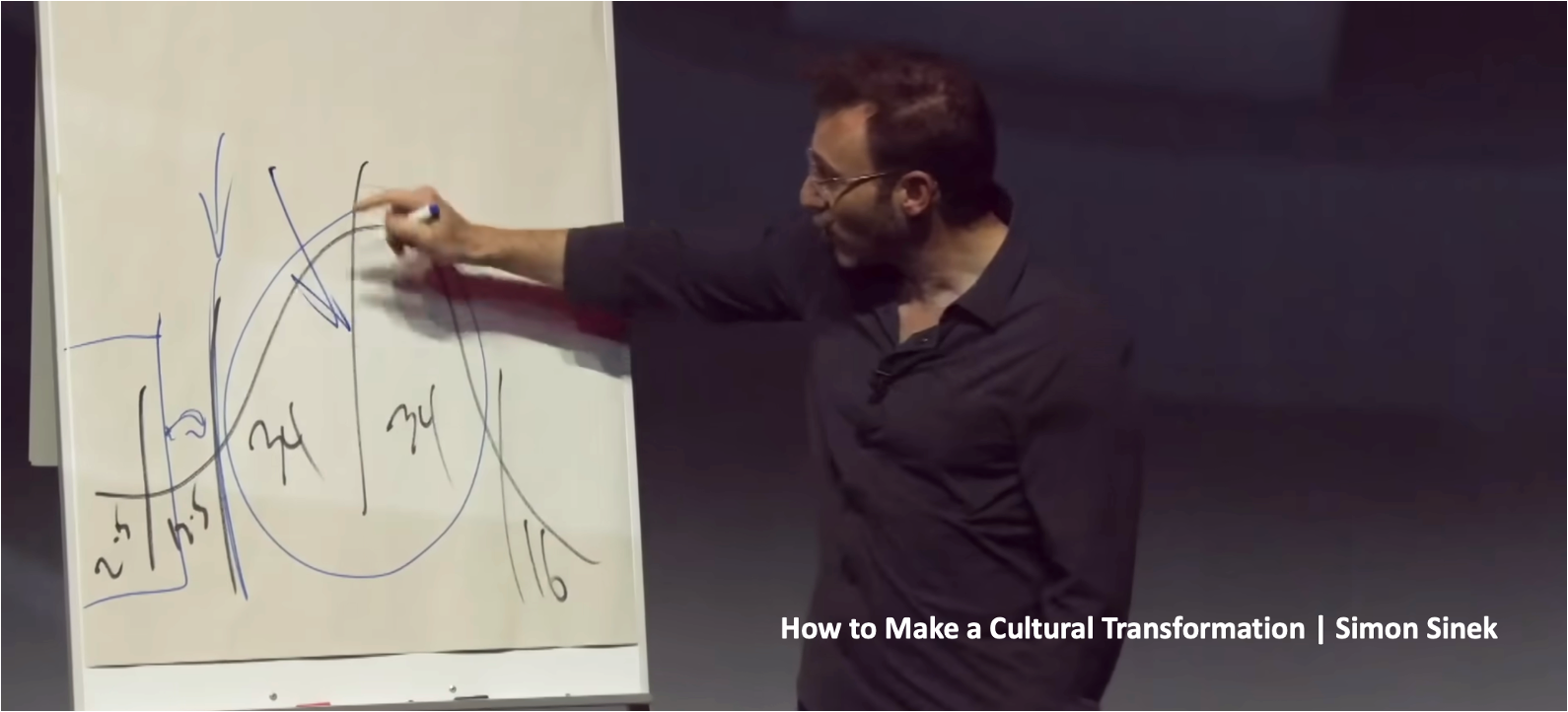
That strategy makes sense for launching a product into an open market where you get to choose your audience.
I don’t think it’s the right strategy for changing a culture inside a team that already works together every single day.
And there’s decades-old research that explains why…
In 1943, psychologist Kurt Lewin ran an experiment on American housewives during wartime meat rationing, trying to get them to serve meats their families usually avoided.
One group heard a well delivered lecture from a nutrition expert, complete with recipes and testimonials from women who’d already served the meat successfully. Only 3 percent of that group went on to actually serve it.
A second group skipped the lecture entirely and took part in a facilitated group discussion, working through their own objections out loud together and reaching their own decision as a group. 32 percent of that group served the meat, and the change held up longer over time than the lecture group’s did.
Same facts. Same expert. Same room.
The only difference was whether people experienced the idea passively or lived it out loud together. That’s not early adopters converting skeptics through contagious enthusiasm. Nobody in the discussion group walked in more convinced than anyone else.
The shared experience moved the number from 3 percent to 32 percent.
There’s a second reason belief tends to form after an experience instead of before one.
Psychologist Daryl Bem’s self-perception theory found that people often figure out what they believe by watching what they just did, especially when they didn’t walk in with a strong opinion either way.
Most people sitting in a room hearing about a new value or a new process don’t have a strong belief yet. They’re neutral. Trying to argue someone into conviction before they’ve experienced anything is fighting for ground nobody is standing on yet. In fairness to the research, belief and behavior actually influence each other in both directions over time, not in one strict order.
But the practical lesson holds.
Give a team the experience first, and belief has something real to attach itself to.
Sinek’s model still asks a leader to recruit a subset of the team and hope their energy crosses the gap to everyone else. That gap is real.
It’s the exact reason Geoffrey Moore built an entire career around what he calls crossing the chasm, because the skeptical middle of any group doesn’t trust an outlier’s excitement. They trust proof from someone who feels like them.
A well-designed shared experience skips that gap completely, because nobody in the room is more exposed to the new idea than anyone else.
A hundred percent of the team lives it at the same time, not a recruited slice of it.
The Culture Loop Runs in Both Directions
Here’s the part most culture conversations miss entirely.
The Culture Awareness Loop doesn’t only build strong cultures. Run it long enough with the wrong inputs and it builds weak ones just as reliably.
A positive loop looks like this. A good shared experience creates sharper awareness, which builds a stronger belief in the team, which produces a better behavior, which becomes a better experience the next time around. Confidence compounds.
A negative loop runs the same mechanism in reverse. A bad shared experience, a broken promise, a leader who says one thing and rewards another, creates a cynical awareness, which hardens into a limiting belief, which produces a guarded behavior, which becomes the next bad experience. Cynicism compounds just as reliably as confidence does.
This is the part I’d want every leader to sit with. You are already running this loop, whether you’re managing it on purpose or not.
The only question is which direction it’s spinning.

How a Leader Uses This Without a Facilitator
Build the experience before the explanation.
Don’t open with a slide explaining why the new approach matters. Put the team inside a short exercise, discussion, or live scenario where they encounter the problem the new approach solves. Let them feel the gap before you name the fix.
Let the team reach the conclusion out loud.
Lewin’s housewives didn’t change because they were told the right answer. They changed because they worked through their own resistance in front of each other and arrived at the decision themselves. Ask questions in the room. Let people voice the doubt. Don’t rush past it with a rebuttal.
Ask for the first attempt in the room, not later.
Don’t end with willingness. End with action. Have the team try the new behavior, even in a small way, before they leave. That first attempt is what belief attaches itself to.
Reinforce it before the loop resets on its own.
A single strong experience isn’t the finish line. Bring the behavior back into the next huddle, the next Monday Morning Test, the next check in. If you don’t intentionally repeat it, the team will repeat something else instead, and the loop will spin whether you’re steering it or not.
None of this requires finding your most excitable people and hoping their energy is contagious.
It requires engineering one honest, shared experience where the whole team notices something together, updates what they believe together, and takes the first behavior together. Do that on repeat, on purpose, and you’re not managing a culture initiative anymore. You’re running the loop in the direction you actually want it to spin.
If you’re planning a leadership offsite, a training rollout, or a keynote built to start that loop the right direction for your team, that’s exactly the work I love doing with organizations.
Reach out and let’s talk about what that could look like for your team.
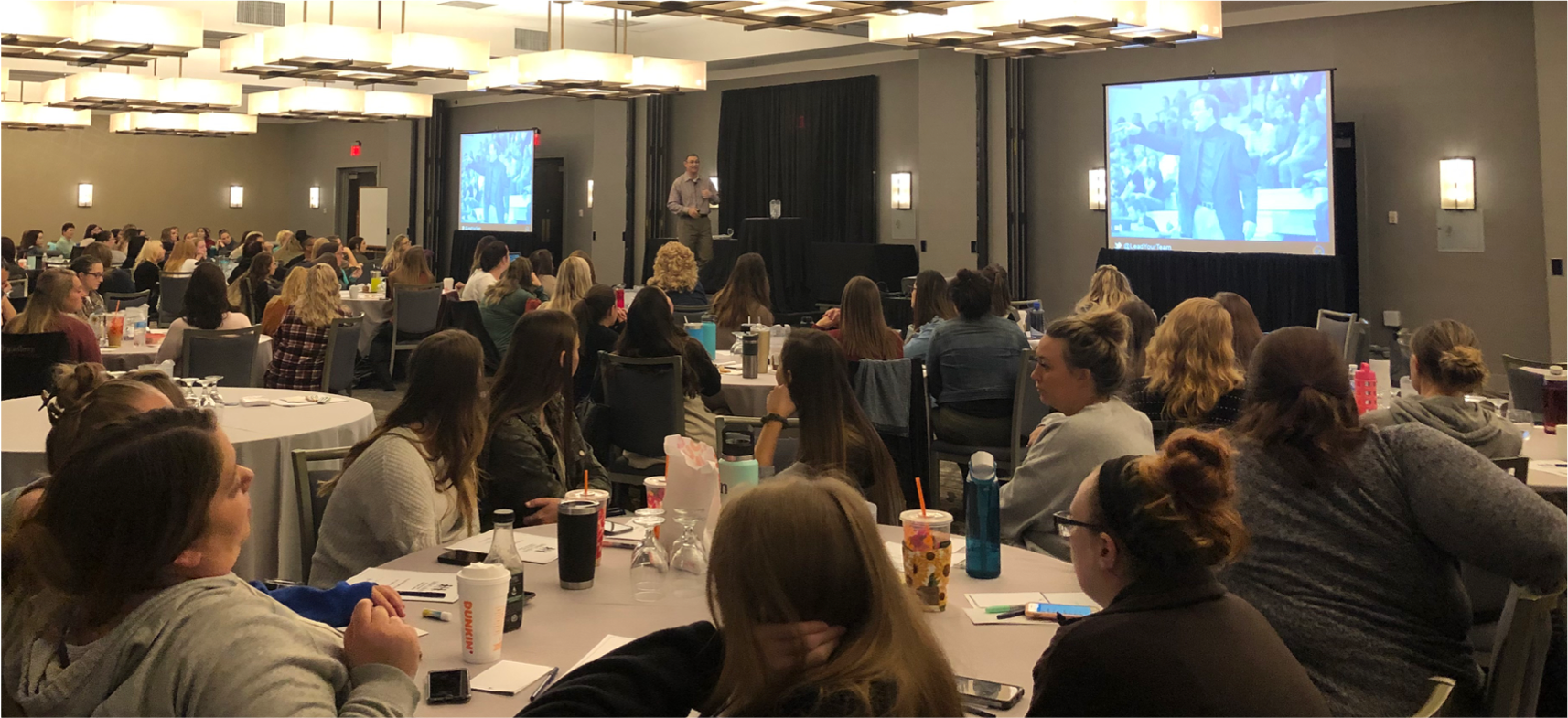
Sean Glaze is a workplace culture keynote speaker and team building event facilitator who spent 20 years coaching basketball before transitioning to corporate speaking. He has worked with organizations including Cisco, John Deere, CDC, Emory University, and Southern Company, helping improve teamwork with better accountability, trust, and collaboration.
He is the author of several leadership books including Rapid Teamwork, What Effective Leaders Do, and The 10 Commandments of Winning Teammates, and he built the G.R.E.A.T. Culture Model, a framework leaders use to diagnose and strengthen team dynamics.